
Window Replacement in Austin, Specified for the Sun
Austin Quality Windows handles window replacement in Austin, TX as Travis County's trusted specialist in premium openings, specializing in steel windows, aluminum-clad wood casements and floor-to-ceiling glass walls. We offer multi-slide door walls and historic window restoration.
- Free in-home measure
- Elevations you approve
- Installed to manufacturer instructions
- One written price
Windows, Doors and Glass
Tell Us About Your Openings
A free in-home measure, elevations you approve, and one written price.
Calls only, we do not receive text messages.
Windows chosen for the house you have
Our team provides a full glass package on every order, from low-E coatings to laminated and tempered units, delivering cooler, quieter rooms and clean sightlines for both residential and commercial projects. The same crew that measures each opening on site installs it, flashing every sill to the manufacturer's written instructions and water-testing before the trim goes back on.
From a flush sill cut into a slab for a door wall to a whole-house package of new frames, glass and trim, our team handles every detail. Serving Austin, West Lake Hills, Rollingwood and Tarrytown, we quote every job in writing after a free in-home measure.
Why Austin Quality Windows
How We Work
No handoffs between a salesperson, a measurer and a subcontracted crew. The crew that measures your openings installs the windows.
Replacement Windows and Architectural Glass for Austin Homes
A house worth commissioning new glass for usually has good bones and tired windows. The frames were picked by a builder years ago, the sashes stick or sweat, and the west wall bakes the living room every afternoon. Window replacement fixes that, but on a house of this calibre the right replacement is rarely the same unit in a newer box. It is a chance to open a view, sharpen a sightline or put back the profile an older house was built with.
Here is the work, grouped the way owners and architects tend to scope it:
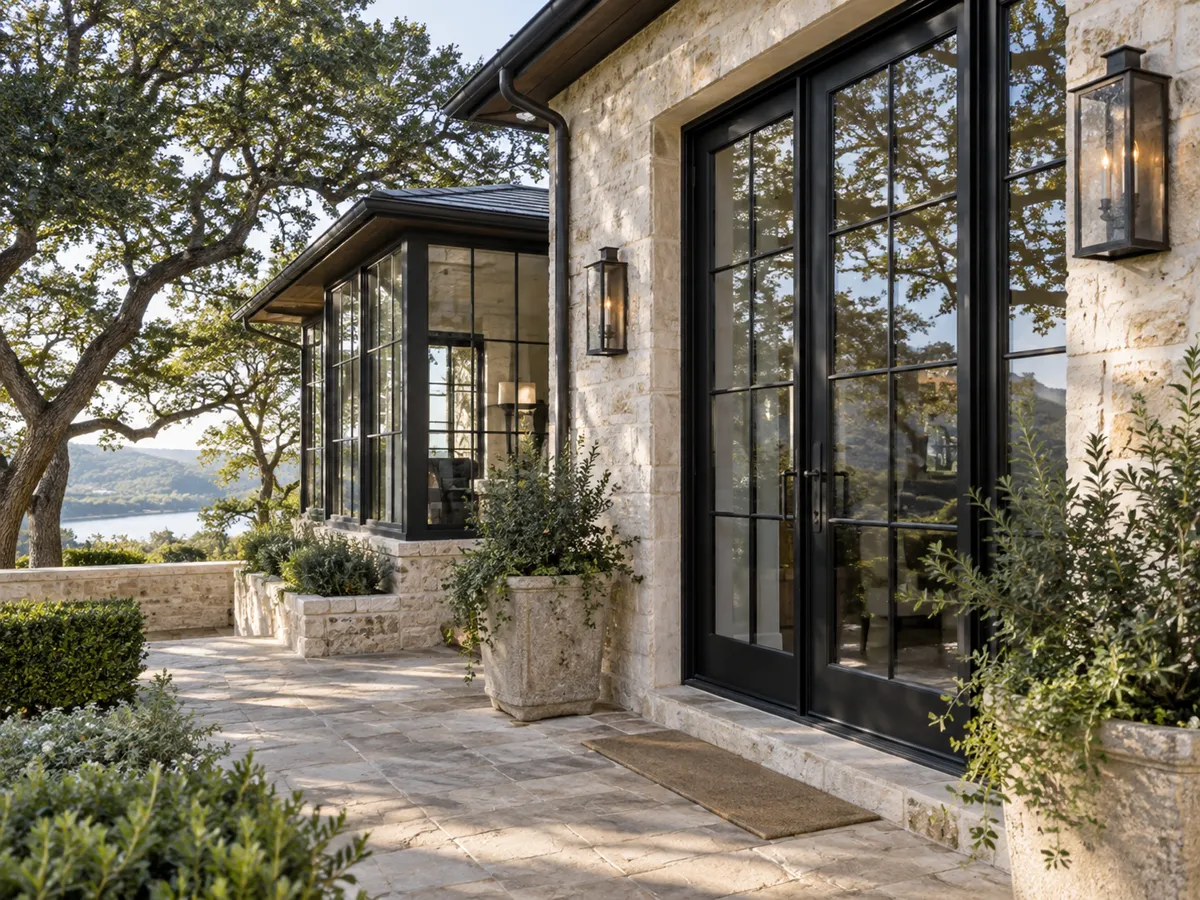
- Steel windows and doors: slim, thermally broken steel frames for modern and European-inspired houses where the narrowest sightline matters.
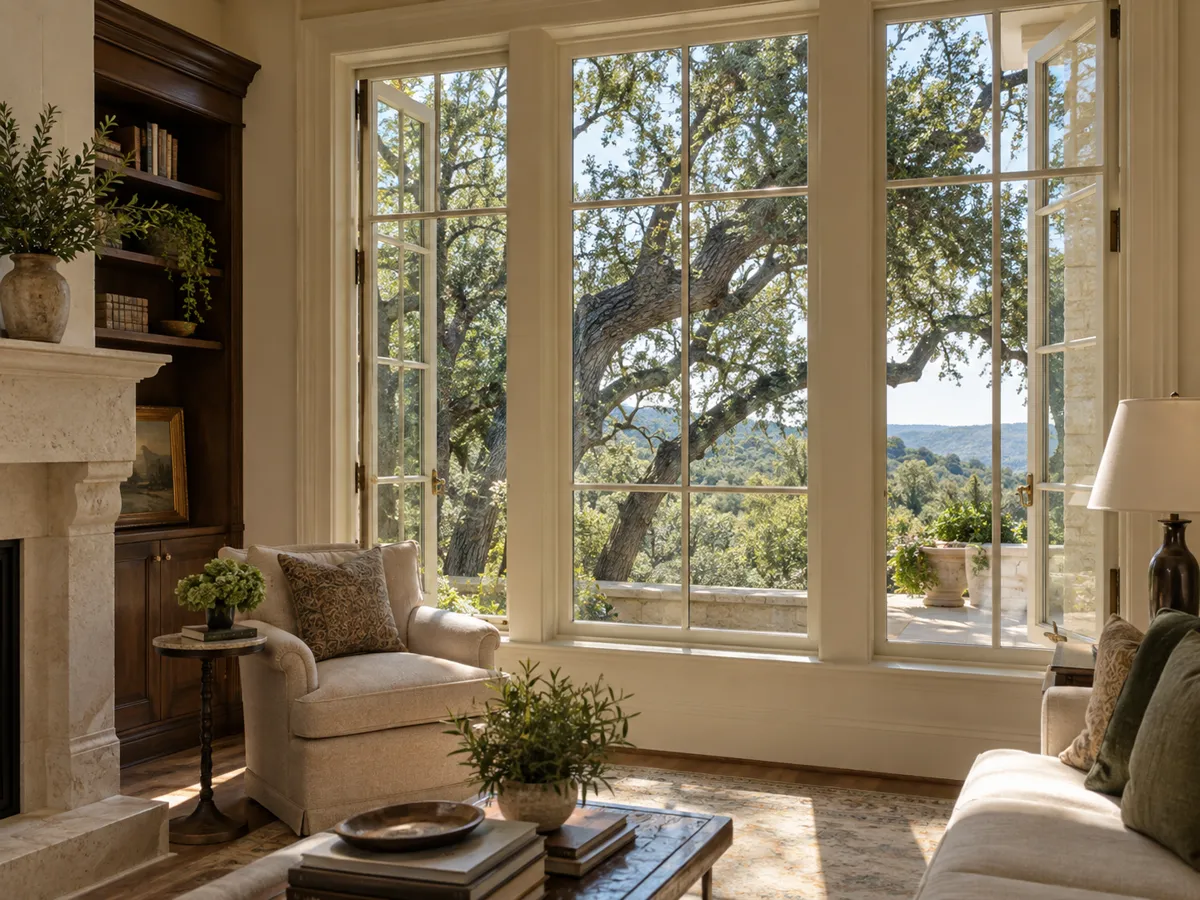
- Wood and clad-wood windows: warm wood inside, an aluminum skin outside, for traditional and transitional homes.
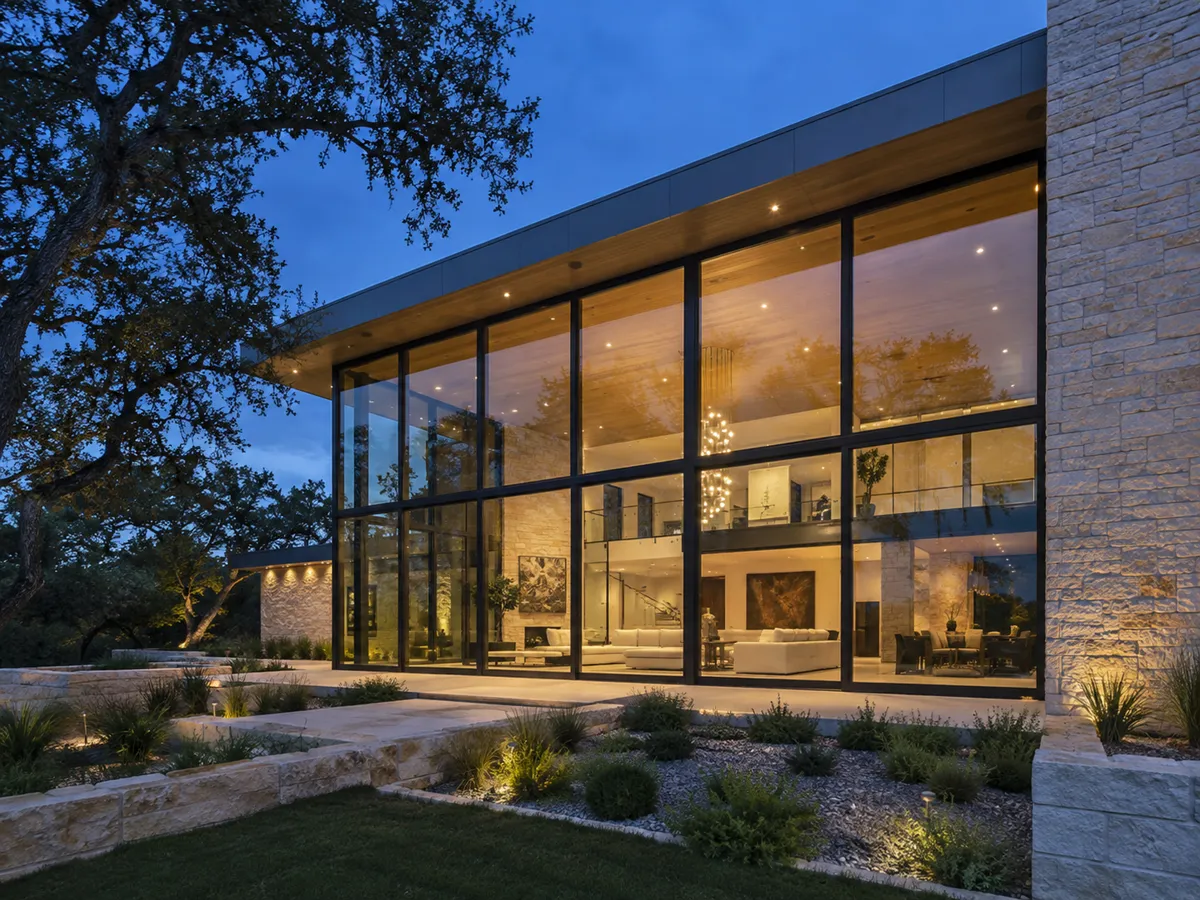
- Floor-to-ceiling windows and glass walls: fixed and operable runs that turn a whole wall into the view.
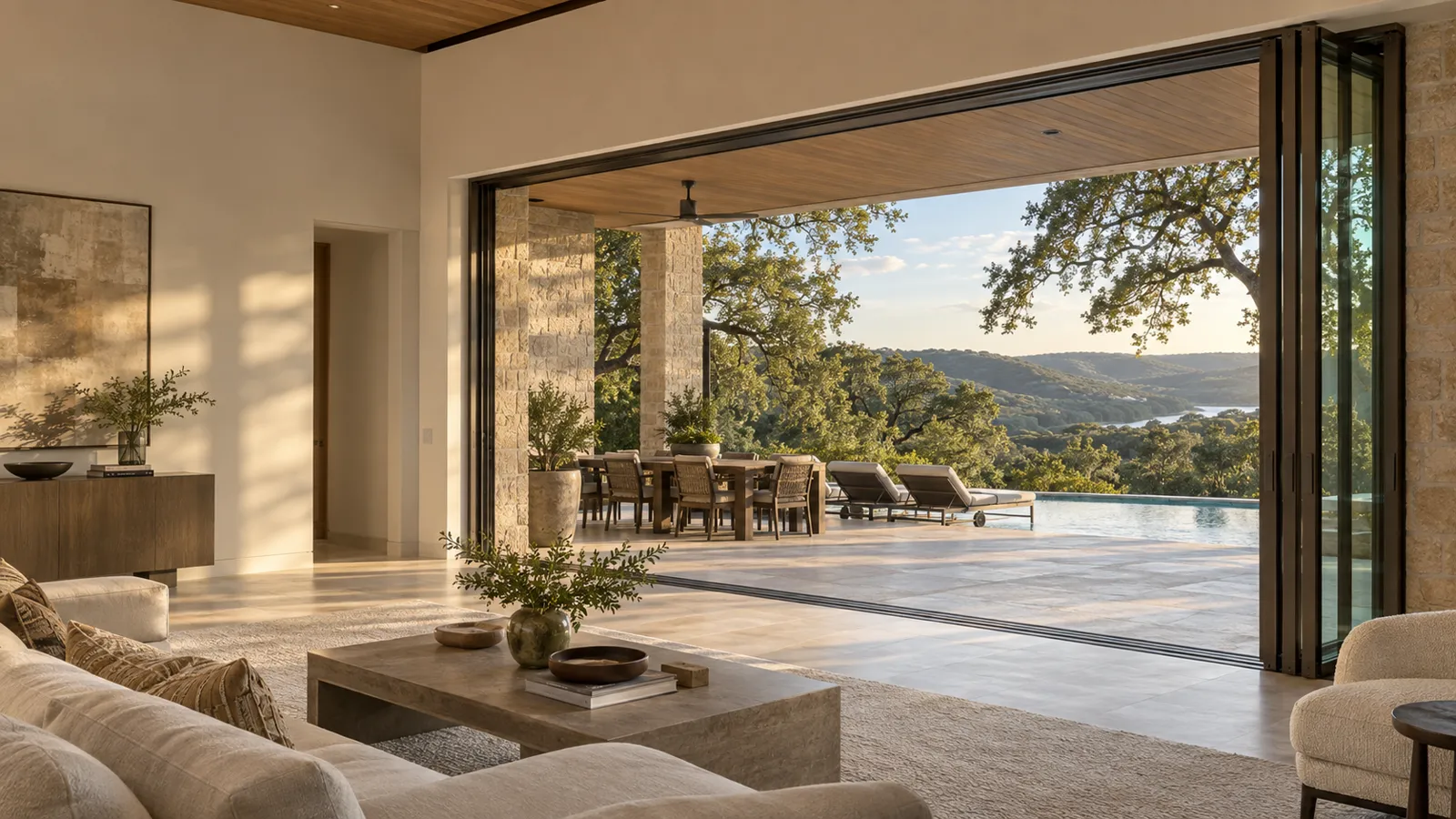
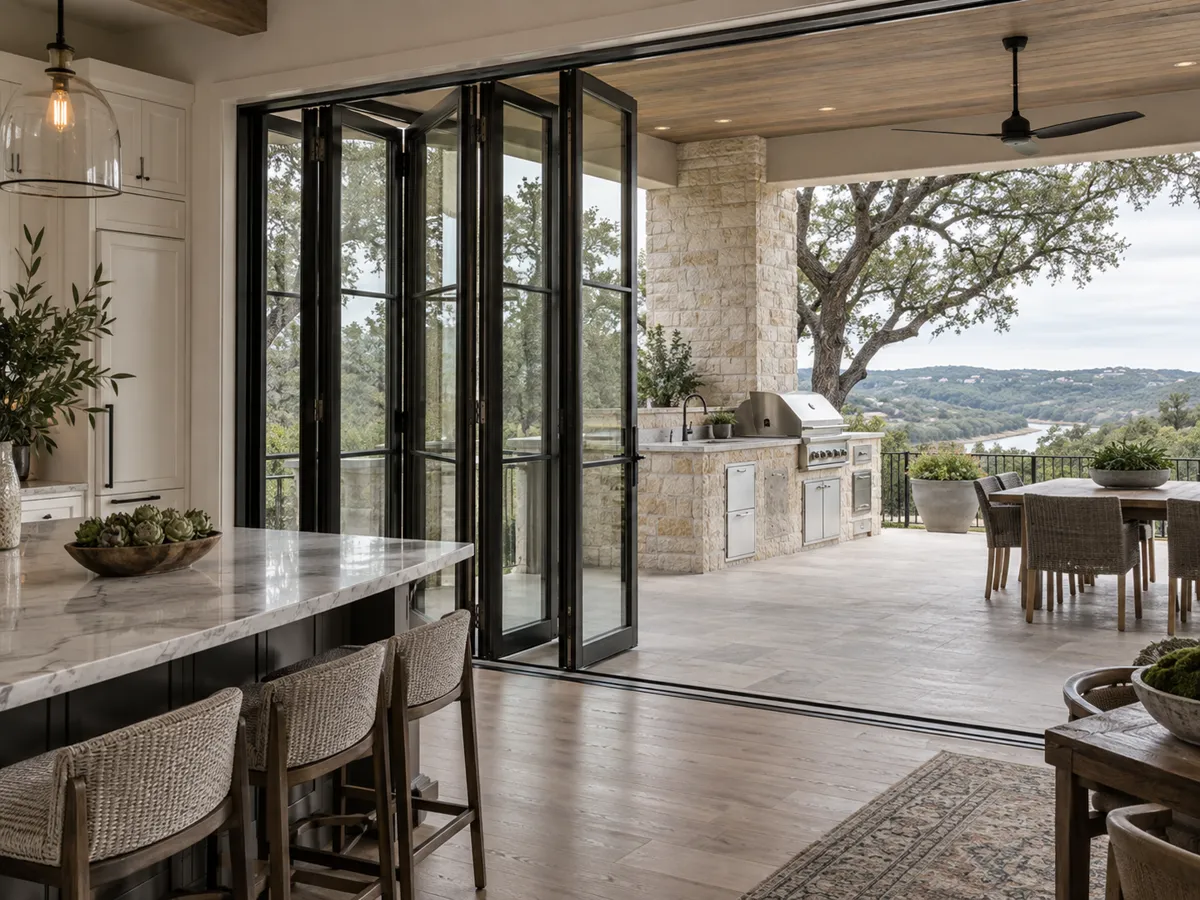
- Multi-slide and bi-fold door walls: panels that stack or fold away to join a room to a terrace.
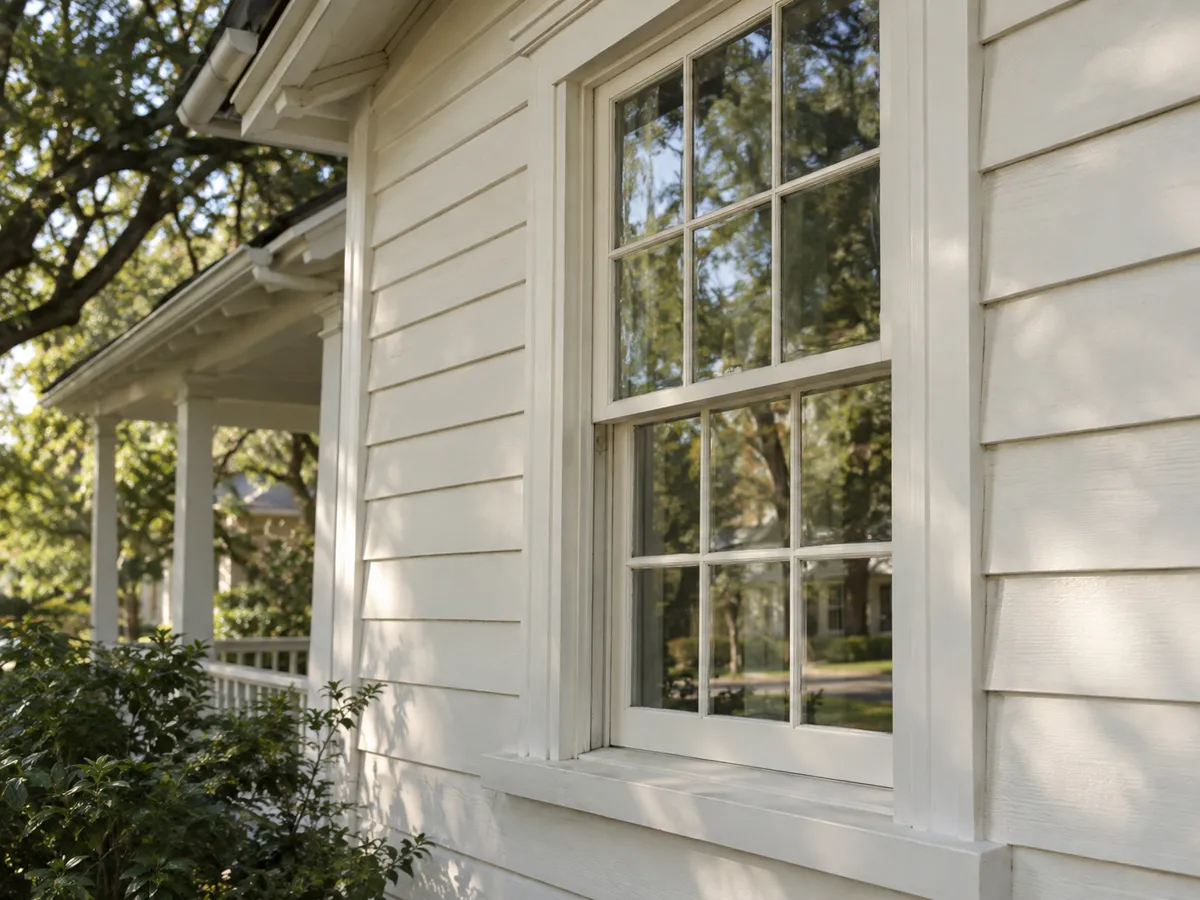
- Historic window restoration: repairing original sash, or matching it where repair is no longer possible.
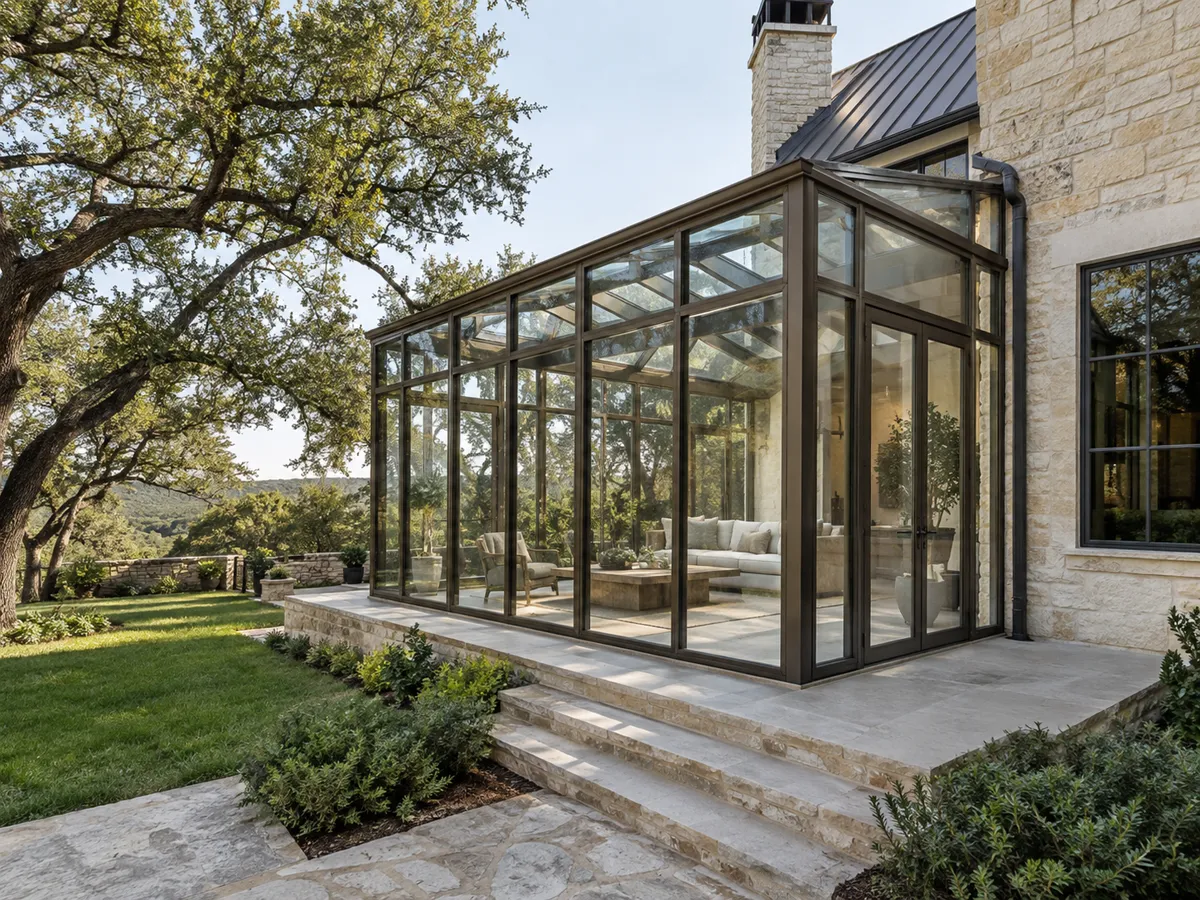
- Sunrooms and glass enclosures: a room built to hold daylight while keeping the weather out.
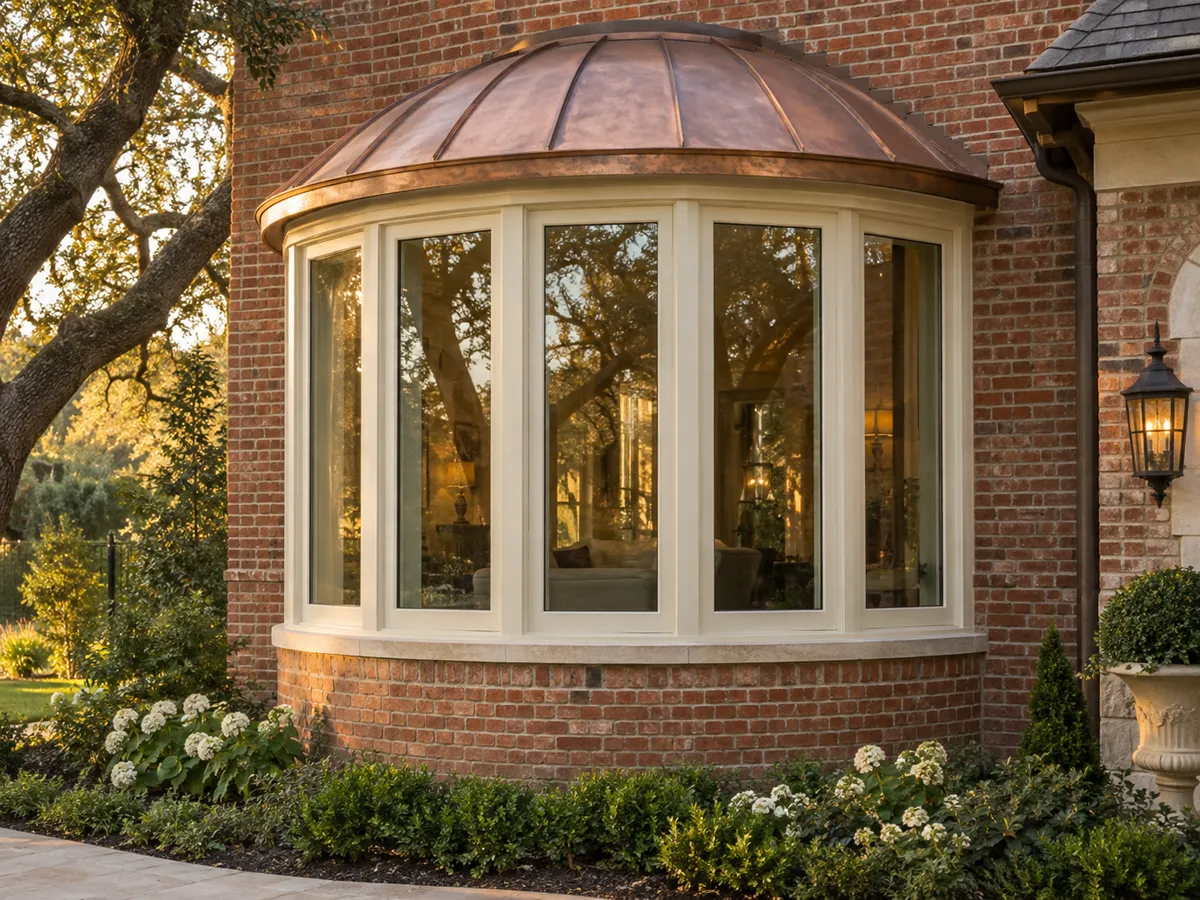
- Bay and bow windows: projecting units that add a seat, a desk or a little floor space.
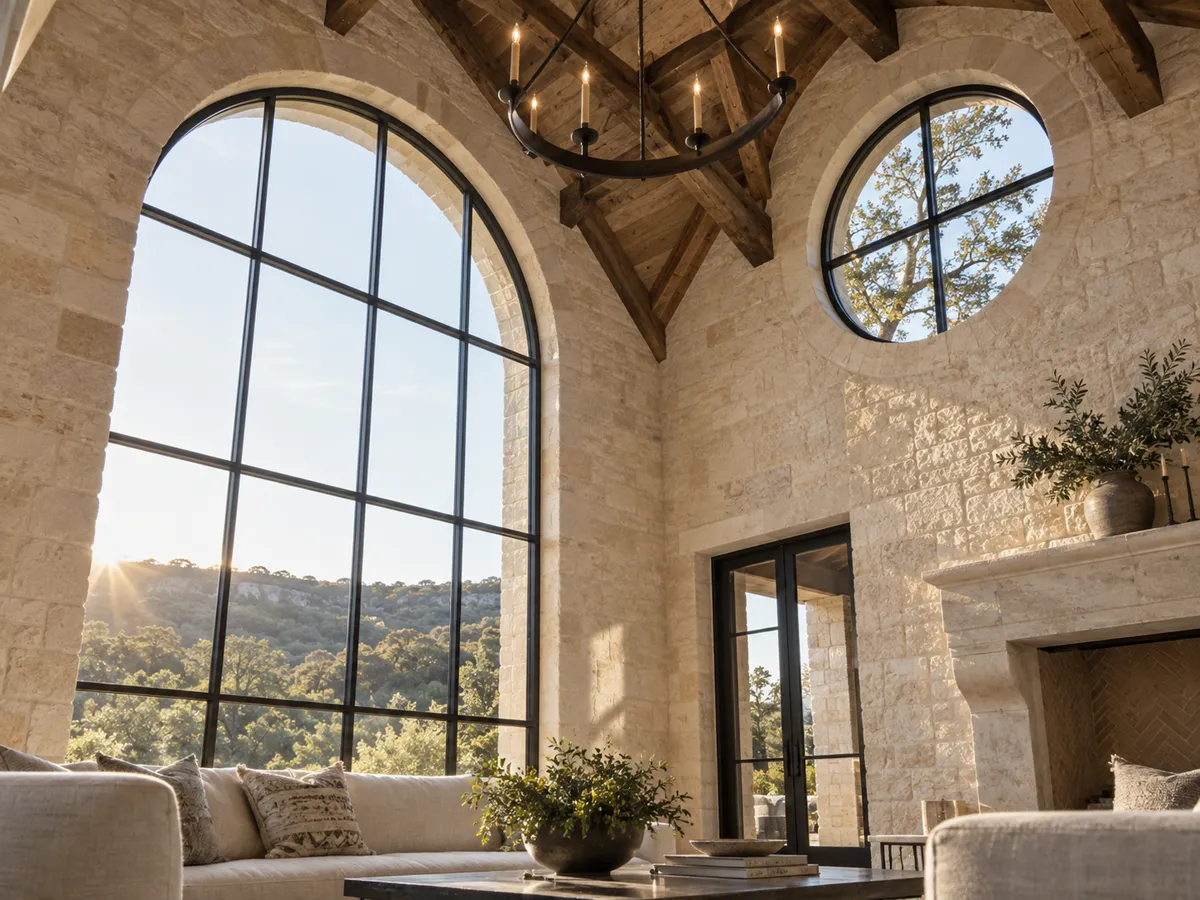
- Custom and architectural shapes: arches, trapezoids, rounds and clerestory runs made to the opening.
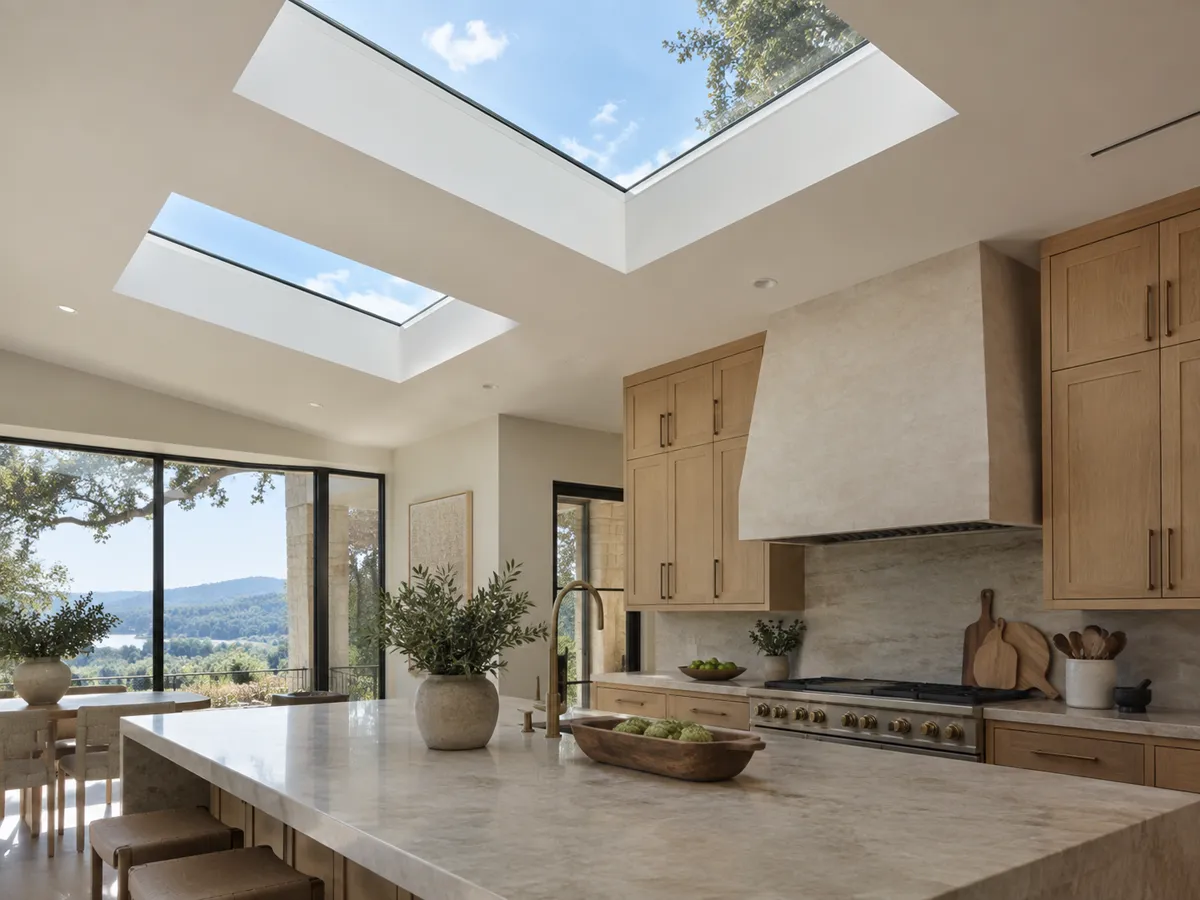
- Skylights: fixed and venting units, flashed into the roof and sized to the room below.
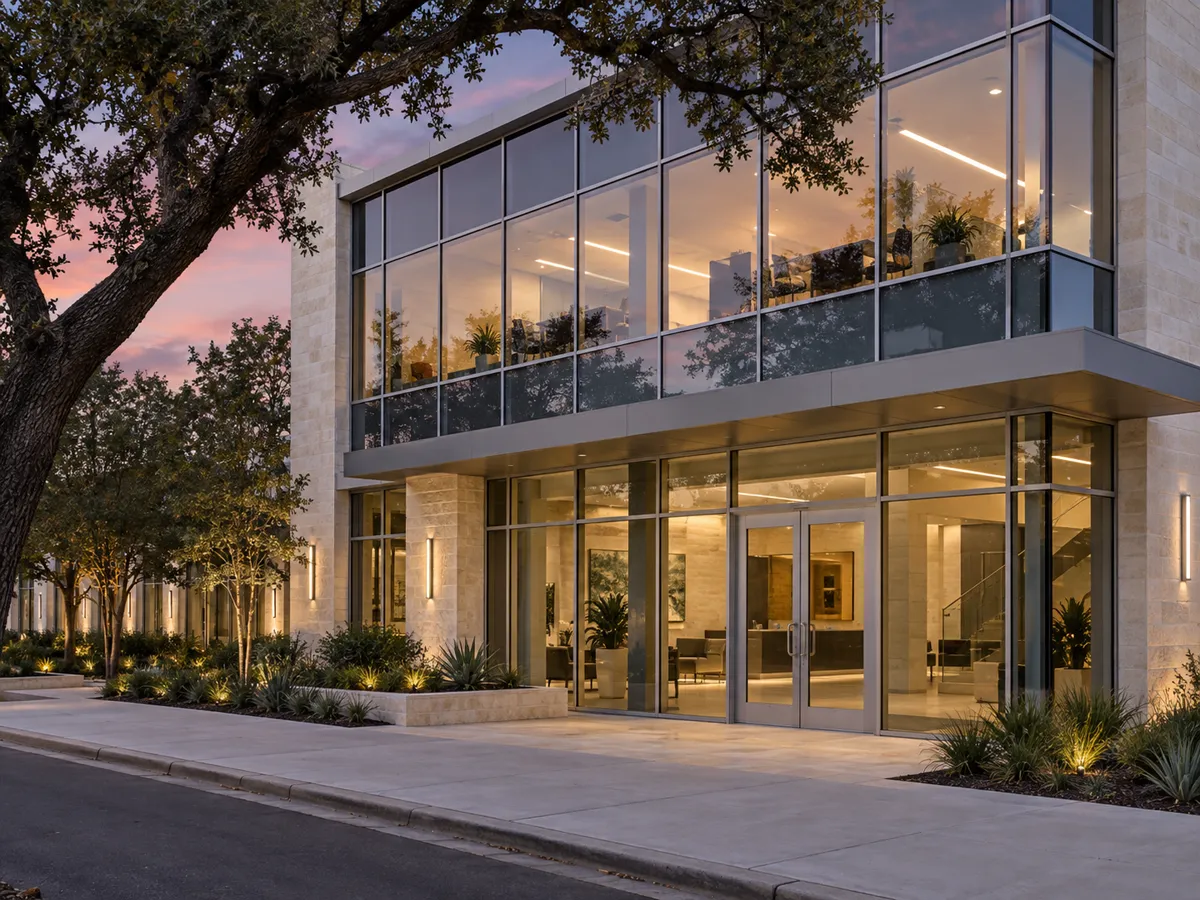
- Commercial storefront glazing: storefront systems and glass for shops, offices and mixed-use buildings.
Each service has its own page with the detail. This page covers what they share: the glass, the frame, what moves the price and how a job runs from the first visit to the last bead of sealant.
Glass That Handles West-Facing Austin Sun
Austin summers are long and very hot, and the city logs roughly 2,650 hours of bright sunshine a year. That sun is the problem most window choices here are really solving. The frame decides the look. The glass decides how the room feels at five in the afternoon in August.
Travis County sits in Climate Zone 2, and the energy chapter the state still uses as its residential floor sets a fenestration U-factor of 0.40 and a solar heat gain coefficient (SHGC) of 0.25. That table covers replacement windows, not only new houses. Both numbers come from the NFRC label, the rating the National Fenestration Rating Council runs for U-factor, SHGC, visible transmittance, air leakage and condensation resistance. A unit without a label is assigned default values, so every unit we quote carries one.
Meeting 0.25 across a wall of glass is done in the glass, not the frame. The tools:
- Low-emissivity coatings: thin metal oxide or silver layers that keep heat on the side of the pane where it started while letting visible light through.
- Insulated glass units: two or three panes held apart by a sealed spacer, with argon or krypton in the gap.
- Laminated glass: panes bonded to a plastic interlayer that holds the pieces together if broken, quiets street and boat noise, and blocks nearly all ultraviolet light before it fades a rug or a floor.
- Tempered glass: heat-treated safety glass, used wherever the code calls for safety glazing, which we confirm opening by opening against the current code.
One caution. A strongly reflective coating is not always allowed. West Lake Hills bans glass with a reflectivity factor of 20 percent or more, and several associations west of town ban mirrored glass outright, so the coating is chosen with the address in mind.
Frame Materials, From Steel to Clad Wood
The frame sets the sightline, the profile and how much upkeep the house will ask of you. Here is what each material brings to an Austin opening:
- Steel: the slimmest profile and a very durable frame. Plain steel conducts heat readily, so a thermally broken steel system is the one worth specifying in this climate.
- Aluminum-clad wood: a wood interior that can be stained or painted, protected outside by an aluminum skin that sheds rain and sun.
- Thermally broken aluminum: two aluminum sections joined by a low-conductivity barrier, so the inside face does not follow the outside temperature. It is the usual frame for large sliding and folding door walls and for storefront systems.
- Fiberglass: a strong, stable frame with very good thermal resistance, often a fit for a painted modern exterior.
- Vinyl: low upkeep and good insulation, though most owners of a custom house want a narrower or warmer-looking profile than it offers.
On an older house the frame question comes second. The first question is whether the original sash can be kept, and the answer changes both the scope and the approvals.
What Window Replacement in Austin Costs, and What Moves the Price
We do not publish a figure per window, because on houses like these no two openings cost the same and a number off a chart would mislead you. What we can tell you is exactly what moves the price on your quote:
- The glass package: dual or triple pane, the low-E coating and its SHGC, laminated glass for sound or security, tempered units where the code requires safety glazing, tint and gas fill.
- Frame material: vinyl, fiberglass, aluminum-clad wood, thermally broken aluminum or steel, plus the interior wood species and finish.
- Opening size and count: oversize units, arches and other custom shapes, operable against fixed, and how many openings change at once.
- Structural work: enlarging an opening, a new header or beam, an engineer's letter for a wide glass wall or door wall, or a flush sill cut into a slab.
- Access: lift or crane work on a hillside or lake lot, a second-storey glass wall, a tight side yard or staging on a slope.
- Historic review: a City of Austin landmark or a house in a local historic district may need review before work starts, and restoring is priced differently from replacing.
- Everything around the unit: removal of the old windows, interior and exterior trim, stucco, stone or siding repair, and HOA or POA architectural approval.
Your quote starts with a free in-home measure. We look at every opening, talk through glass and frame, and send a written price with the scope spelled out line by line.
The process
How a Window Project Runs
The measure
We come to the house, measure every opening, check rough openings and sills, note which walls take the afternoon sun, and ask what you want each room to do.
Drawings and approvals
Anything beyond a like-for-like swap gets elevations or shop drawings for you and your architect to approve. Nothing is ordered until they are signed and any HOA, POA or historic submittal is in.
Ordering
How long the units take depends on the manufacturer and the glass. You get the date in writing with the quote, and the installation is booked around that date rather than guessed.
Installation
The crew that measured is the crew that installs. Old units come out room by room, sill pans and flashing go in to the manufacturer's written instructions, and each unit is set, shimmed, anchored and sealed.
Water test and handover
Before interior trim goes back on, we water-test the openings. Then comes trim, touch-up, a walk-through of every opening with you, and your written warranty for the work.
Historic Houses, Permits and Association Rules
Austin's older neighbourhoods and the incorporated towns to the west each add a layer of rules to a window job. Part of our work is knowing which ones apply before anything is ordered.
- Historic districts: under the City of Austin Historic Design Standards, historic windows are repaired rather than replaced where half or more of the sash members are intact, a replacement matches the original size, configuration and profile, and false muntins inside the glass are not allowed. Divided lites must be true, or simulated with dimensional muntins on the outside of the glass.
- City permits: Rollingwood requires a permit for every window replacement, Sunset Valley and West Lake Hills permit alterations to a house, and Lakeway permits any framing change and any sunroom.
- Associations: Barton Creek, Lost Creek, Steiner Ranch and The Hills route exterior window and glass changes through an architectural committee, and several of them ban mirrored or reflective glass.
Rules change, so every job is checked against the current code and guidelines at quote time, and we prepare the submittal package with you rather than leaving it to you, assembling the specifications and samples the committee asks for.
On a custom build, the timing matters as much as the paperwork. We confirm rough opening sizes with the framer early and sequence with the roofer so skylight and head flashing tie in cleanly.
Where We Measure and Install
We work across Austin and the Travis County communities to its west and south: Tarrytown, Rollingwood, West Lake Hills, Barton Creek, Lost Creek, Sunset Valley, Volente, The Hills, Lakeway and Steiner Ranch.
The western part of the county rises onto the limestone hills at the edge of the Texas Hill Country, along Lake Austin and Lake Travis on the Colorado River, and many lots there are steep, wooded or on the water. That terrain shapes a job as much as the house does: how glass is delivered, where a lift can stand, and how much sun and view a wall of glass will face. Each town has its own page covering the rules and conditions that apply there.
What we install
Windows, Doors and Glass for the Whole House
Ten services, from one arched transom to a full wall of glass.
Questions
Questions Homeowners Ask Us
What drives the price of window replacement in Austin?
The glass package, the frame material, the size and number of openings, any header or structural work, site access, and whether historic or association review applies. Each is spelled out on your written quote after a free in-home measure.
How long does it take from order to installation?
It depends on the manufacturer and the glass. We give you the date in writing with the quote, and the installation is scheduled around it.
Should I restore my original windows or replace them?
If the sash and frame are sound, restoration keeps character a replacement cannot copy, and inside an Austin historic district the standards ask for repair first. Where the wood or steel has failed, we match the original profile. We tell you which applies after looking at the windows themselves.
Will I need HOA, POA or historic approval, and who files it?
Many communities west of Austin require architectural committee approval for window changes, and a house in a local historic district may need City review. We prepare the drawings, specifications and samples, and either file them or hand you a complete package, whichever the committee requires.
What glass works best on west-facing windows?
Low-E insulated glass with a low solar heat gain coefficient, chosen from the NFRC label. Add laminated glass where sound or security matters. Where a town or association limits reflectivity, we choose a coating that stays under the limit.
How long will my house be open during installation?
On a standard replacement we remove an old unit only when its replacement is on site and ready to set. A glass wall or door wall that needs a new header takes longer, and the opening is weather-protected until the new unit is in.
Do you offer a warranty?
Yes. Every installation comes with a written warranty, and we walk you through what it covers before you sign.
What happens at the free in-home measure?
We measure every opening, check sills and rough openings, look at sun exposure and access, and talk through glass and frame options with you. A written quote follows.
Do you cover my area?
We serve Austin and the Travis County towns and communities listed above, from Tarrytown out to Lakeway and Steiner Ranch. If your address is nearby and not listed, call and ask.
Request your free in-home measure
Or call (512) 737-7557. Calls only, we do not receive text messages.
Talk to us about your windows
Free in-home measure across Austin and the west side. We call you back to set a time.
Calls only, we do not receive text messages.