
Rollingwood · Barton Creek · Tarrytown · Lost Creek
Window Installation in West Lake Hills, to the City's Rules
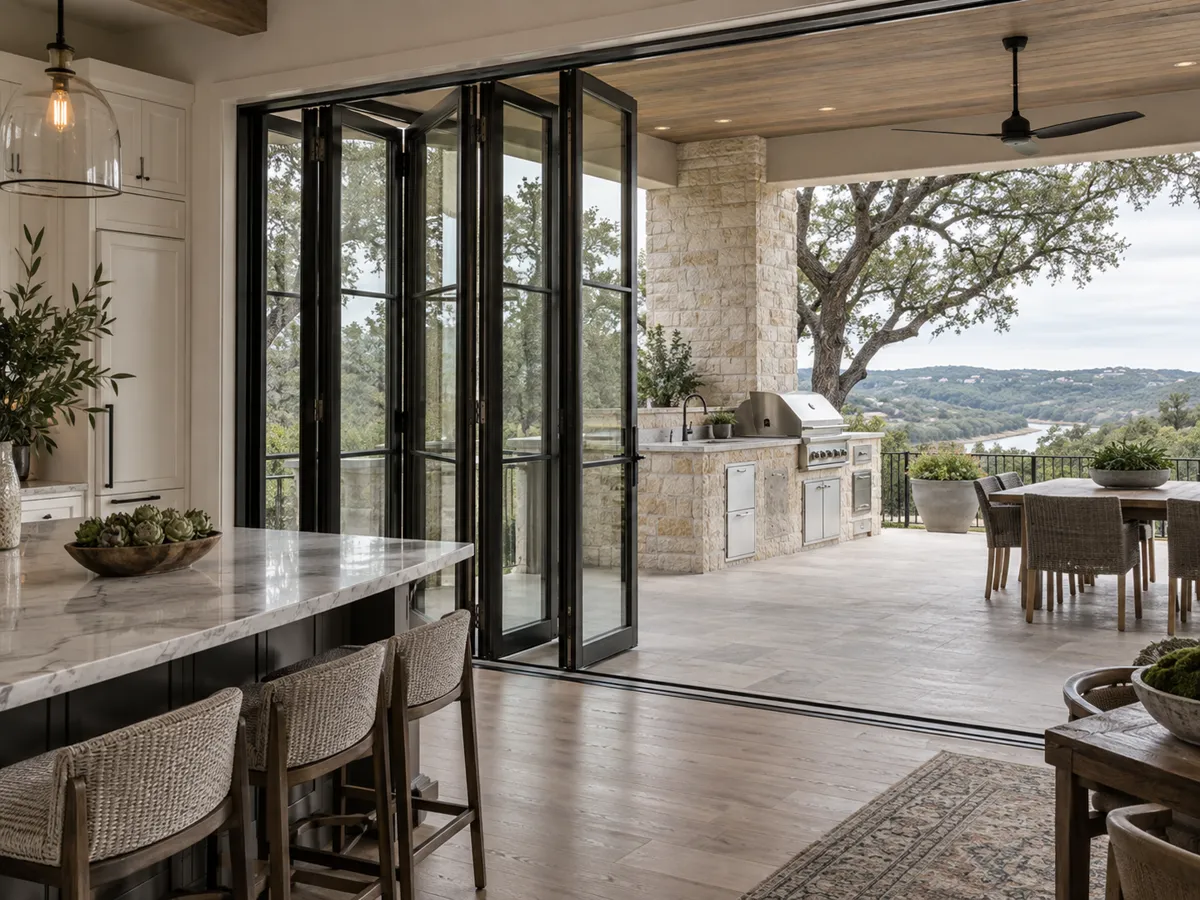
Austin Quality Windows handles window installation in West Lake Hills, TX, as a specialist Travis County glazing crew, specializing in view-facing glass walls, steel window packages and low-reflectance insulated glass. We offer wood-clad windows and multi-slide door walls.
- Free in-home measure
- Elevations you approve
- Installed to manufacturer instructions
- One written price
Windows and glass in West Lake Hills
Our team provides glass selection read straight off the NFRC label, delivering bright rooms that stay comfortable under hard afternoon sun for both residential and commercial projects. Every opening is measured by our own installers, drawn up as elevations you approve, and flashed to the manufacturer's written instructions before a single unit is set.
From a glass sample handed to the city inspector ahead of install to the permit filed with the building official, our team handles every detail. Serving West Lake Hills, Rollingwood and Lost Creek, we check each job against the city code in force on the day we quote.
Why Austin Quality Windows
How We Work
No handoffs between a salesperson, a measurer and a subcontracted crew. The crew that measures your openings installs the windows.
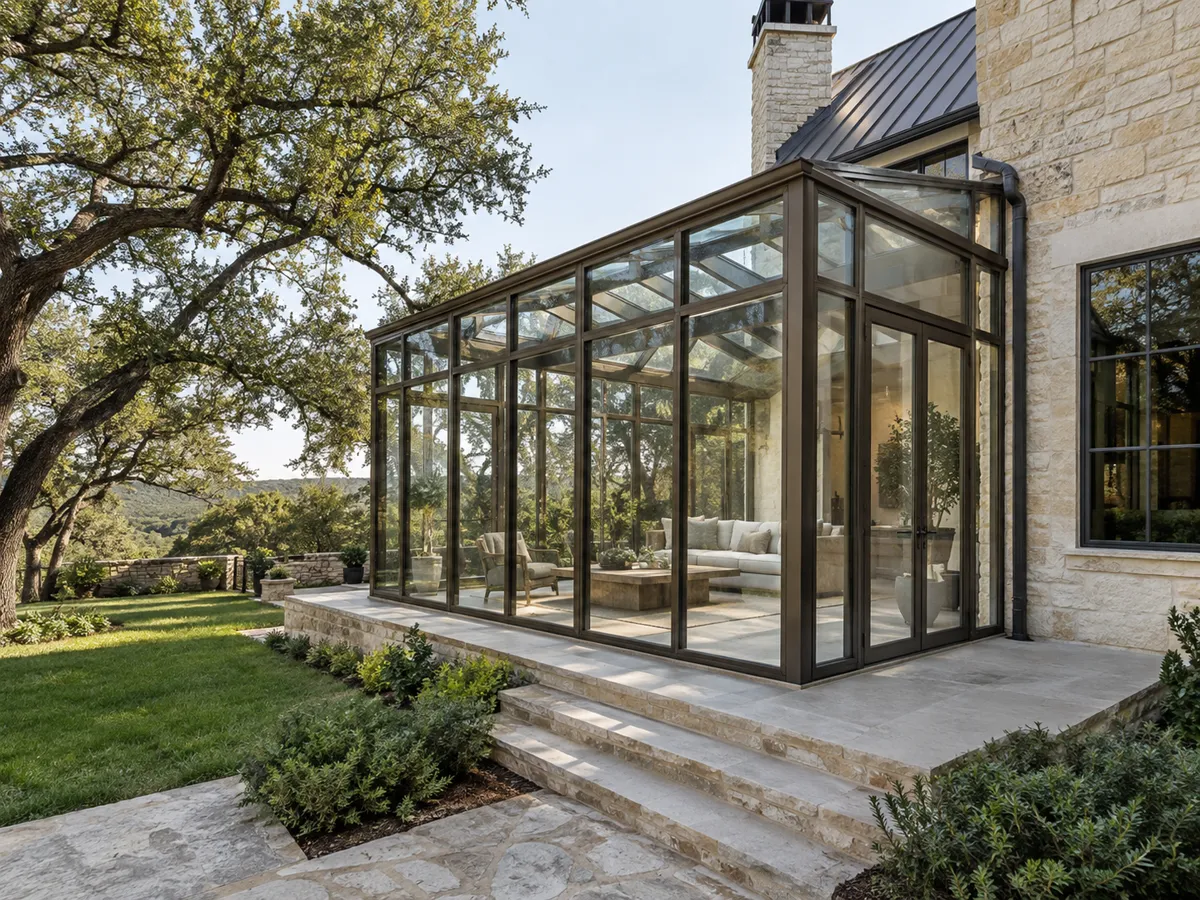
West Lake Hills Draws the Line at 20 Percent Reflective Glass
West Lake Hills writes glass reflectivity into its code. Section 22.03.013 says glass with a reflectivity factor of 20 percent or greater, which the code calls mirrored glass, shall not be used on any structure. The same section prohibits glass that throws reflective glare or heat onto city streets or past your property lines.
That rule decides the coating on any view wall that faces a neighbour or the road. We check the reflectance of the proposed glass against the 20 percent line at the quote, not at the inspection, so a heat-control choice never turns into a code problem after it is installed.
The code also lets the city inspector ask for a sample of reflective or shiny exterior material before it goes in. We plan for that: the glass make-up is chosen early, a sample can be ready if the inspector wants one, and nothing is ordered until the choice is settled.
Why it matters after the job, too
Material installed after August 31, 2005 and later judged in violation must be dulled, painted or removed. On a wall of fixed glass that is not a small correction, so we would rather get the reflectance right on paper first.
The 2021 Energy Code and a 0.40 U-Factor on Every New Unit
West Lake Hills has adopted the 2021 International Residential Code and the 2021 International Energy Conservation Code, under Ordinance 2026-010, adopted June 24, 2026. The city's amended table keeps the Climate Zone 2 fenestration U-factor at 0.40. That is ahead of the Texas floor, which still points to the energy chapter of the 2015 residential code.
U-factor measures how well the whole assembly insulates, and lower is better. It is one of four numbers on the performance label from the National Fenestration Rating Council, alongside solar heat gain coefficient, visible transmittance and air leakage. A lower solar heat gain coefficient means less of the sun's heat comes through; visible transmittance tells you how much daylight you keep.
We quote from those labels, never from a brochure. Under the Texas compliance guide for the 2015 code, a unit without an NFRC label is assigned a default U-factor and SHGC, which is rarely a number anyone wants on a permit. So every unit we propose for a West Lake Hills house carries its label, and we read the current city table again at quote time, because the ordinance that set these numbers is only months old.
A Permit for Any Alteration, Filed Before Work Starts
The city rewrote the permit section of the residential code in its own words. Anyone who intends to construct, enlarge, alter, repair, move or demolish a building must apply to the building official and hold the permit first. New glass in an existing opening is an alteration, and widening that opening for a door wall is an enlargement.
There is a second clause worth knowing. If the owner does the work personally, the owner must prove to the building official that they own the house and live in it as their homestead. When we do the work, we pull the permit, so that proof is not your problem.
- We confirm the permit scope from the measure and the elevations.
- We file before any opening is touched.
- We keep the glass specification on hand for the reflectivity and U-factor questions.
Hillside Houses, View Walls and the West Sun
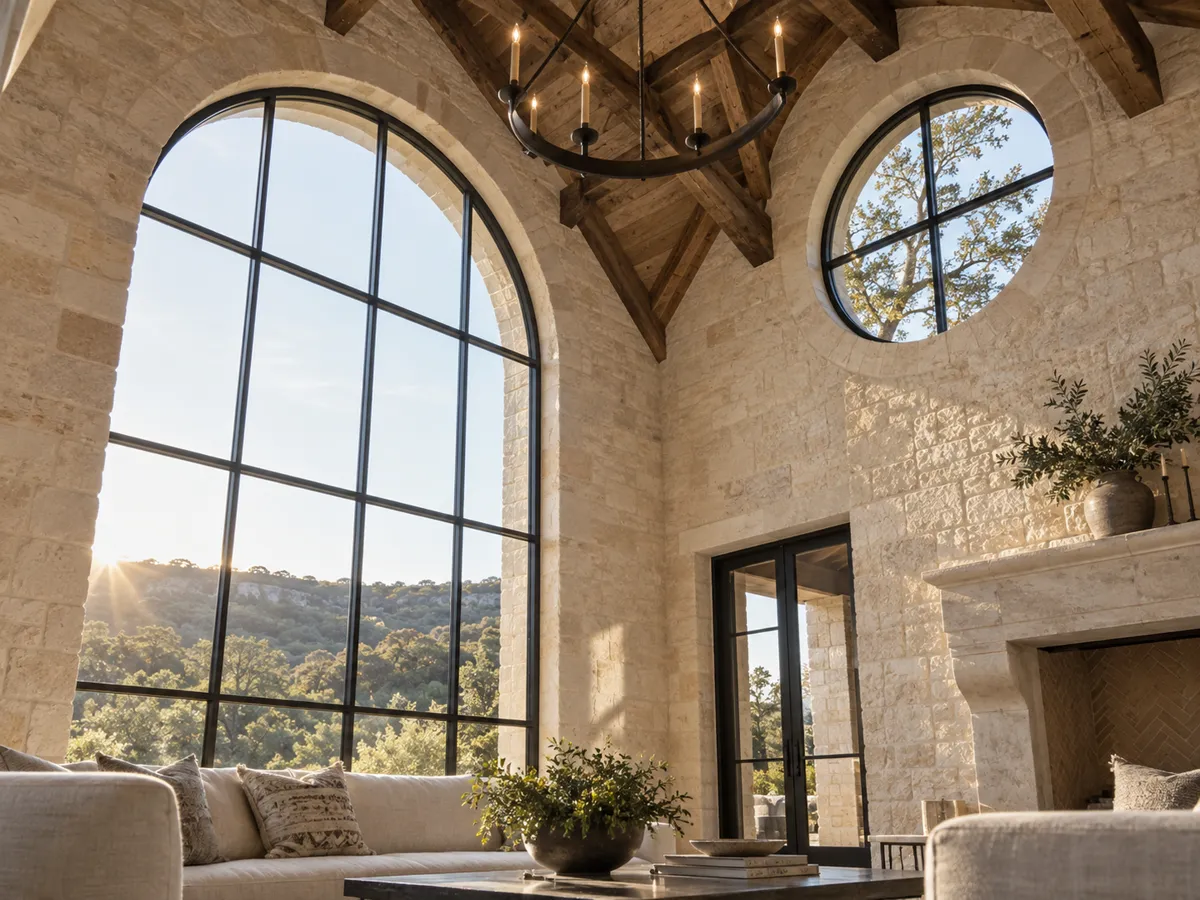
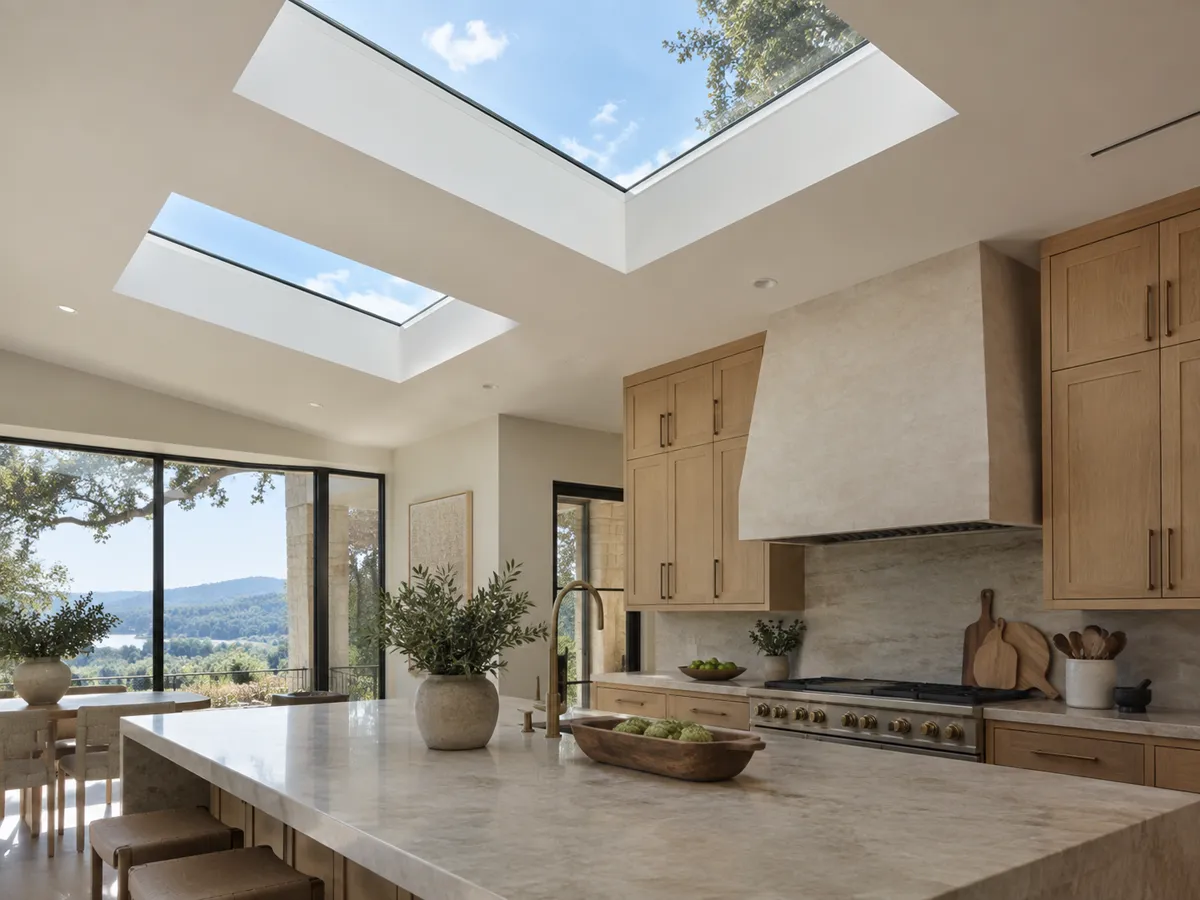
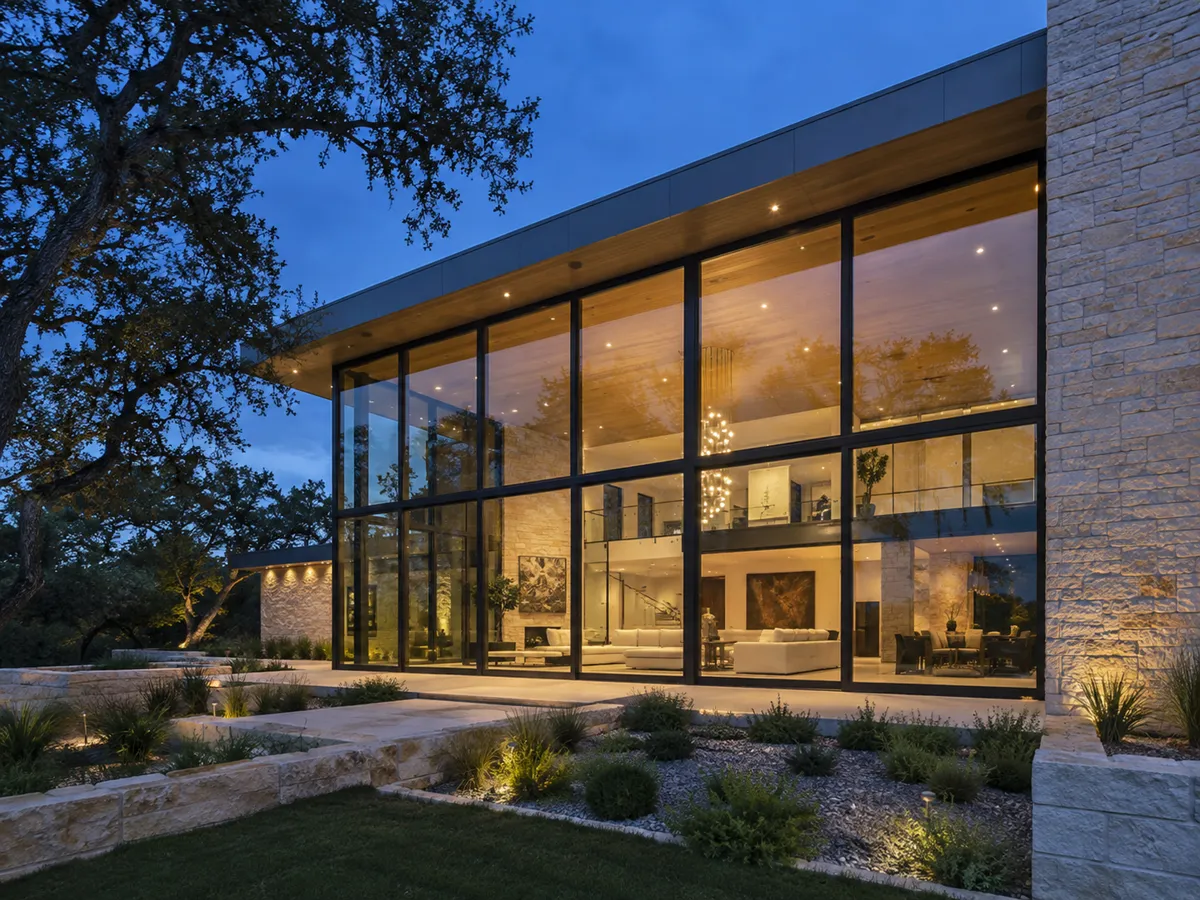
West Lake Hills sits in the hills west of central Austin at about 863 feet, and it developed rapidly in the 1970s and 1980s, especially south of the Colorado River. That gives the city two kinds of job. A house from that building wave may still have the units it was built with, and the conversation is about new openings, sightlines and a better glass package. A newer house on the next lot may already be a wall of glass facing a view, and the question is how to keep that glass comfortable.
Where the glass faces west, the glass package does most of the work. A low-E coating keeps radiant heat on the side of the glass it came from while letting visible light through. In insulated glass the soft, silver-based coatings sit sealed inside the unit, because they cannot live on an exposed surface. Argon between the panes cuts heat moving through the gap, and a laminated pane quiets a room near a busy road.
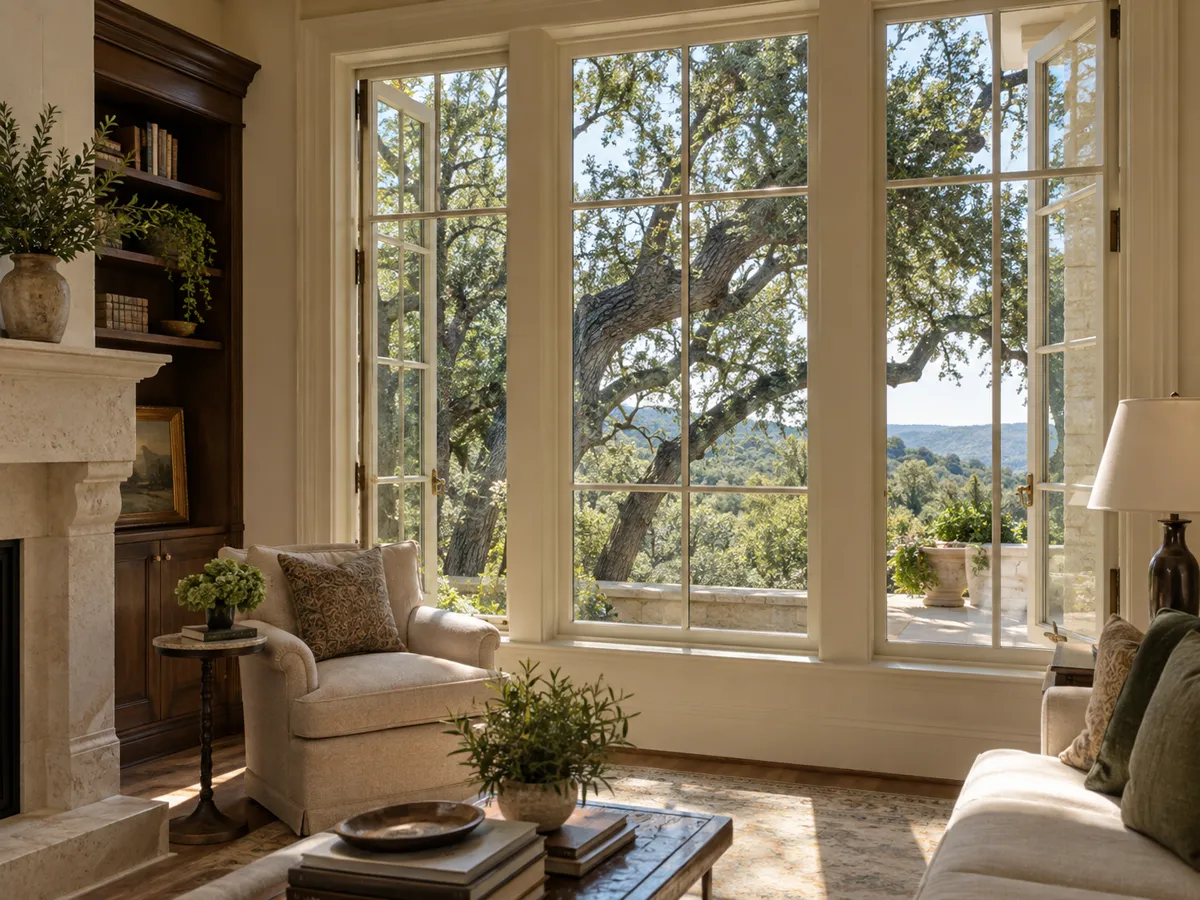
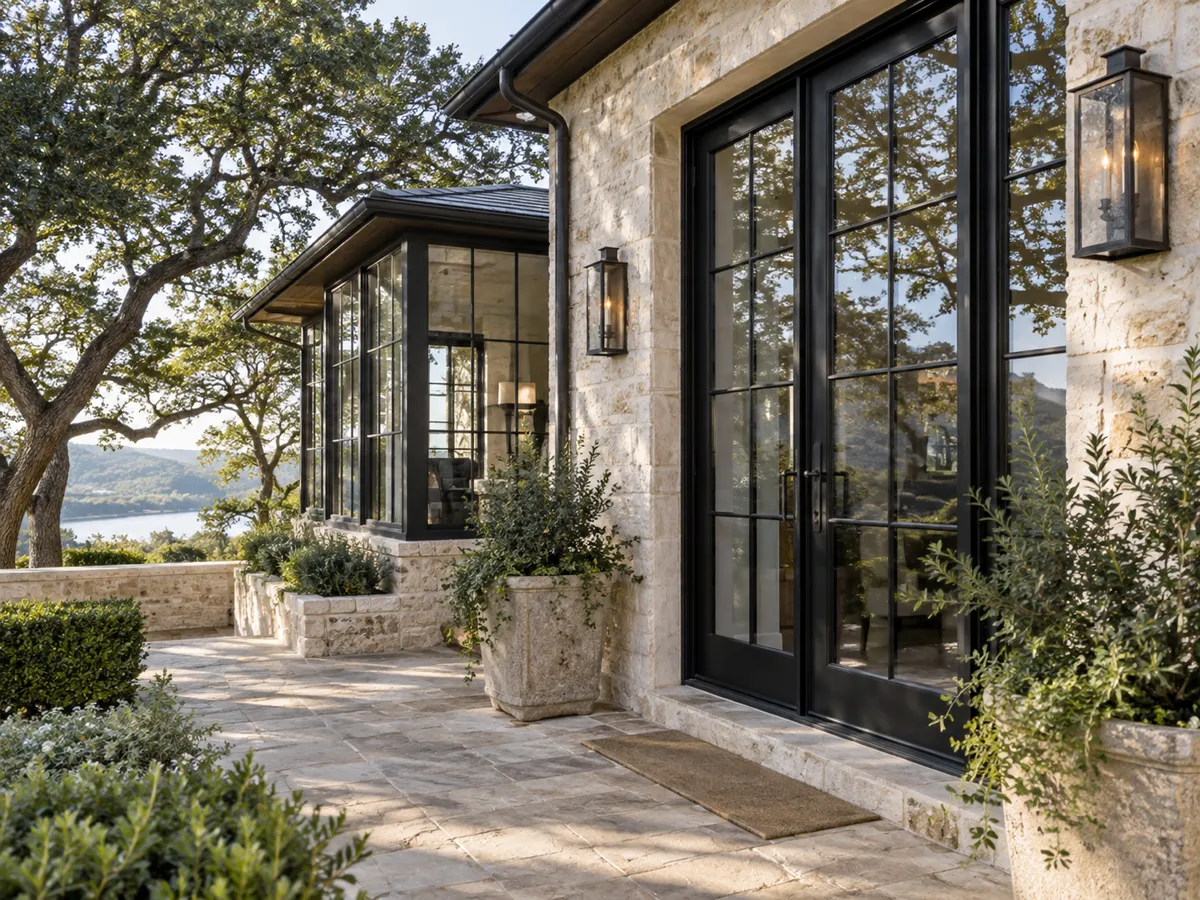
Frame choice follows the look you want. Steel is the choice when slim sightlines matter most. Wood-clad windows put wood inside the room and a cladding outside, and thermally broken aluminum carries large fixed lites. We lay those options against your elevations rather than hand you a catalogue.
What Drives the Cost of a West Lake Hills Glass Project
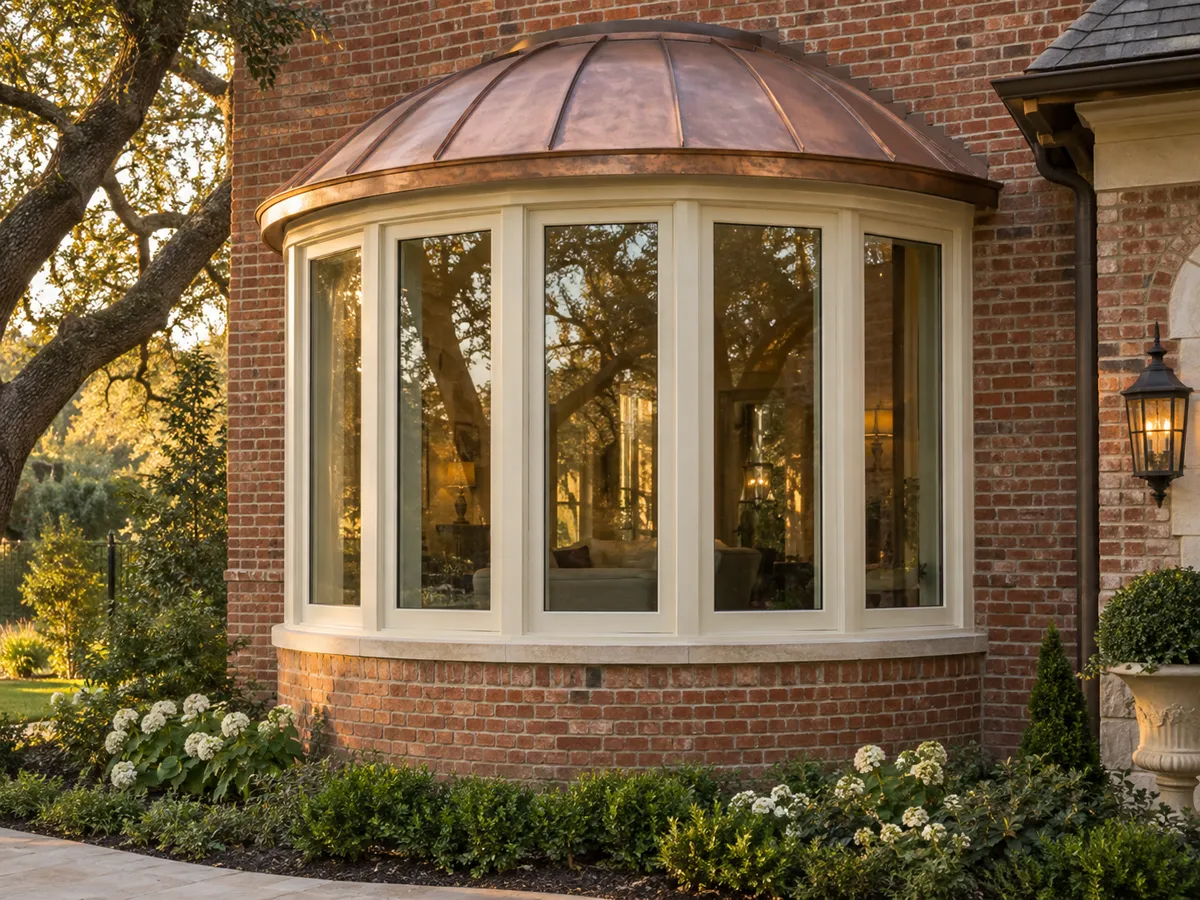
We do not publish prices, because two houses on one street can be different jobs. What moves the number is easy to name:
- The glass package. Dual or triple pane, the low-E coating and its solar heat gain, laminated glass for sound or security, tempered glass where the code calls for safety glazing, gas fill, and a reflectance low enough to pass the 20 percent rule.
- Frame material. Anything from vinyl or fiberglass to aluminum-clad wood, thermally broken aluminum or steel, and on the inside, the wood species and finish you pick.
- Size and count. Oversize units, operable versus fixed, and how many openings change at once.
- Structural work. A wider opening means a new header or beam, an engineer's letter for a long glass span, or a flush sill cut into a slab.
- Access. A hillside lot can need a lift or a crane, and a second-storey glass wall needs staging on a slope.
- Finish work. Removing the old units, interior and exterior trim, and stucco, stone or siding repair around the opening.
- Approvals. The city permit, and HOA architectural approval where a subdivision has one.
The way to a real number is the free in-home measure. We look at every opening, the wall it sits in and the ground a crane would stand on, then quote in writing.
How the Job Runs, From Measure to Water Test
The crew that measures your openings is the crew that installs them. We record the rough openings, check for level and square, and note anything behind the trim that needs attention.
Next come elevations and, for a glass wall or door wall, shop drawings. You and your architect approve those before we order, and we build to the drawings rather than redesign them. A custom builder gets rough opening sizes early and a sequence that fits framing and the roofer.
On install day each opening gets a sill pan beneath it and head flashing above, installed to the manufacturer's written instructions, because flashing laid in the wrong order can steer water into the wall instead of away from it. We water-test the opening before the trim goes back on, then finish inside and out. You get a written warranty with the job.
The process
From First Measure to Finished Openings
Four steps, and nothing is ordered until you have signed off on the drawings and the price.
Free in-home measure
We measure every opening, check the framing and the header, and talk through glass, frame material and how each window should operate.
Elevations and a written price
You get drawings of every unit for your approval and for any HOA or historic review, with one written price.
Ordered to your sizes
Units are ordered to the approved sizes and glass package, and checked against the drawings when they arrive.
Installed and water tested
Old units out, openings flashed, new units set, sealed and water tested, then trim and cleanup.
Windows, Doors and Glass We Install
Questions
West Lake Hills: Window Questions
Can I use reflective solar glass on my West Lake Hills house?
Only below the city line. Section 22.03.013 bars glass with a reflectivity factor of 20 percent or greater, and glass that throws glare past your property lines. We choose a low-E package that controls heat without reading as a mirror, and we can supply a sample if the inspector asks.
Do I need a permit for new windows in West Lake Hills?
Yes. The city requires a permit before anyone alters, repairs or enlarges a building, and new glass is an alteration. We file it for you once the measure and elevations are done.
What drives the price of a West Lake Hills project?
The glass package, the frame material, the size and number of openings, any header or beam work, access on a sloping lot, and the trim and exterior repair around each opening. The free in-home measure turns those into a written quote.
How long from order to install?
It depends on the manufacturer and the glass you choose. We give you the date in writing with the quote, and we do not promise one before the order is placed.
Which glass handles west-facing sun best?
Look at the solar heat gain coefficient on the NFRC label: lower means less of the sun's heat gets through. A low-E coating does that job while keeping daylight, and in West Lake Hills the coating also has to stay under the reflectivity limit.
How long will my house be open?
We work opening by opening and close each one back up as soon as it can be. A widened opening with new header work stays open longer, and we tell you which rooms are affected before we start.
Do you cover my part of West Lake Hills?
Yes, the whole city, plus Rollingwood, Lost Creek and Barton Creek nearby. Your opening is measured by the same crew that will install it, wherever in West Lake Hills the house sits.
What happens at the free measure?
We measure every opening you are considering, look at the wall and the access, talk through glass and frame choices against the city rules, and follow up with elevations and a written quote.
Talk to us about windows in West Lake Hills
Free in-home measure across Austin and the west side. We call you back to set a time.
Calls only, we do not receive text messages.