
Rollingwood · Barton Creek · West Lake Hills · Tarrytown
Window Installation in Sunset Valley, Permitted and Bird-Aware
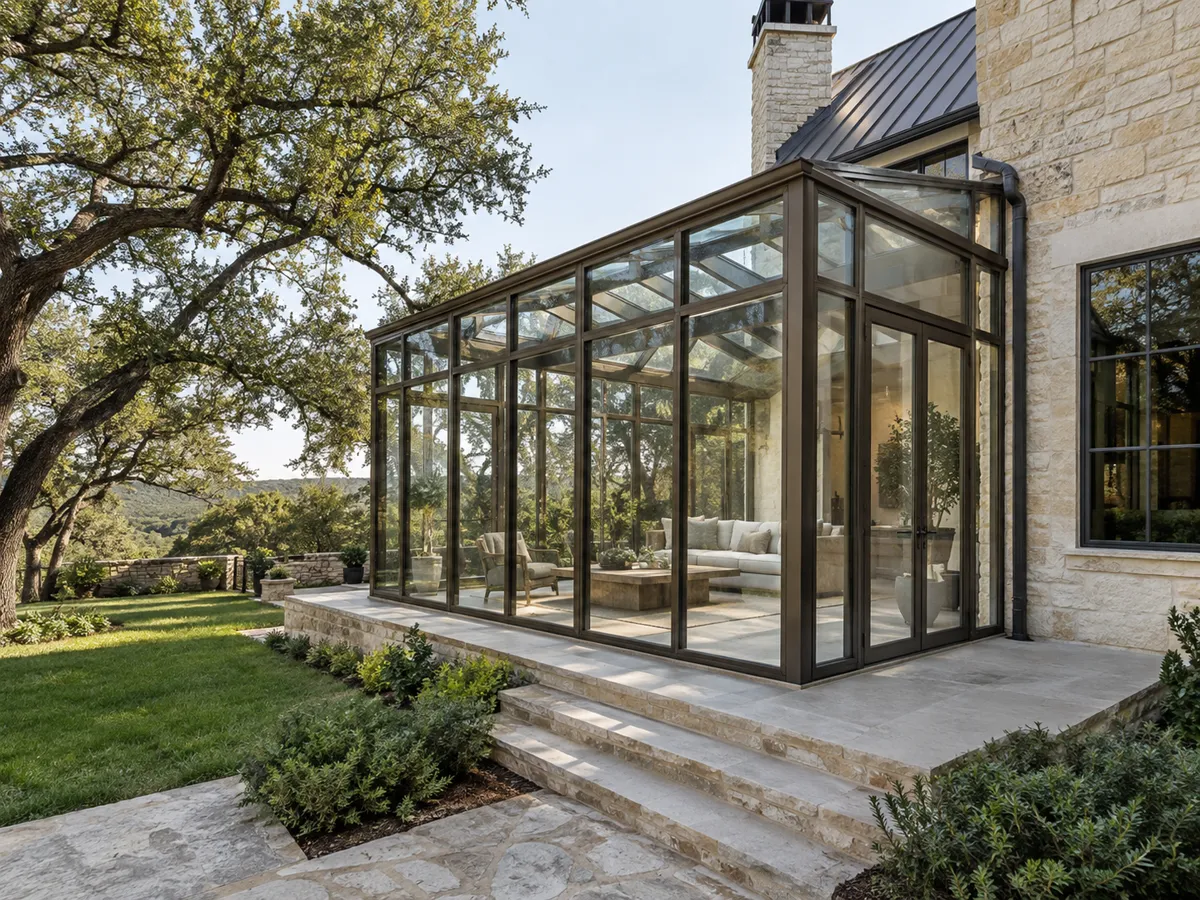
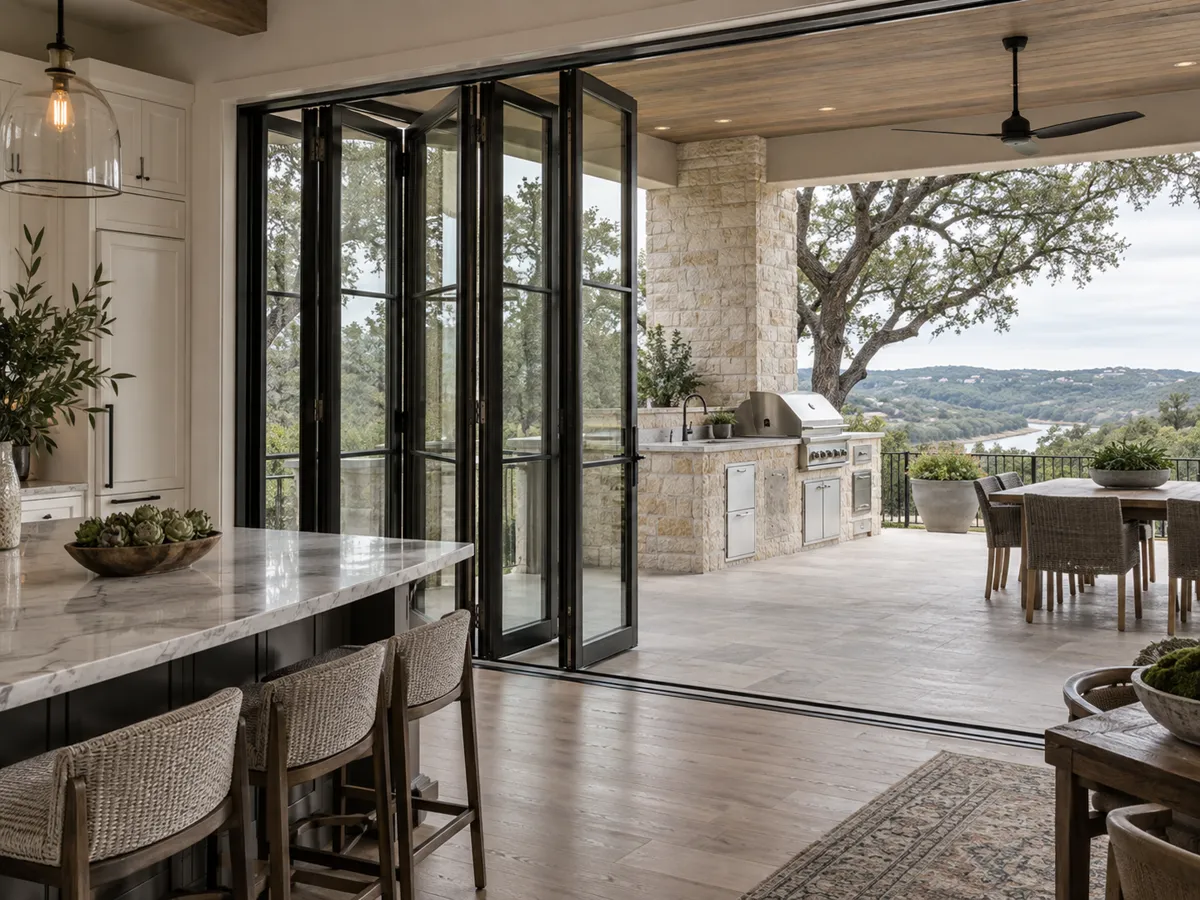
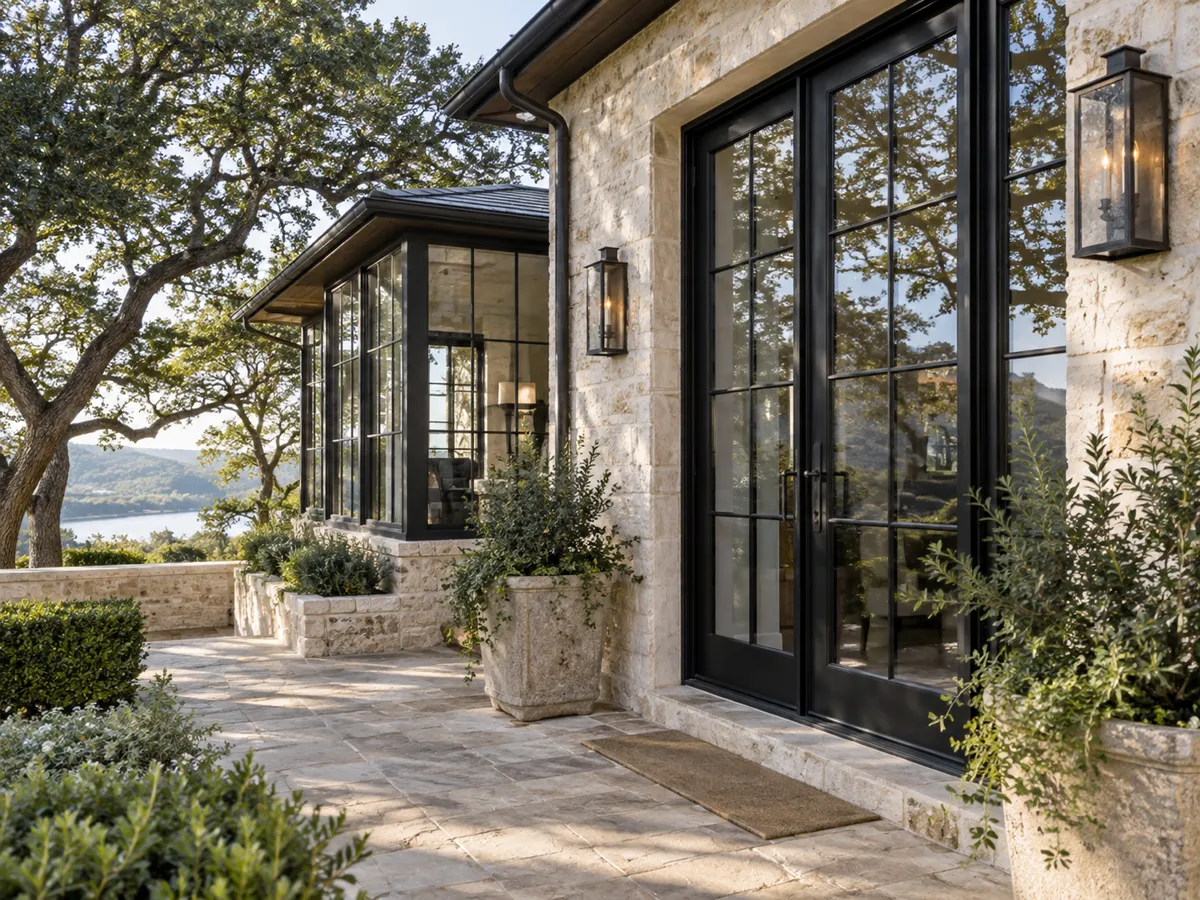
Austin Quality Windows is a trusted Travis County specialist in window installation in Sunset Valley, TX, specializing in bird-visible fritted glass for large picture windows, glass corners set with patterned panes, and steel or clad-wood frames sized to each opening. We offer floor-to-ceiling glass walls and multi-slide door walls.
- Free in-home measure
- Elevations you approve
- Installed to manufacturer instructions
- One written price
Windows and glass in Sunset Valley
Our team provides the permit paperwork and an NFRC label check against the energy code, delivering cooler, quieter rooms for homes and code-ready glazing for both residential and commercial projects. Every opening is measured by the same crew that installs it, and we water-test each new window before the interior trim goes back on.
From exterior screens and closely spaced frit dots that let a passing bird see the pane to a full rear wall of new glass facing greenspace, our team handles every detail. Serving Sunset Valley, Barton Creek and Rollingwood, we check each job against the city's current permit rules when we quote it.
Why Austin Quality Windows
How We Work
No handoffs between a salesperson, a measurer and a subcontracted crew. The crew that measures your openings installs the windows.
A Permit for New Glass in a Small City Ringed by Austin
Sunset Valley is its own city, about five miles southwest of downtown Austin and surrounded on every side by the City of Austin. It incorporated on September 13, 1954, after brothers M.H. and Clarence Flournoy laid out the subdivision in the early 1950s. Because it is a separate city, the window job here answers to Sunset Valley's rules, not Austin's.
The city's permit FAQ is broad. A permit is required to erect, construct, enlarge, alter, repair, improve, remove, convert, move or demolish any building or structure in its zoning jurisdiction. The exempt list is cosmetic: painting, papering, tiling, carpeting, cabinets, counter tops, similar finish work and minor repairs. Windows are not on it.
- What that means for you: we treat a change of windows, a widened opening or a new door wall as permitted work and confirm the requirement with the city when we quote.
- The clock: a Sunset Valley permit expires on the 181st day if the work has not had an inspection, so we schedule the install before we let the permit sit.
- The finish: once permitted work is complete, the city requires a final inspection.
We prepare the window schedule and the product sheets that go with the application, so the city sees exactly which units go into which openings.
Glass Corners, Picture Windows and Sunset Valley's Birds
Few cities write about glass the way Sunset Valley does. Its bird page says birds do not recognize glass as a solid barrier: they fly at reflected trees and sky, or at vegetation they can see straight through a pane. It names glass corners and large picture windows as collision risks, points to spring and fall migration through Central Texas, and notes the city's more than 270 acres of greenspace. The city even hands out free bird-window decals to residents.
The guidance is voluntary. We found no ordinance requiring bird-safe glass here, and we will not tell you one exists. What we do is price it as an option on any big pane, because it is far easier to build visibility into new glass than to add it later.
What actually works, from the research
- Fritted or patterned glass: ceramic dots or a pattern fired into the pane make it visible to a bird while you still see out.
- Treat the outside: the city and the research agree that exterior treatments beat interior ones, because they break the reflection before a bird reaches it.
- Close spacing: marks spaced no more than 5 cm apart horizontally or 10 cm vertically, not one or two decals on a large pane.
- Exterior screens: a screen makes glass more visible and gives a physical buffer.
Ultraviolet-only patterns are no longer recommended, since not every species sees ultraviolet light. Fall migration is the worse season, because so many young birds are flying it for the first time.
Heat, Sun and the Energy Code Numbers Behind the Glass
The Sunset Valley code text on file adopts the 2015 International Residential Code and the 2015 International Energy Conservation Code, though the posted code notes it may not reflect the latest legislation. Under the 2015 IECC, Travis County sits in Climate Zone 2, where the prescriptive limits are a window U-factor of 0.40, a skylight U-factor of 0.65 and a solar heat gain coefficient of 0.25. The Texas energy code guide from SPEER says that table applies to additions, alterations and new units set into existing walls, not only to new houses.
Those numbers must come from an NFRC rating on a label the manufacturer applies. A unit with no label gets assigned a default U-factor and SHGC, which is a poor start for any inspection, so every unit we order carries its label.
- SHGC: the fraction of the sun's energy that gets through the whole window, from 0 to 1. Lower means less heat on a west wall.
- Low-E coatings: they reflect infrared heat back toward its source while letting visible light pass. Silver-based soft coats have to live sealed inside an insulated glass unit.
- Gas fill: argon conducts heat at about two thirds the rate of air, which is why it is the standard fill between panes.
We confirm the edition in force at quote time, then match the glass to it.
What Drives the Cost of a Sunset Valley Window Project
We publish no per-window number, because two openings in the same house can differ more than two houses on the same street. The price follows these drivers.
- The glass package: dual or triple pane, the low-E coating and the solar heat gain it allows, laminated glass for sound or security, tempered glass where the code calls for safety glazing, tint, gas fill, and fritted or patterned bird-visible glass on a large pane.
- Frame material: a vinyl or fiberglass frame prices differently from aluminum-clad wood, thermally broken aluminum or steel, and a stained interior wood adds its own line.
- Opening size and count: standard or oversize units, custom shapes, operable versus fixed, and how many openings change at once.
- Structural work: a new header or beam where an opening grows, an engineer's letter for a wide glass wall or door wall, and a flush sill cut into the slab.
- Access: a tight side yard, staging on a slope, or a lift for a second-storey pane.
- Removal and finish work: taking out the old units, interior and exterior trim, and patching stucco, stone or siding around the opening.
- Paperwork: the city permit, and any HOA architectural approval your street carries.
It all starts with a free in-home measure, where we price the house in front of us rather than an average one.
How a Sunset Valley Job Runs, Opening by Opening
A good window job is mostly decided before the glass is ordered. Ours runs in the same order on every house.
- Measure: the crew that will install the windows measures each rough opening and notes the wall, the sill and the sun it faces.
- Drawings: you approve elevations and a window schedule before anything is ordered, including which panes get frit.
- Permit: we file with the city and plan the install so an inspection lands well inside the permit's life.
- Install: sill pans and flashing go in to the manufacturer's written instructions, the unit is set, shimmed and sealed.
- Water test: we water-test the opening before trim covers the flashing.
- Final inspection and warranty: the city's final inspection, then your written warranty.
One crew owns the job from the measure to the water test, so there is nobody to blame a wrong size on.
The process
From First Measure to Finished Openings
Four steps, and nothing is ordered until you have signed off on the drawings and the price.
Free in-home measure
We measure every opening, check the framing and the header, and talk through glass, frame material and how each window should operate.
Elevations and a written price
You get drawings of every unit for your approval and for any HOA or historic review, with one written price.
Ordered to your sizes
Units are ordered to the approved sizes and glass package, and checked against the drawings when they arrive.
Installed and water tested
Old units out, openings flashed, new units set, sealed and water tested, then trim and cleanup.
Windows, Doors and Glass We Install
Service area
Nearby Areas We Cover
Questions
Sunset Valley: Window Questions
Do I need a permit to change windows in Sunset Valley?
Sunset Valley requires a permit to alter or improve a building, and its exempt list covers cosmetic finish work, not windows. We treat window work as permitted, confirm it with the city when we quote, and file the application with the window schedule attached.
Is bird-safe glass required by the city?
No ordinance requiring it was found. The city's guidance is voluntary: it names glass corners and large picture windows as collision risks and gives residents free decals. We offer fritted or patterned glass as an option on large panes, and you decide.
What drives the price of a window project here?
The glass package, the frame material, the size and number of openings, any header or structural work, access, removal and trim, and the permit. We give you a written price after a free in-home measure.
How long from order to install?
It depends on the manufacturer and the glass, and bird-visible or laminated glass can change it. We give you the date in writing with the quote.
What glass handles a west-facing wall in Sunset Valley?
Look for a low solar heat gain coefficient on the NFRC label. Under the 2015 code Travis County's limit is 0.25, and a low-E coating inside an insulated unit is how a pane gets there while still letting light in.
How long will my house be open during the install?
It depends on how many openings change and whether any need a new header. Swapping a unit in an existing opening is a far shorter disruption than widening a wall for a door wall. We walk you through it room by room, in writing, before we start.
Do you offer a warranty?
Yes, every job comes with a written warranty, handed to you after the final inspection.
What happens at the free measure?
We measure every opening you want changed, look at the sun, the wall material and any glass corner, talk through bird-visible glass if the pane is large, and then send a written quote.
Talk to us about windows in Sunset Valley
Free in-home measure across Austin and the west side. We call you back to set a time.
Calls only, we do not receive text messages.