Fixed glass, not a door wall
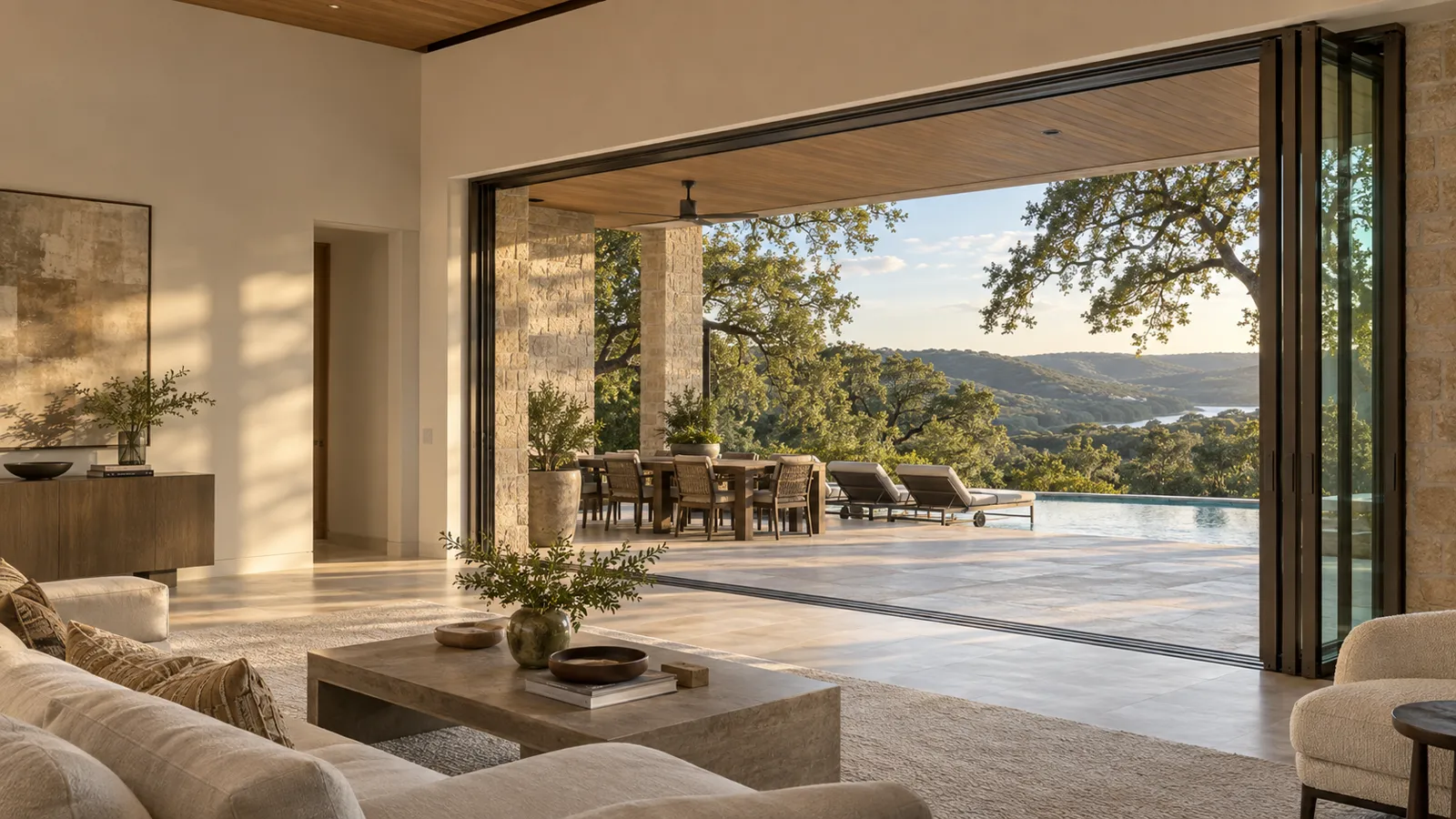
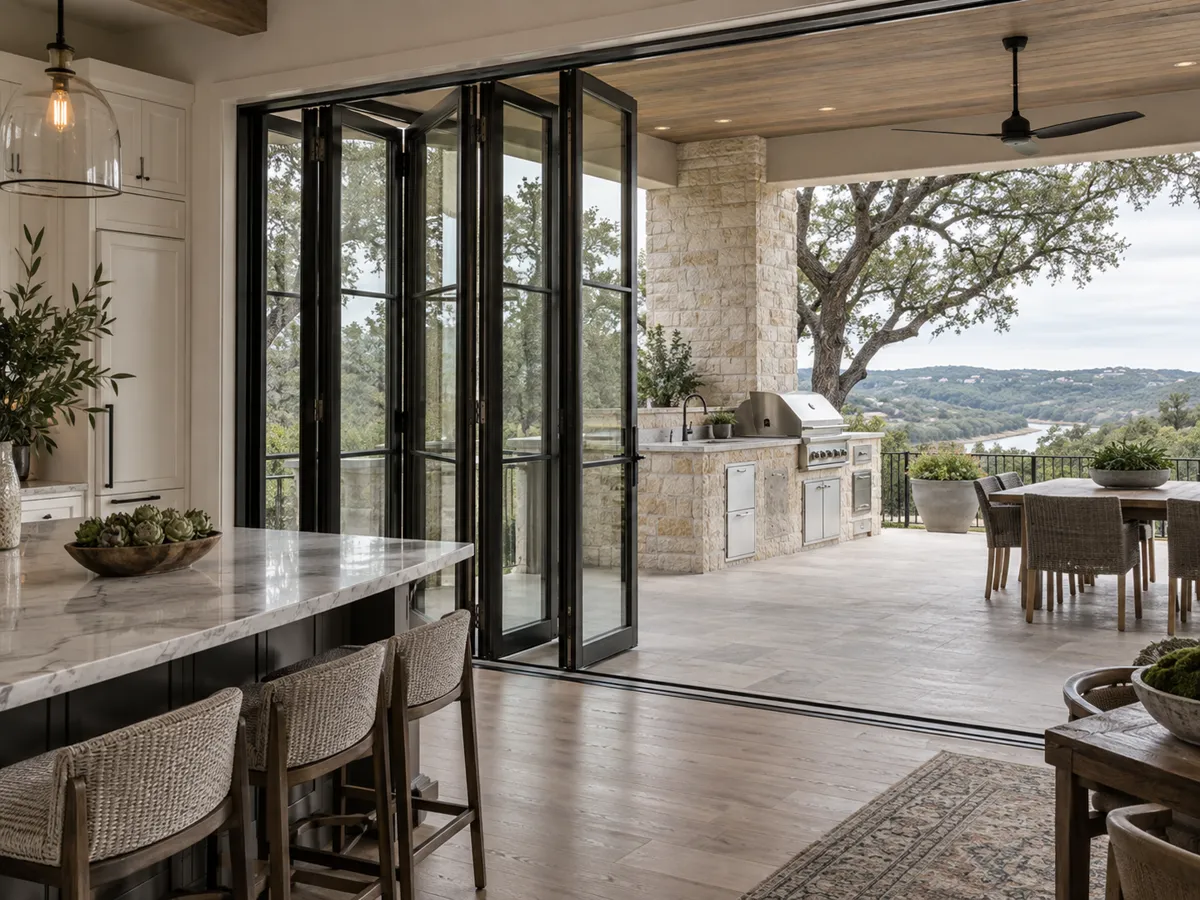
This page is about glass that stays put. Panels that slide, pocket or fold away make a door wall, with its own track, sill and drainage. Many rooms pair a fixed view wall with a door wall on the terrace.
Austin Quality Windows plans and installs floor-to-ceiling windows in Austin, TX, and is Travis County's specialist in fixed architectural glazing, specializing in window walls, oversized picture windows and structural header work over wide openings. We offer insulated low-E glass units and laminated safety glass.
Our team provides a full glass package matched to each elevation, delivering clear, uninterrupted views for homeowners and a crisp, even facade for both residential and commercial projects. The same crew that measures every rough opening sets the glass, and we install and flash each frame to the manufacturer's written instructions before a hose test at the sill.
From squaring a new header over the full width of the opening to sealing the last mullion cap, our team handles every detail. Serving Austin, West Lake Hills, Rollingwood and Barton Creek, we build glass walls for view lots where the afternoon sun is part of the design brief.
Why Austin Quality Windows
No handoffs between a salesperson, a measurer and a subcontracted crew. The crew that measures your openings installs the windows.
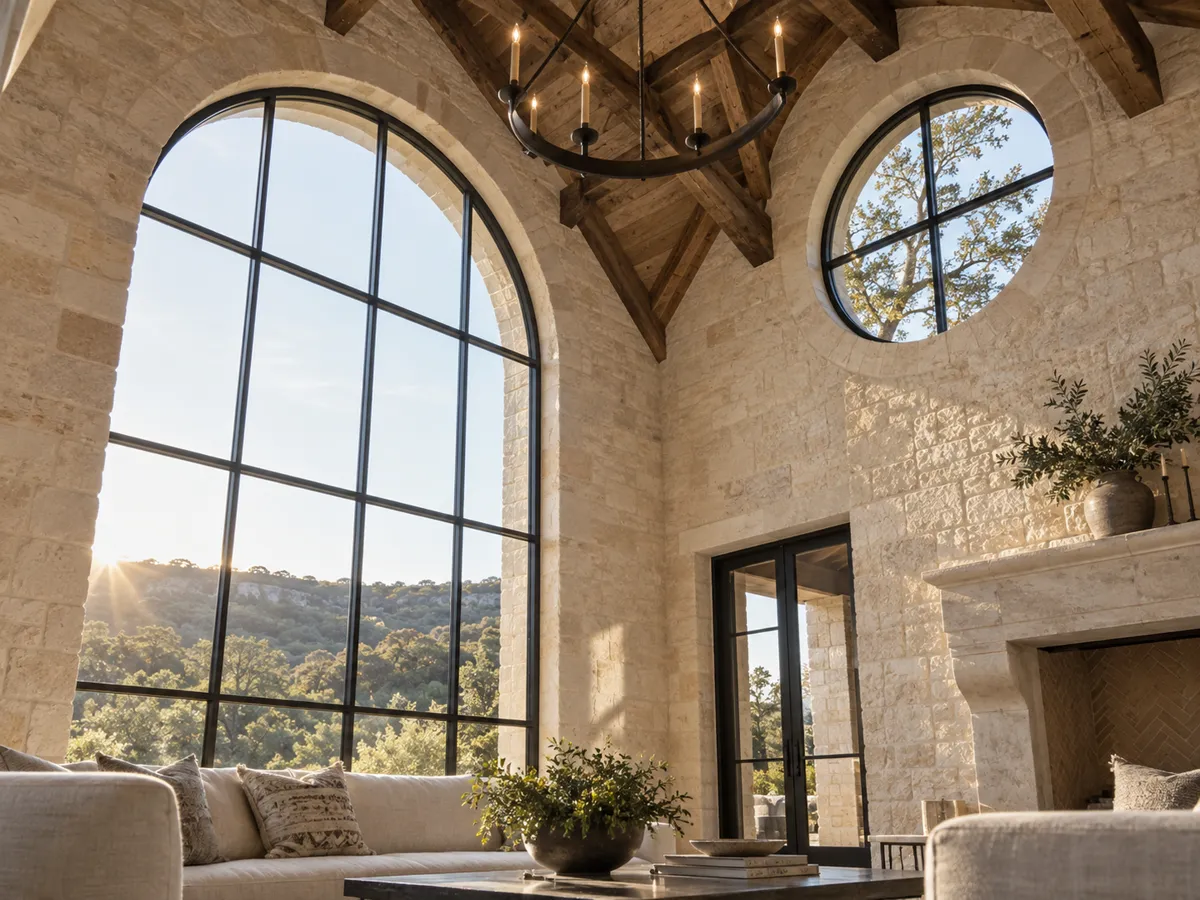
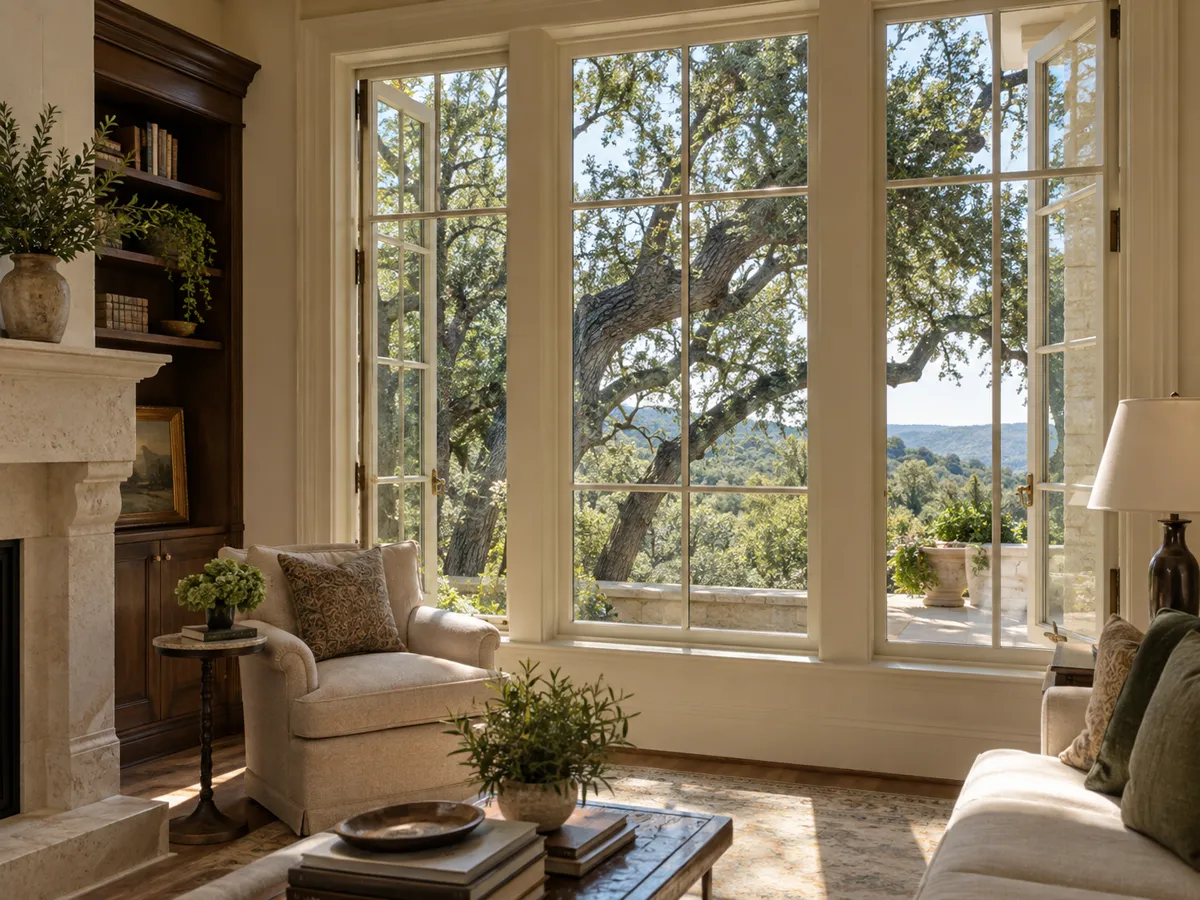
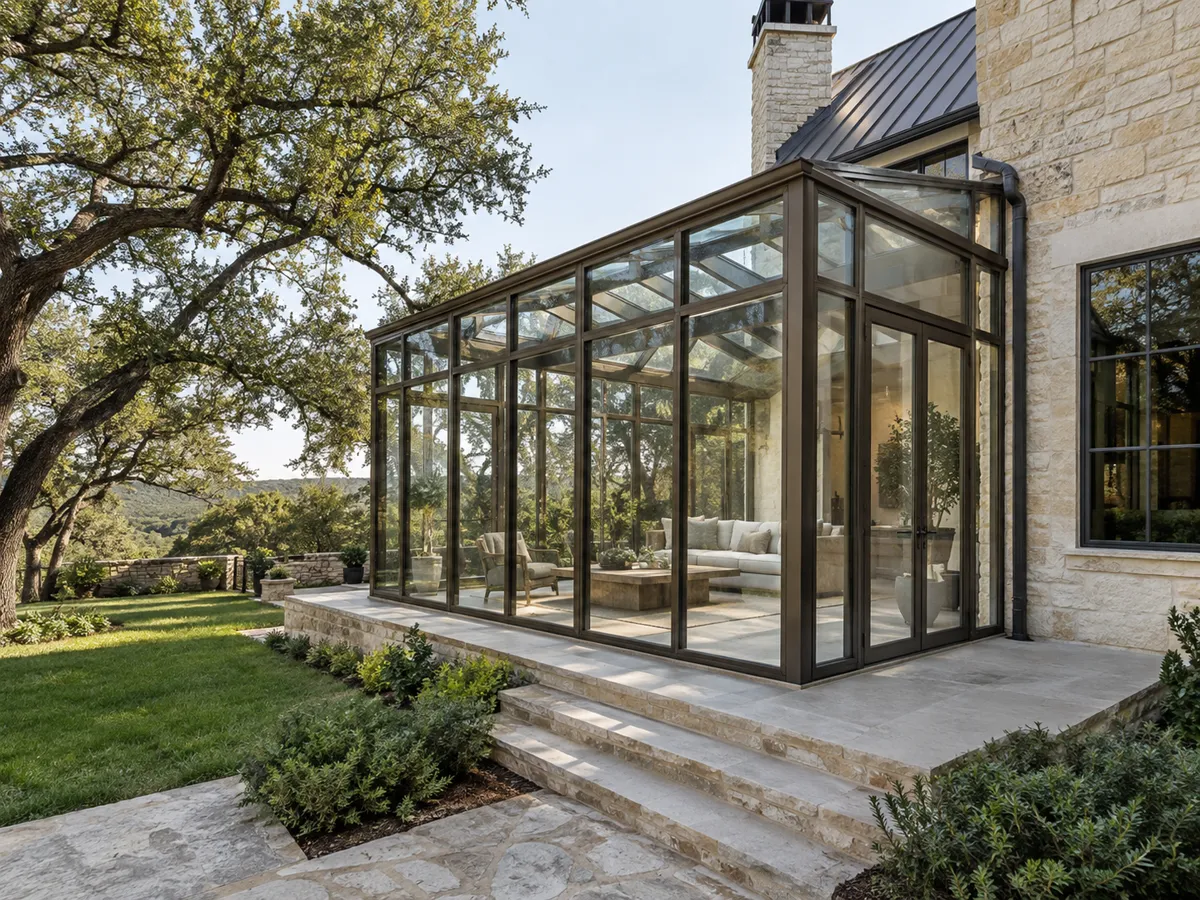
A glass wall is a run of fixed glazing that reaches from the finished floor to the ceiling line. Nothing on it opens. A fixed window is one that cannot be opened and whose job is to let light in, and a picture window is a large fixed unit with no glazing bars, or only light ones near the edge. Put several of those side by side, joined by slim vertical mullions, and you have a window wall.
This page is about glass that stays put. Panels that slide, pocket or fold away make a door wall, with its own track, sill and drainage. Many rooms pair a fixed view wall with a door wall on the terrace.
A window wall carries no structural load beyond its own weight. It hands the wind load back to the house through its anchors at the floor, the head and the columns, so the framing matters as much as the glass.
A lintel, or header in a framed wall, is the beam that spans an opening and carries the load above it down to the posts on each side. Over an ordinary window it is a modest piece of lumber. Over a wall of glass it is the part of the job that decides whether the glass will sit happily for decades or crack at a corner the first hot summer.
Most glass wall jobs in older West Austin homes start as a wall with two or three windows. We remove the studs between them and replace the old headers with one continuous beam.
Glass does not bend. If a long header sags under the roof load, the frame beneath it is squeezed and the glass takes the stress at its edges, so we check the header before a frame goes in.
On new construction we work from the architect's elevations, confirm rough opening sizes with the builder before framing is complete, and return shop drawings for sign-off. We build to the drawings.
Depending on the span and what sits above it, the new beam over a glass wall may be engineered lumber or steel, and we ask for an engineer's letter before we cut. Once it is in, we check the finished header for level and flat and shim the head so the glazing pocket is true along its full length. We do not redesign the elevation to make that easier.
The mullions between the panes need the same care. On a two-storey wall they have to be stiff enough that the glass does not flex in a Hill Country storm gust.
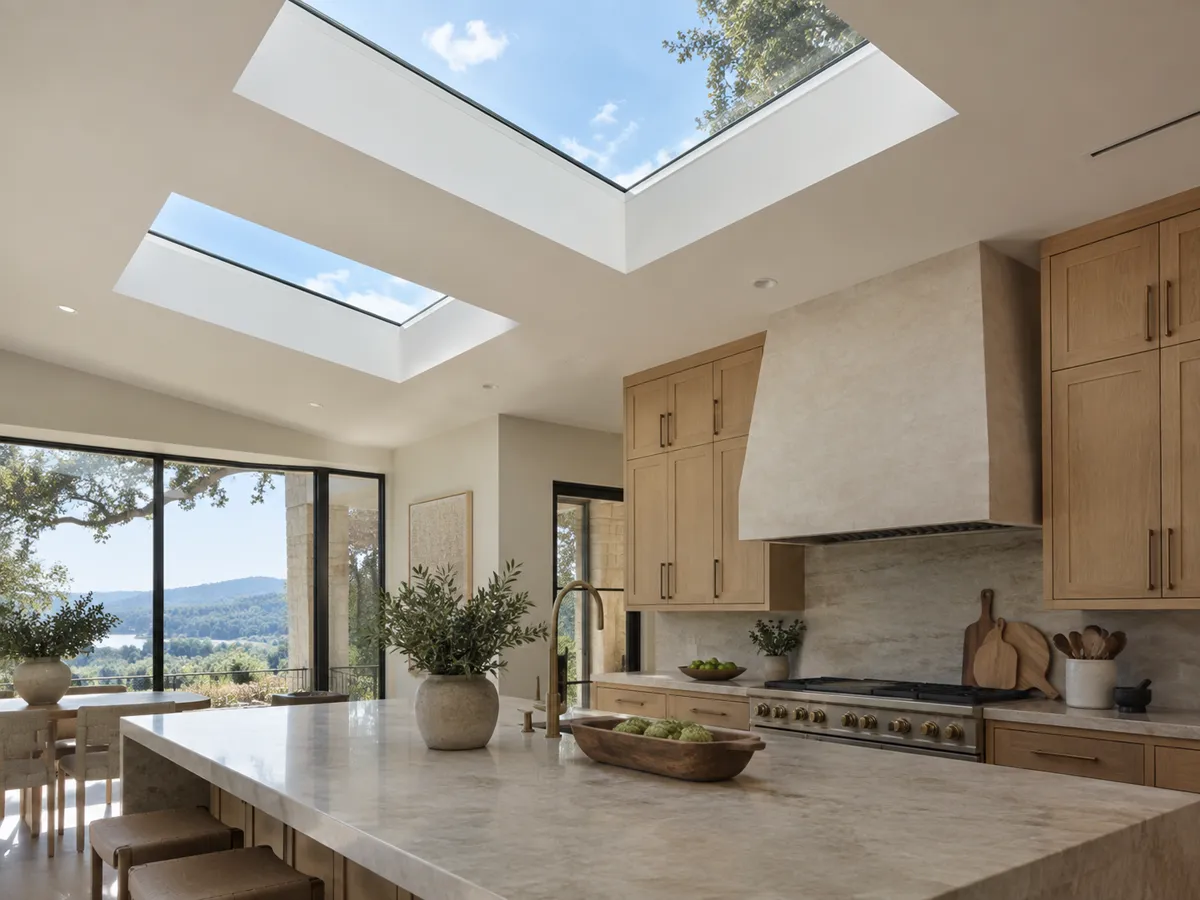
Austin reaches 90 degrees on about 123 days a year, and 29 of those reach 100. A glass wall facing west takes the lowest, hottest sun of the afternoon straight through, and a south wall takes it most of the day. Solar gain, the heat a space picks up as it absorbs sunlight, is the single biggest thing a large pane changes about a room.
The solar heat gain coefficient measures how much of the sun striking a window assembly passes through as heat, from 0 to 1. Lower means less heat, and Climate Zone 2 sets the limit at 0.25.
Every unit we specify carries an NFRC label rating U-factor, solar heat gain coefficient, visible transmittance and air leakage. The energy code takes U-factor and SHGC from that rating, and we read it with you.
A low-E coating reflects infrared heat while letting most visible light through. Several places we serve limit how shiny glass may be, so the heat control comes from a low-SHGC coating, not a mirrored film.
US building codes call for tempered or laminated glass in several places, including large windows, glass that runs close to floor level and glass near doors and stairs. A floor-to-ceiling wall meets most of those at once, so safety glazing is part of the design, not an upgrade.
Tempered glass is about four times stronger than ordinary annealed glass and breaks into small granular pieces rather than long shards. It cannot be cut or ground once tempered, so the measure has to be exact.
Laminated glass bonds a polymer interlayer between two panes, which holds the pieces together if the glass breaks. It also cuts outside noise, blocks almost all ultraviolet light and is hard to break through.
An insulated glass unit is two or more panes held apart by a sealed spacer. Argon in the gap conducts heat at about two thirds the rate of air, and a third pane adds insulation and weight.
Travis County sits in energy code Climate Zone 2, and the Texas guide to that code says its SHGC table applies to additions, alterations and replacement windows as well as new homes. In a hot, sunny climate a low SHGC matters more than a low U-factor. A unit without an NFRC label is assigned a default value instead of its rated one, which is one more reason we only order labelled units.
Reflectivity is the other constraint on a view wall:
An overhang, deep eave or porch roof above the wall does the rest of the shading, and your architect may already have one on the drawings. Beyond heat, the choice is about the room. For a bedroom wall facing a road or a gallery wall protecting art and floors from fading, laminated glass is worth the discussion. Tempered units are ordered to size, because a unit made an eighth of an inch too large cannot be trimmed on site. Triple glazing matters on a tall wall too, since every pane has to be carried in and set by hand or by lift.
We do not publish a price for glass walls, because no two are the same size, the same height or the same distance from the truck. Here is what moves the number, so the quote makes sense when you see it.
The first step is a free in-home measure. We look at the wall, the structure above it and the sun, then give you a written quote with every one of these items shown.
One crew owns the job from the first tape measurement to the final inspection of the sealant.
The work is covered by a written warranty, and you get the manufacturer's paperwork for every unit.
The rules for a glass wall change at every city line, and we check the job against the current rule when we quote it.
West Lake Hills enforces the 2021 residential and energy codes, holds windows to a 0.40 U-factor in its own amended table, and requires a permit for any alteration. Its reflectivity limit shapes the coating.
Rollingwood permits window work, and an exterior change such as a new glass wall opening brings mailed notice to owners within 250 feet and a wait before plan review. We build that into the schedule.
In Barton Creek, the POA reviews window specifications, material and colour, bars builder-grade units and prohibits mirrored glass. We prepare the submittal with you before anything is ordered, so approval comes first.
Inside the city, a landmark or local historic district house goes through historic review before street-facing openings change, and visible historic openings are not enlarged. A glass wall facing the yard is usually easier.
The process
Four steps, and nothing is ordered until you have signed off on the drawings and the price.
We measure every opening, check the framing and the header, and talk through glass, frame material and how each window should operate.
You get drawings of every unit for your approval and for any HOA or historic review, with one written price.
Units are ordered to the approved sizes and glass package, and checked against the drawings when they arrive.
Old units out, openings flashed, new units set, sealed and water tested, then trim and cleanup.
Service area
Questions
The glass package, the frame material, the size and number of openings, any header or beam work, access to the wall, and finish work around it. We explain each one in the written quote after the free measure.
Insulated glass with a low-E coating chosen for a low solar heat gain coefficient. The energy code limit here is an SHGC of 0.25, and an overhang above the wall helps as much as the coating does.
It depends on the manufacturer and the glass. Oversize and laminated units take longer to produce than standard ones, and we give you the delivery date in writing with the quote.
We do not open the wall until the glass is on site. Header work and setting the units are planned so the opening is closed and weathertight at the end of each working stage, and we tell you the day-by-day plan before we start.
Often, yes. Barton Creek and Steiner Ranch review glass and window specifications, and City of Austin landmarks and local historic districts review street-facing changes. We prepare the drawings and product data for the submittal with you.
Yes. Most jobs replace two or three windows with one opening, which means a new header or beam across the full span. We ask for an engineer's letter before we cut.
We work across Travis County, including Austin, West Lake Hills, Rollingwood, Barton Creek, Lost Creek and Lakeway. Call and we will confirm your address.
We measure the opening, check the header and floor, look at the sun on that wall and the route the glass will take into the house, and talk through frame and glass options. You get a written quote afterwards.
Yes. Our installation is covered by a written warranty, and each unit also carries the manufacturer's own product warranty documents, which we hand over at the end of the job.
Free in-home measure across Austin and the west side. We call you back to set a time.
Calls only, we do not receive text messages.