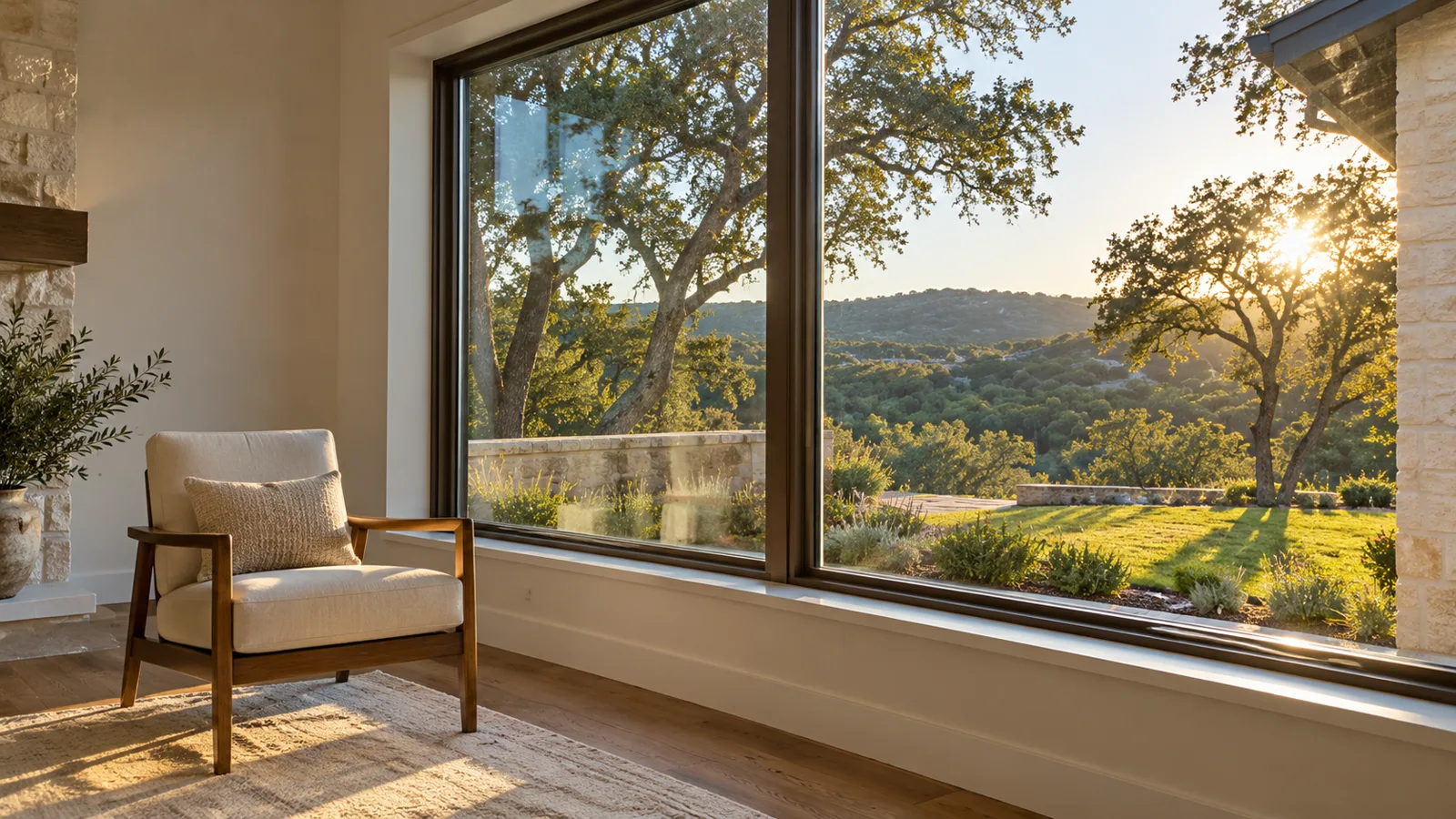
Thermally broken aluminum
The slimmest frame and the largest glass for the wall, with a polyamide break to keep the inner face warmer or cooler than bare metal could.
Austin Quality Windows handles aluminum window replacement in Austin, TX for whole houses, and is Travis County's leading specialist in taking out dated metal sliders, specializing in thermally broken aluminum frames, full-frame tear-outs and low-E insulated glass. We offer slim-profile fixed and sliding units and matched picture windows.
Our team provides a single glass package across every elevation, delivering cooler frames and clearer views for both residential and commercial projects. We install every unit with our own crew, measure each rough opening after the old frame is out, and flash the new window to the manufacturer's written instructions.
From cutting a corroded aluminum frame free of the stucco to a house fully reglazed and trimmed, our team handles every detail. Serving Austin, Lakeway, The Hills and Steiner Ranch, we plan the change-out so each room is closed up before the crew moves on.
Why Austin Quality Windows
No handoffs between a salesperson, a measurer and a subcontracted crew. The crew that measures your openings installs the windows.
Old aluminum windows are uncomfortable in Austin because the metal frame carries heat straight through the wall and the single pane of glass does almost nothing to stop it. Aluminium is a good conductor of heat, so a frame with no break in it passes outdoor temperature to the room side, hot in a summer with about 123 days at 90 degrees or more, and cold on a winter morning.
That cold metal is why older frames drip. Condensation forms when a surface drops below the dew point of the air touching it, and a humid Gulf wind makes Austin's indoor air wet enough to bead on an unbroken aluminum frame and run onto the sill. Over the years that water stains drywall, lifts paint and feeds rot in a wood sill below the frame.
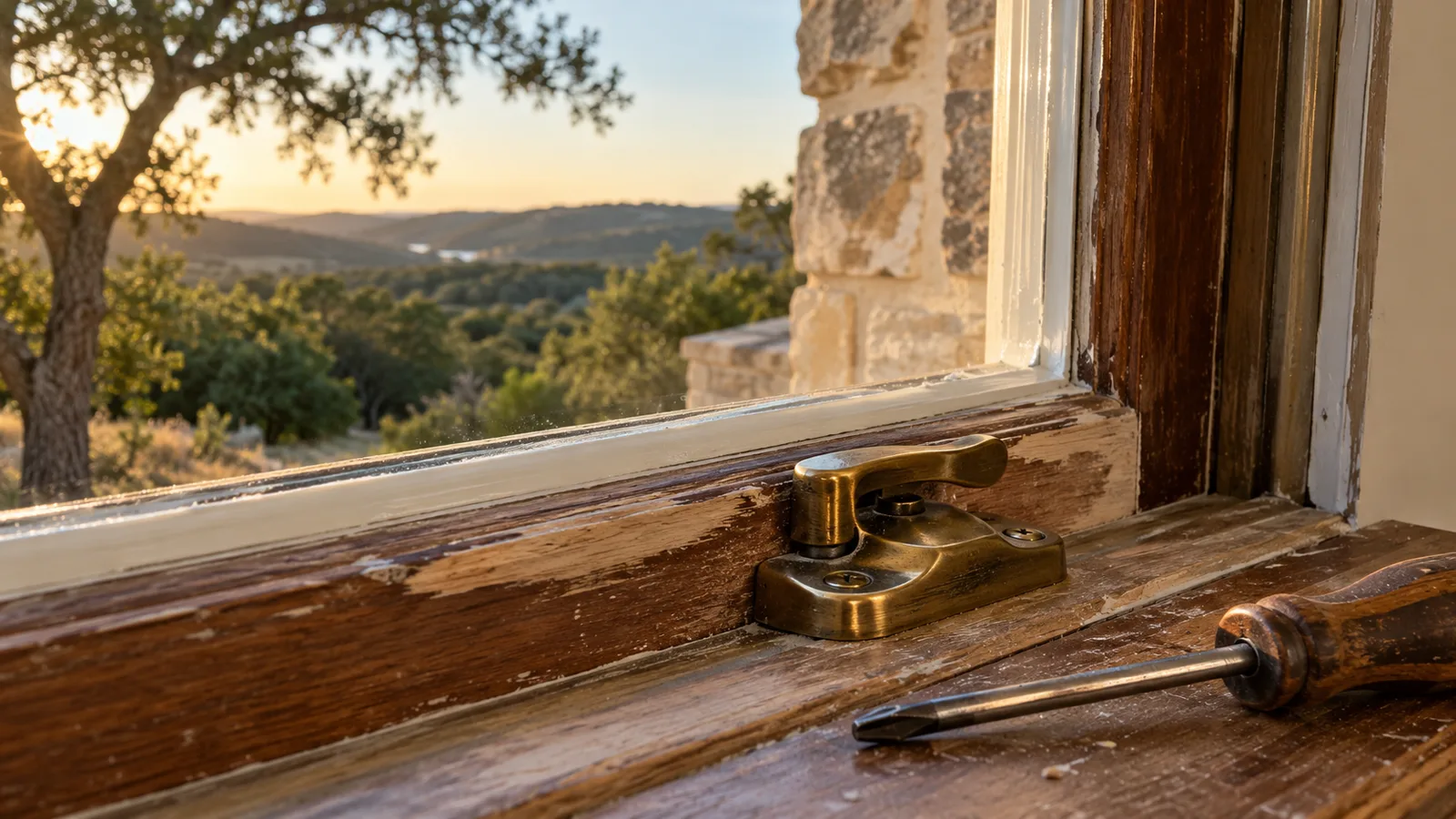
Horizontal sliders add a third problem. A sliding sash seals with brush strips and overlaps rather than pressing against its frame, so it generally leaks more air than a hinged window, and the rollers and track wear until the sash drags. When the frames run hot, the glass fogs and the sashes stick at once, the frame has reached the end of its useful life and repair no longer pays.
A thermally broken aluminum window keeps the slim, strong metal frame but splits it into an inner and an outer profile joined by a low-conductivity strip, most often reinforced polyamide. Heat now has to cross that strip instead of a continuous run of metal, so the room-side frame stays closer to room temperature and condensation on the frame drops.
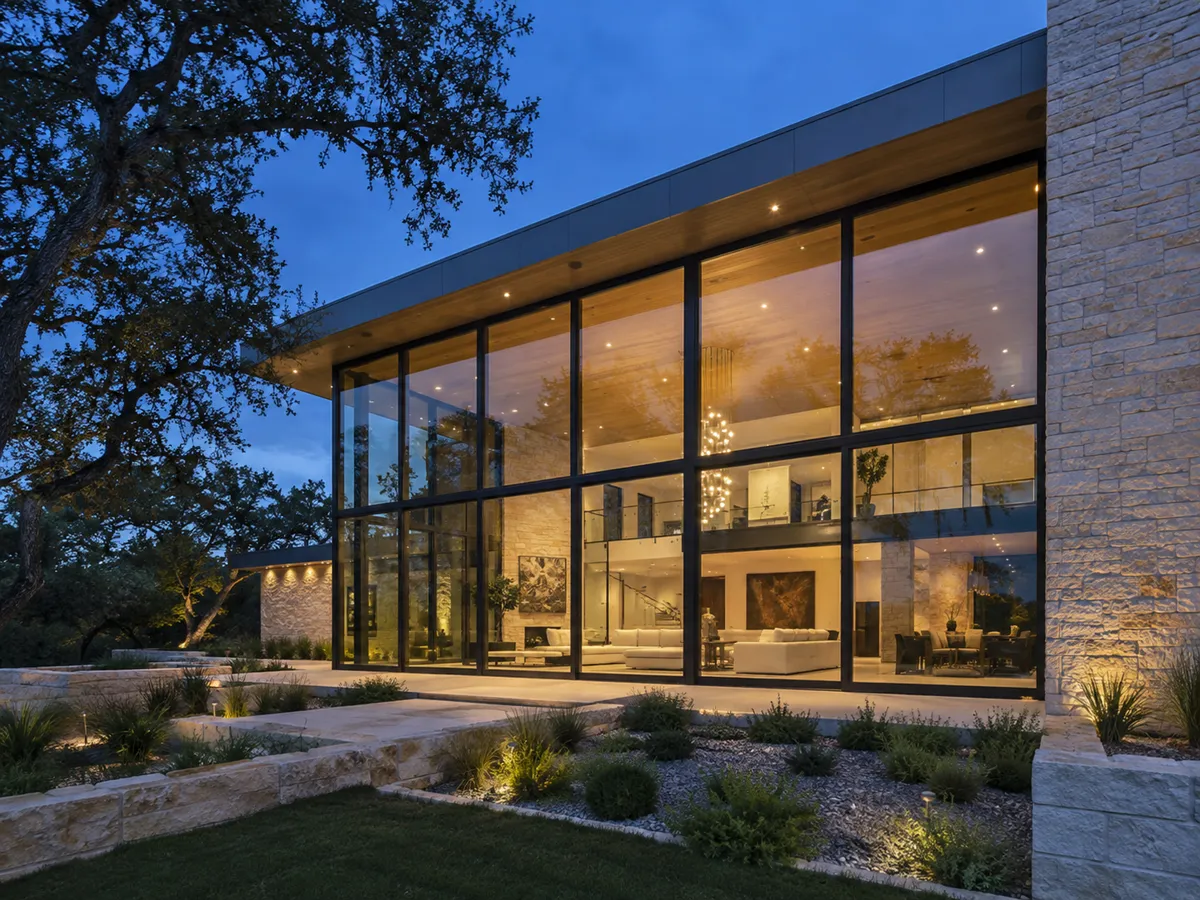
It is not magic. A break does not turn aluminum into an insulator, and a wider, well-engineered break does more than a thin one, so we compare the frame section, not just the label, before anything is specified. Paired with insulated low-E glass, a thermally broken frame suits a house where the owner wants narrow sightlines, large fixed lites and a crisp metal finish, which is exactly the look a vinyl frame struggles to give.
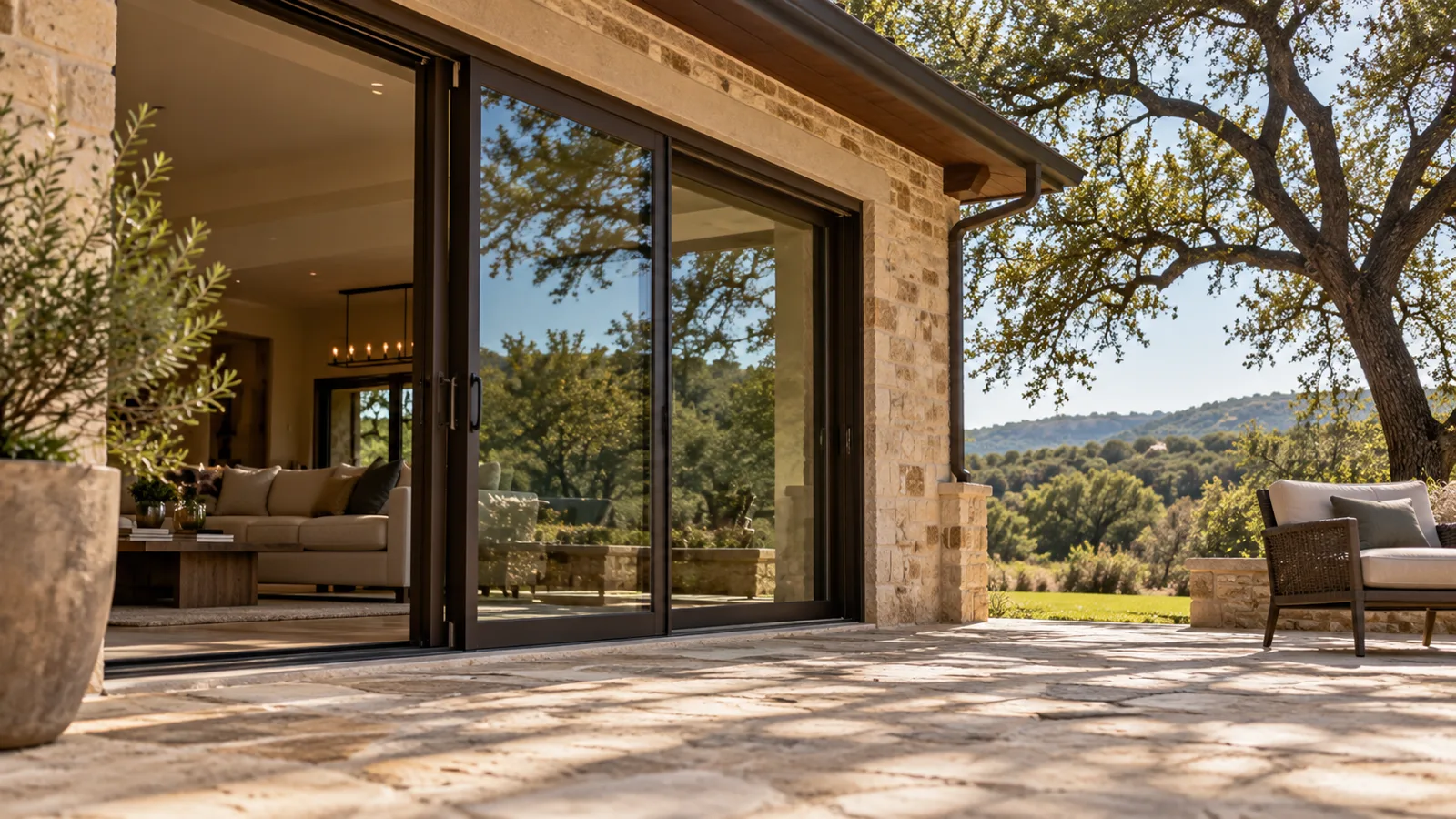
Aluminum also stays very low maintenance and durable. Finishes come in a wide range of colors, and dark bronze or black frames hold their shape in Texas heat in a way some other frame materials do not.
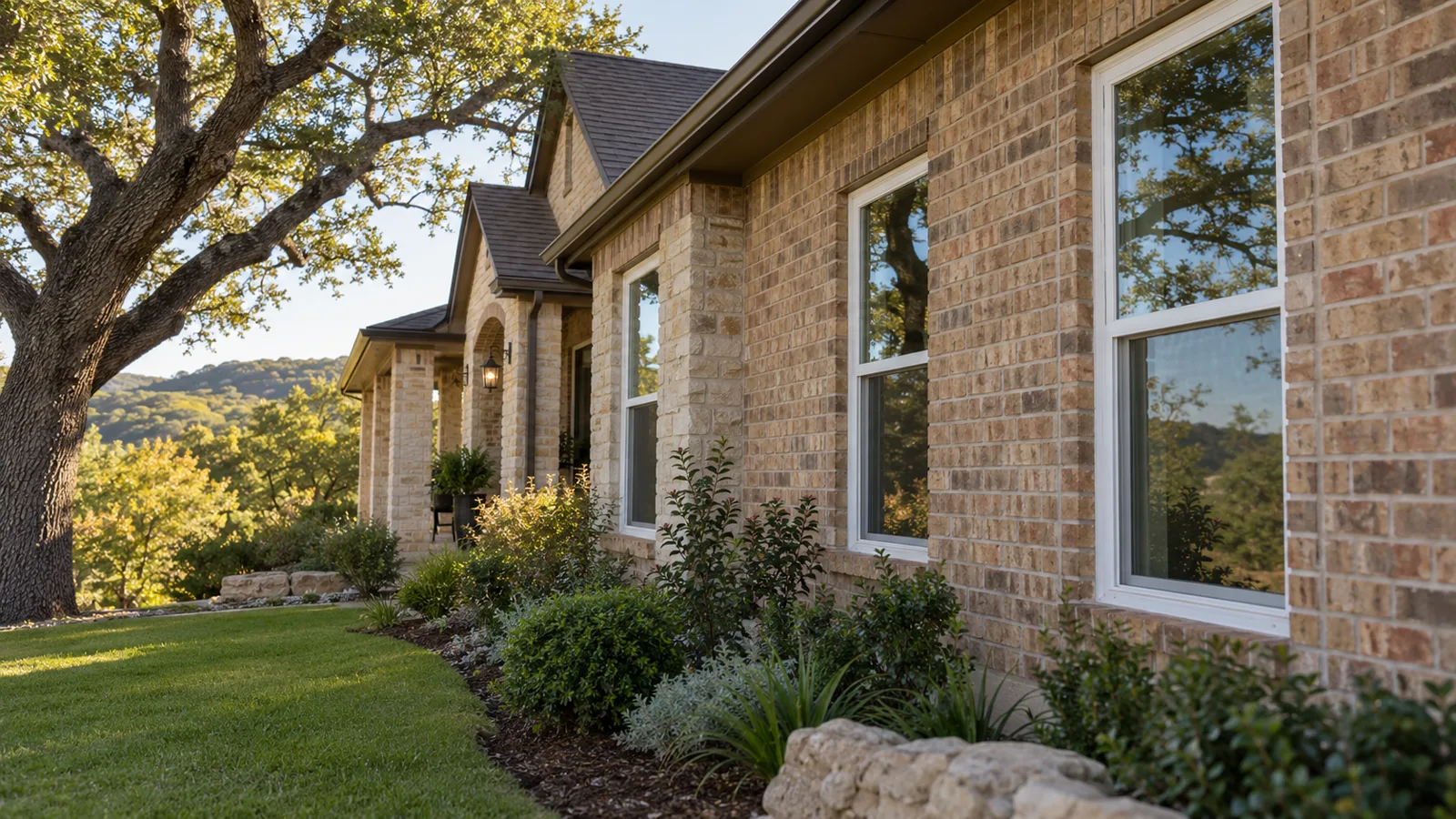
Not every owner of a dated aluminum house wants metal again. At the measure we price the alternatives beside a thermally broken frame so you can compare like with like.
The slimmest frame and the largest glass for the wall, with a polyamide break to keep the inner face warmer or cooler than bare metal could.
Very good thermal resistance and very low maintenance at a lower price, with wider frames and fewer dark color options than metal.
Very good thermal resistance and very low upkeep, with a stiff frame that allows narrower sightlines than vinyl at a higher price.
Real wood on the room side and an aluminum skin outside, for a warmer interior finish where the house calls for it.
Most aluminum change-outs in Austin are done full-frame, because the old frame is the part that is failing. Where it is fastened behind stucco, brick or siding, we cut it free, take the opening back to the rough framing and inspect the sill and the wall for water damage before a new window goes in.
Full-frame removal lets us do the water management properly. A new sill pan goes under the unit, the new window is set plumb and square, and flashing is lapped so water that gets behind the cladding drains out rather than in. We flash every opening to the window maker's published installation instructions for that product type, then we water-test it before the trim goes back.
An insert installation leaves the old frame in place and sets a new unit inside it. On a metal frame that is sound, square and dry it can save exterior patching, but it also leaves the old metal frame as a heat path and makes the glass smaller. We tell you per opening which method fits, and why.
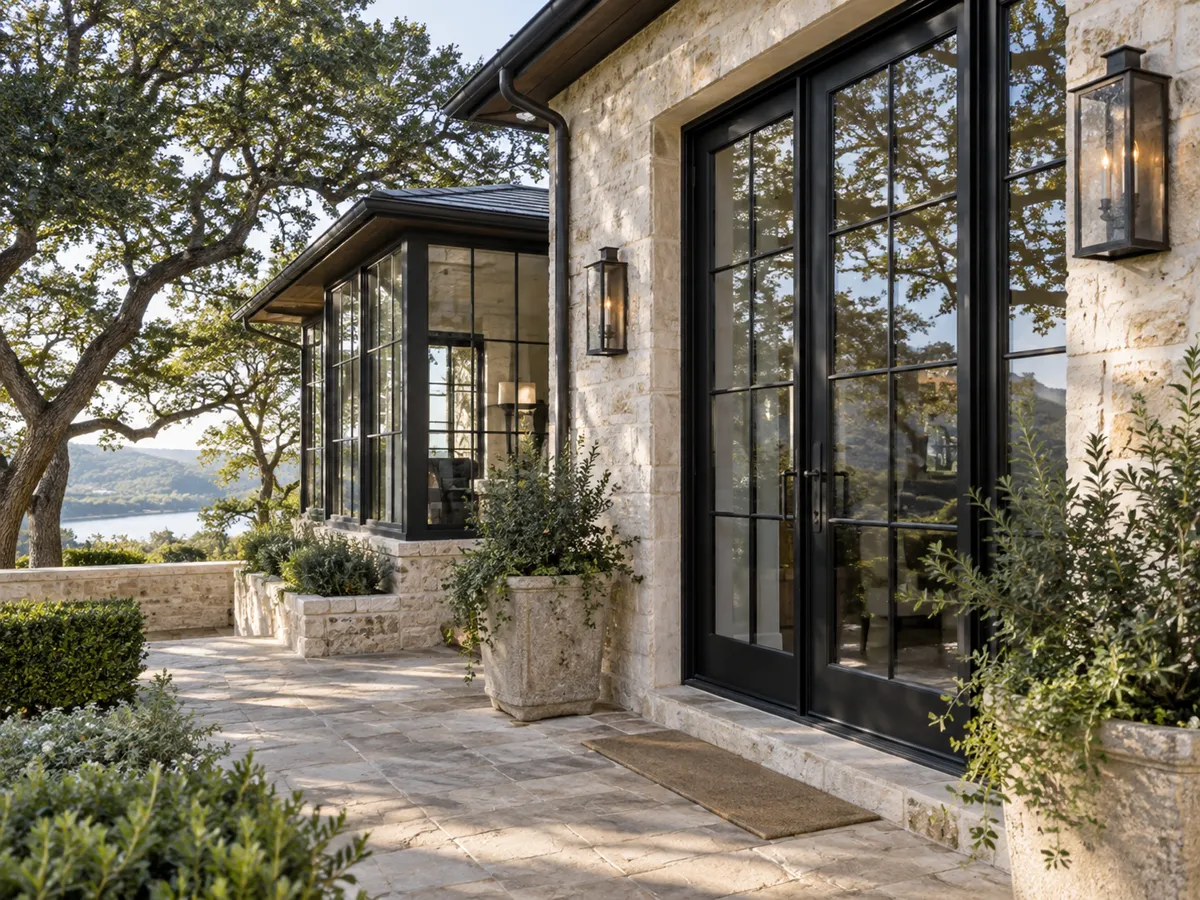
The glass you put in an aluminum change-out is checked against the energy code even though it is a replacement. Travis County is in Climate Zone 2, and the Texas energy code guide applies its window limits to replacement windows, not only to new homes: a U-factor of 0.40 or lower and a solar heat gain coefficient of 0.25 or lower under the 2015 IECC.
Every unit we supply carries an NFRC label showing its U-factor, SHGC, visible transmittance and air leakage, so you can read the numbers yourself. Low-E coatings reflect infrared while passing visible light, and argon in the gap conducts heat less than air, which together take most of the heat out of a west-facing wall of glass.
Some places we serve add their own rule. West Lake Hills bans glass at 20 percent reflectivity or more, and Steiner Ranch does not permit reflective glass at all, so a mirrored coating that once looked like the easy answer to the afternoon sun is off the table there.
We give no price for an aluminum change-out until we have measured, because the house decides it. These are the drivers.
All of it is settled at the free in-home measure, where we look at every opening and give you a written scope and price.
Changing from aluminum to another frame material, or to a new color, is the kind of change many of our service areas review. In Rollingwood, swapping out any window needs a city permit. West Lake Hills permits any alteration. In Lost Creek, a change to a window's size, material or look goes to the LCNA architectural control committee, and in The Hills the POA approves window and glass changes through an architectural modification request.
We check the current rule for your address at quote time, prepare the product specifications, colors and elevations a committee asks for, and schedule the work after approval comes back, so the crew is never stopped halfway through a house.
The process
Four steps, and nothing is ordered until you have signed off on the drawings and the price.
We measure every opening, check the framing and the header, and talk through glass, frame material and how each window should operate.
You get drawings of every unit for your approval and for any HOA or historic review, with one written price.
Units are ordered to the approved sizes and glass package, and checked against the drawings when they arrive.
Old units out, openings flashed, new units set, sealed and water tested, then trim and cleanup.
Service area
Questions
The bare metal frame runs colder than the room air in cool weather, and when it drops below the dew point, moisture condenses on it. A thermally broken frame and insulated glass keep the inner surfaces warmer, so far less water forms.
Yes. A thermally broken aluminum frame keeps the slim metal profile and dark finishes, with a polyamide strip that interrupts the heat path, paired with low-E insulated glass.
Usually, because the frame is what has failed. We decide per opening at the measure, and where an insert is the better choice we explain the trade-off.
Cutting out a full frame disturbs the finish right around the opening. We include the patch in the scope, so the price you approve already covers it.
It depends on the manufacturer, the frame material and the glass. We put the delivery and installation dates in writing with the quote.
Often it does. Lost Creek reviews a change of material or look, and The Hills reviews window and glass changes, so we prepare the submission and wait for approval before ordering.
An insulated unit with a low-E coating chosen for a low solar heat gain coefficient, at or under the 0.25 limit Climate Zone 2 sets, and without reflective coatings where a neighborhood bans them.
Yes, the installation carries a written warranty, which we go through with you alongside the quote.
Free in-home measure across Austin and the west side. We call you back to set a time.
Calls only, we do not receive text messages.