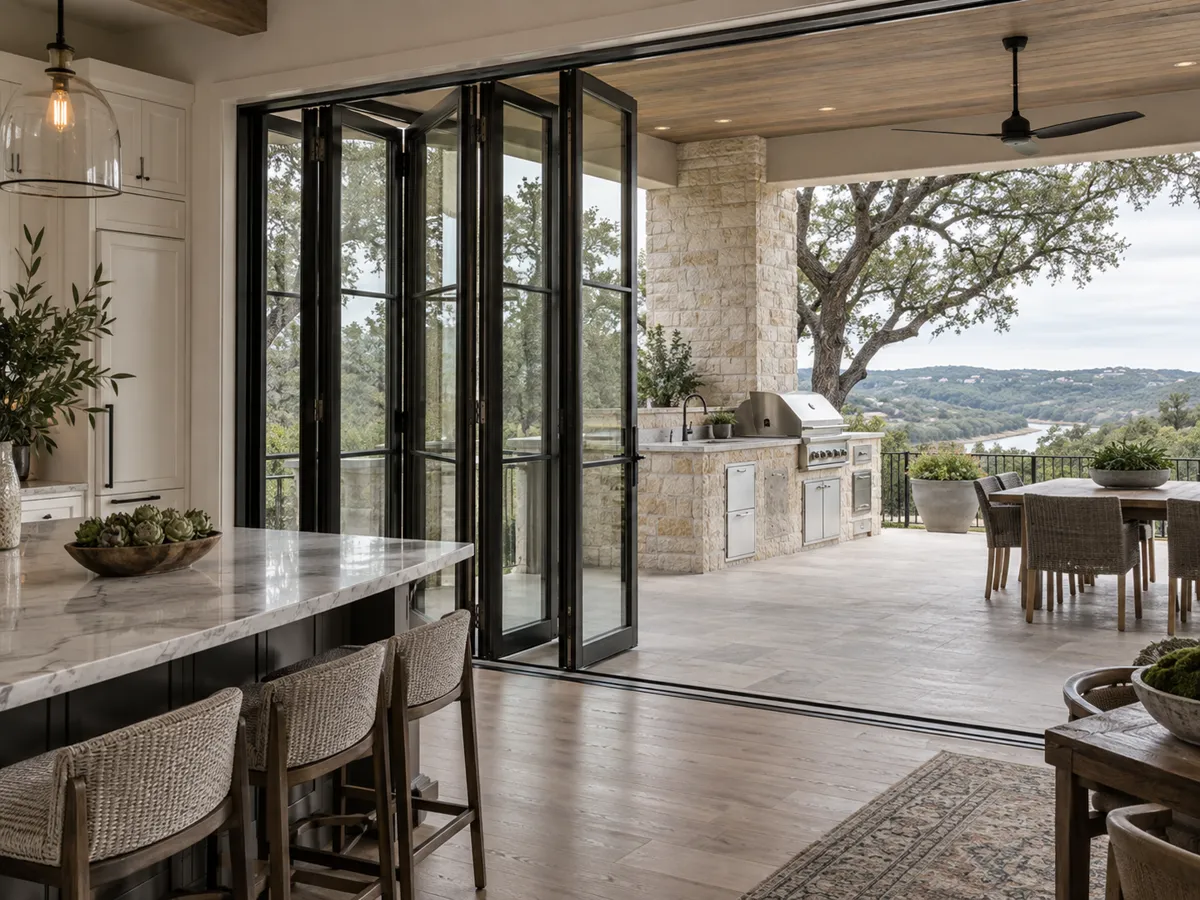
Laminate
A standard vinyl extrusion wrapped in a bonded acrylic film. The film carries the color and shields the profile underneath from direct sun.
Austin Quality Windows delivers vinyl window replacement in Austin, TX and is a leading Travis County installer of rigid uPVC frames, specializing in welded-corner vinyl sashes, insert units that fit inside existing brick and stucco openings, and full-frame vinyl units for openings that need rebuilding. We offer laminate and capstock colors for darker exteriors and lighter frames for the hottest walls.
Our team provides low-E insulated glass in every frame, delivering a window that never needs painting for both residential and commercial projects. The same crew that measures each opening installs the new vinyl unit, flashes it to the manufacturer's written instructions and water-tests it before the interior trim goes back on.
From the expansion clearance a vinyl frame needs inside its opening to a whole elevation of matched frames, our team handles every detail. Serving Austin, Sunset Valley, Steiner Ranch and Lakeway, we tell you plainly where vinyl fits your house and where another frame would serve it better.
Why Austin Quality Windows
No handoffs between a salesperson, a measurer and a subcontracted crew. The crew that measures your openings installs the windows.
Vinyl frames are made of rigid PVC, also called uPVC, meaning unplasticized polyvinyl chloride. Flexible PVC can carry more than 85 percent plasticizer by mass; the rigid grade used for window frames and sills carries none, which is why it holds its shape in a wall. Vinyl took over from painted wood for frames and sills because it stands up to weather, does not rot, and never needs a coat of paint.
In comparison tables of frame materials, uPVC rates very good on thermal resistance and durability and very low on maintenance. That is the whole case for it: a frame that keeps heat out reasonably well and asks almost nothing of you afterwards.
Sunlight is the material's long-term enemy. UV stabilizers are added to the compound to slow it, and unprotected white PVC yellows with age as ultraviolet light degrades the polymer. We order frames made for exterior exposure, not interior-grade profiles, and we look at how much direct sun each wall gets before choosing a color.
Heat is where vinyl has a ceiling. Rigid PVC begins to distort at around 140 degrees Fahrenheit and reaches its glass transition at about 180. A white frame stays well under that. A dark frame on an unshaded west wall can run far hotter than the surrounding air, and trade sources list warped frames and stressed welded corners among the results when the color is simply painted on.
Austin gives a dark frame plenty of chances to fail, with highs at or above 90 degrees on roughly a third of the days in a typical year. So a dark exterior is possible in vinyl, but only in a product built for it. There are three ways that is done, and we only order frames made one of these ways.
A standard vinyl extrusion wrapped in a bonded acrylic film. The film carries the color and shields the profile underneath from direct sun.
A colored layer co-extruded over a white profile, so the color is part of the extrusion itself rather than paint sitting on top of it.
Colors made to reflect the infrared part of sunlight, which keeps a darker frame below the temperature where vinyl starts to soften.
Many Austin houses with older units have brick, stone or stucco wrapped tight around the frame, and that shapes how a vinyl replacement goes in.
Insert. In the United States a replacement unit is usually a framed window that slips inside the original frame once the old sashes come out. In a frame that is square, dry and sound, a vinyl insert leaves the brick returns and the stucco untouched, and the house sees almost no exterior disruption. It gives up a little glass at the edges.
Full-frame. Where the old frame has rot, a history of leaks or the wrong size, it comes out down to the rough opening. A sloped sill pan goes in, the new vinyl unit is set and flashed with each layer lapped like shingles, and the stucco or brick mold is patched back to it.
Movement. Rigid PVC expands about 0.05 mm per meter of length for every degree Celsius of temperature change, so a long vinyl frame moves measurably between a cool morning and a hot afternoon. We leave the perimeter clearance and use the sealant the manufacturer's instructions call for, so that movement never tears the seal.
Vinyl is a good frame for the right house and the wrong one for others. We would rather say so at the measure than sell you a frame you regret.
In Lost Creek any change to a window's material or appearance goes to the LCNA ACC, and in Steiner Ranch window changes need AC approval with a modification deposit. We prepare the product sheets and color samples those reviews ask for.
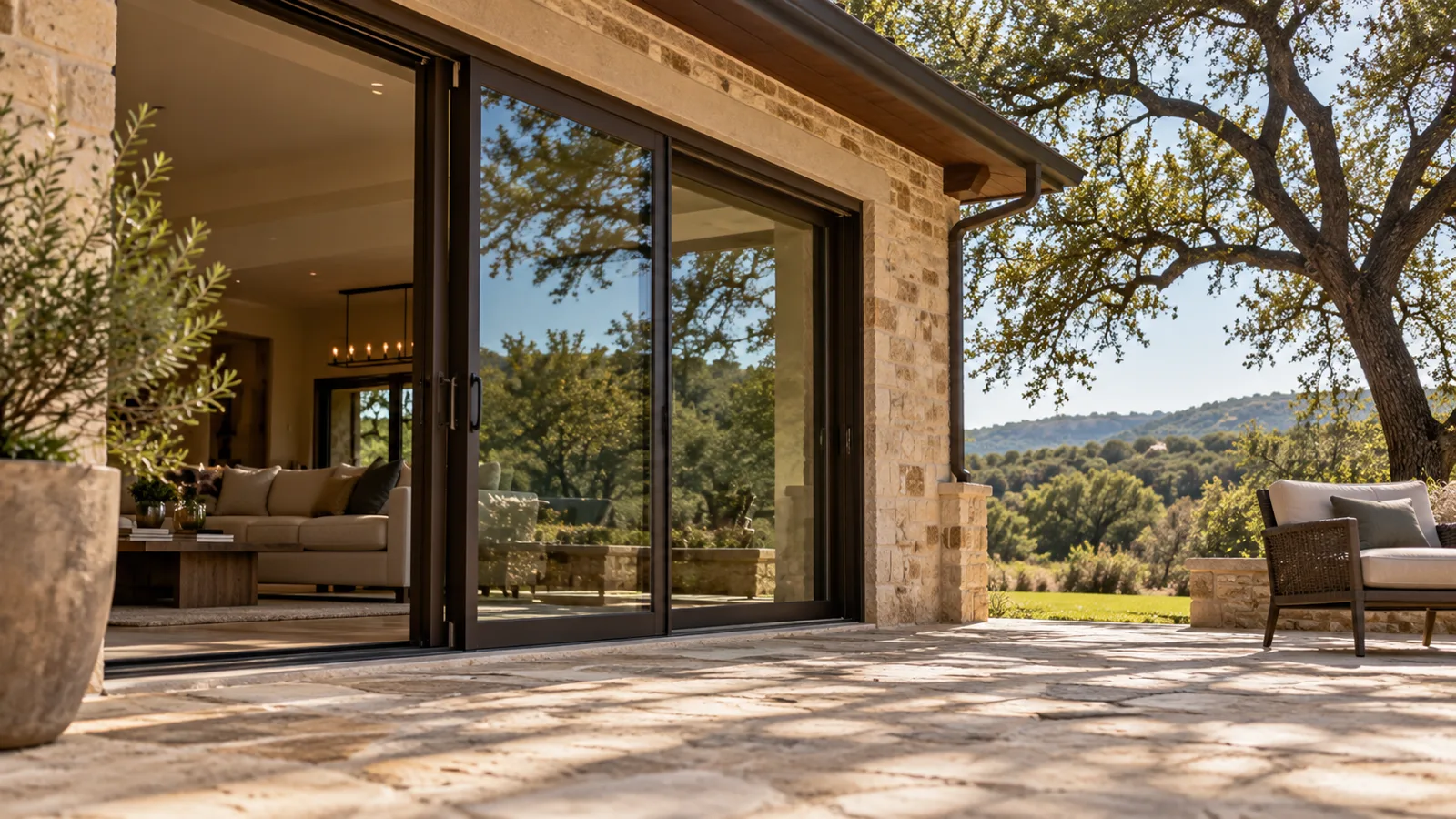
Every vinyl unit we order carries low-E insulated glass with argon fill and an NFRC label, and meets Travis County's Climate Zone 2 limits under the 2015 IECC, a 0.40 U-factor and a 0.25 SHGC, which apply to replacement units as well as new homes. Most vinyl styles come in the same profile family, so a house can mix them and still match.
Both sashes slide. Open the top and bottom equally and warm air leaves at the top while cooler air comes in below.
The top sash is fixed and only the bottom one slides, which leaves fewer moving parts to wear and seal.
Two or more sashes overlap slightly and slide sideways, a natural fit for wide, short openings.
A large fixed unit with no glazing bars, used beside operable units to frame a view.
A side-hinged sash that presses against the frame when it closes, so it leaks less air than a slider.
We do not publish a figure for vinyl, because the same count of openings can price quite differently once color, glass and installation method are settled. These are the drivers.
The price itself comes from the free in-home measure: every opening sized, insert or full-frame marked, color chosen against each wall, and the whole job put in writing.
The process
Four steps, and nothing is ordered until you have signed off on the drawings and the price.
We measure every opening, check the framing and the header, and talk through glass, frame material and how each window should operate.
You get drawings of every unit for your approval and for any HOA or historic review, with one written price.
Units are ordered to the approved sizes and glass package, and checked against the drawings when they arrive.
Old units out, openings flashed, new units set, sealed and water tested, then trim and cleanup.
Questions
The number and size of openings, the color and how it is made, the glass package, insert or full-frame on each opening, wall repairs, access and approvals. The free in-home measure turns those into one written price.
Painted-on dark color can, because rigid PVC begins to distort around 140 degrees Fahrenheit and a dark frame in full sun runs hot. We only order dark vinyl made with laminate, capstock or reflective pigment for that reason.
Usually. Where the old frame is sound, a vinyl insert sets inside it and the brick returns stay as they are. Rotted or leaking frames go full-frame, and we tell you which openings are which at the measure.
Very little. They never need paint; keep the tracks and weep openings clear and wash the frames now and then. UV stabilizers in the compound slow sun damage.
Both rate very good on thermal resistance and durability and very low on maintenance. Fiberglass is worth a look for a dark color on a hot wall or a slimmer frame; vinyl suits a lighter color and standard openings. We compare both at the measure.
It depends on the community. Barton Creek reviews window material and color and does not allow builder-grade units, Lost Creek and Steiner Ranch review window changes too. We prepare the product sheets and samples and handle the filing with you.
It depends on the manufacturer, the color and the glass; custom colors can take longer. We write the install date into your quote.
We work across Austin and Travis County, including Sunset Valley, Steiner Ranch, Lakeway, Rollingwood and West Lake Hills. Call and we will confirm your address.
Yes. Every vinyl installation comes with a written warranty, and we go through it with you at the quote.
Free in-home measure across Austin and the west side. We call you back to set a time.
Calls only, we do not receive text messages.