Full-frame
The old frame, sill and trim come out down to the rough opening. We inspect the framing, fit a sloped sill pan, flash the new unit and rebuild the trim. It is the answer wherever rot, leaks or a size change show up.
Austin Quality Windows handles full window replacement in Austin, TX as Travis County's specialist in whole-house projects, specializing in full-frame tear-outs down to the rough opening, insert units set inside sound existing frames, and one matched low-E glass package across every elevation. We offer double-hung and casement windows on the same order, so the street face and the back of the house share one sightline.
Our team provides a written room-by-room schedule, delivering a house that is closed up and weathertight every night of the job for both residential and commercial projects. The same crew measures every opening on site, builds the order from those measurements, flashes each new frame to the manufacturer's written instructions and water-tests it before the interior trim goes back.
From pulling a rotted sill back to sound framing to the final walk-through of every room, our team handles every detail. Serving Austin, Lakeway, Steiner Ranch and The Hills, we set the order of rooms with you so the house keeps working while it changes.
Why Austin Quality Windows
No handoffs between a salesperson, a measurer and a subcontracted crew. The crew that measures your openings installs the windows.
Full window replacement means every window in the house comes out and new units go in under one contract, one order and one crew. It is a different job from swapping a few tired openings. The order is placed once, so every unit arrives with the same frame color, the same hardware finish and the same glass, and the work runs to a plan you have seen before the first sash comes out.
Most owners reach this point when the original units start failing together. The perimeter seal on an insulated glass unit gives out and condensation collects between the panes, and generally only a new unit fixes that. Sash cords and spring balances wear, sills soften, and air slips in around tired frames. When several of those show up across the house at once, replacing piecemeal leaves mismatched frames and three rounds of disruption instead of one.
A whole-house project also puts every opening through the same measure, the same flashing method and the same water test, so no corner of the house is left on an older standard of installation.
There are two ways to put a new unit into an old opening, and a full replacement rarely uses only one. In the United States the term usually means a framed unit that slips inside the original frame once the old sashes are removed. The European habit is the complete window, outer frame included. We decide which one each opening gets at the measure, and the reason is written on the order.
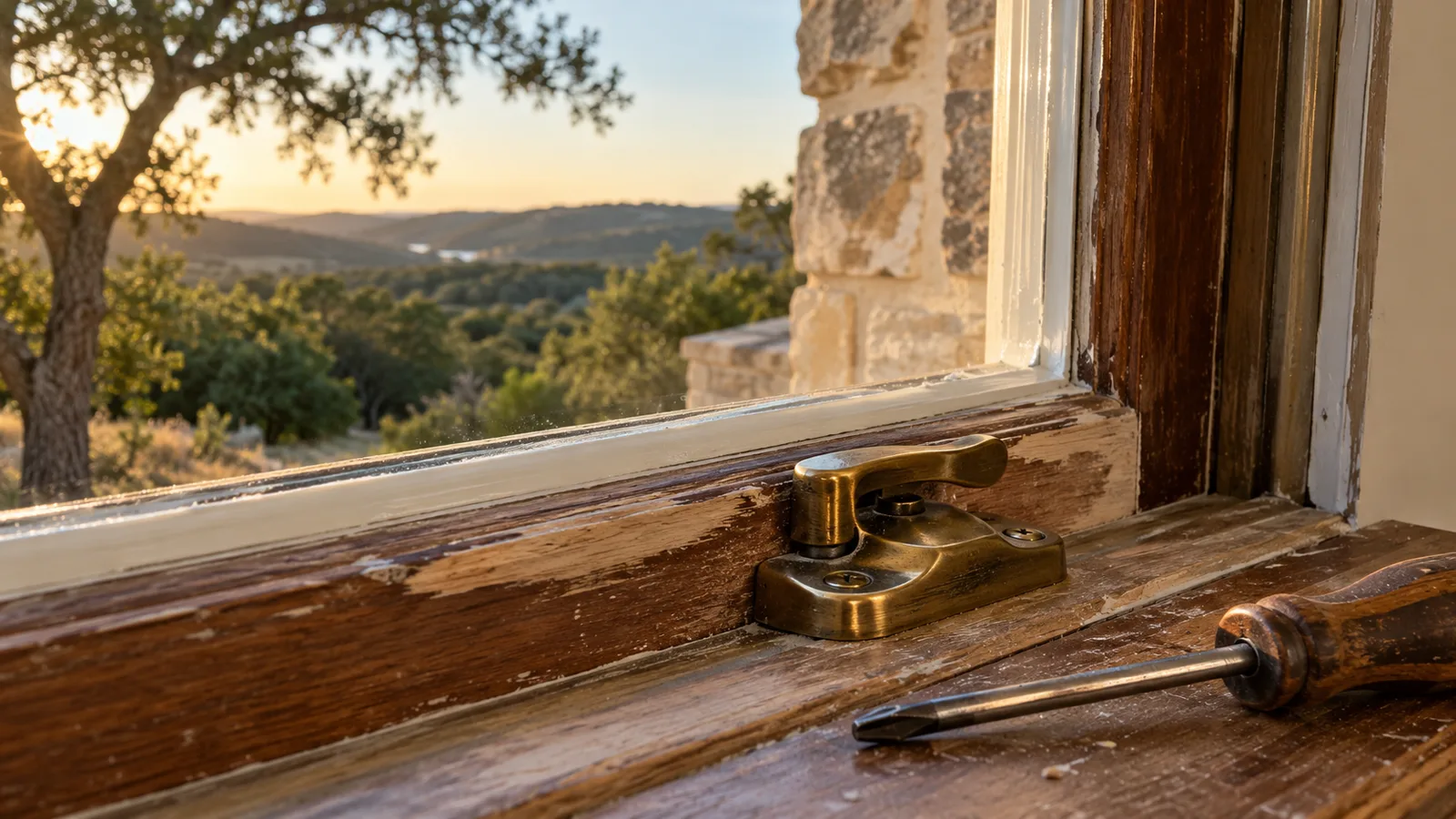
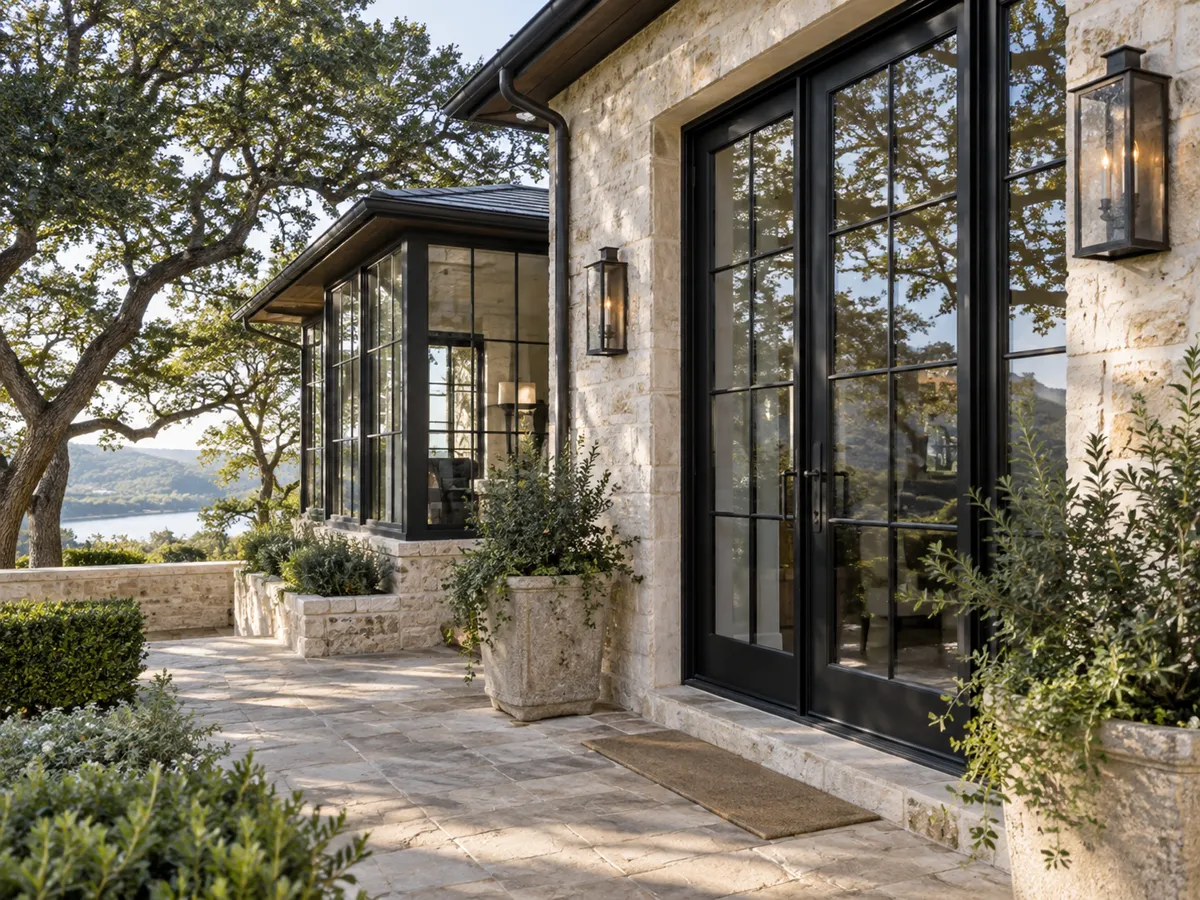
The old frame, sill and trim come out down to the rough opening. We inspect the framing, fit a sloped sill pan, flash the new unit and rebuild the trim. It is the answer wherever rot, leaks or a size change show up.
The existing frame stays and a new unit sets inside it, so interior plaster, exterior stucco and brick returns stay undisturbed. It suits a frame that is square, dry and sound, and it gives up a little glass at the edges.
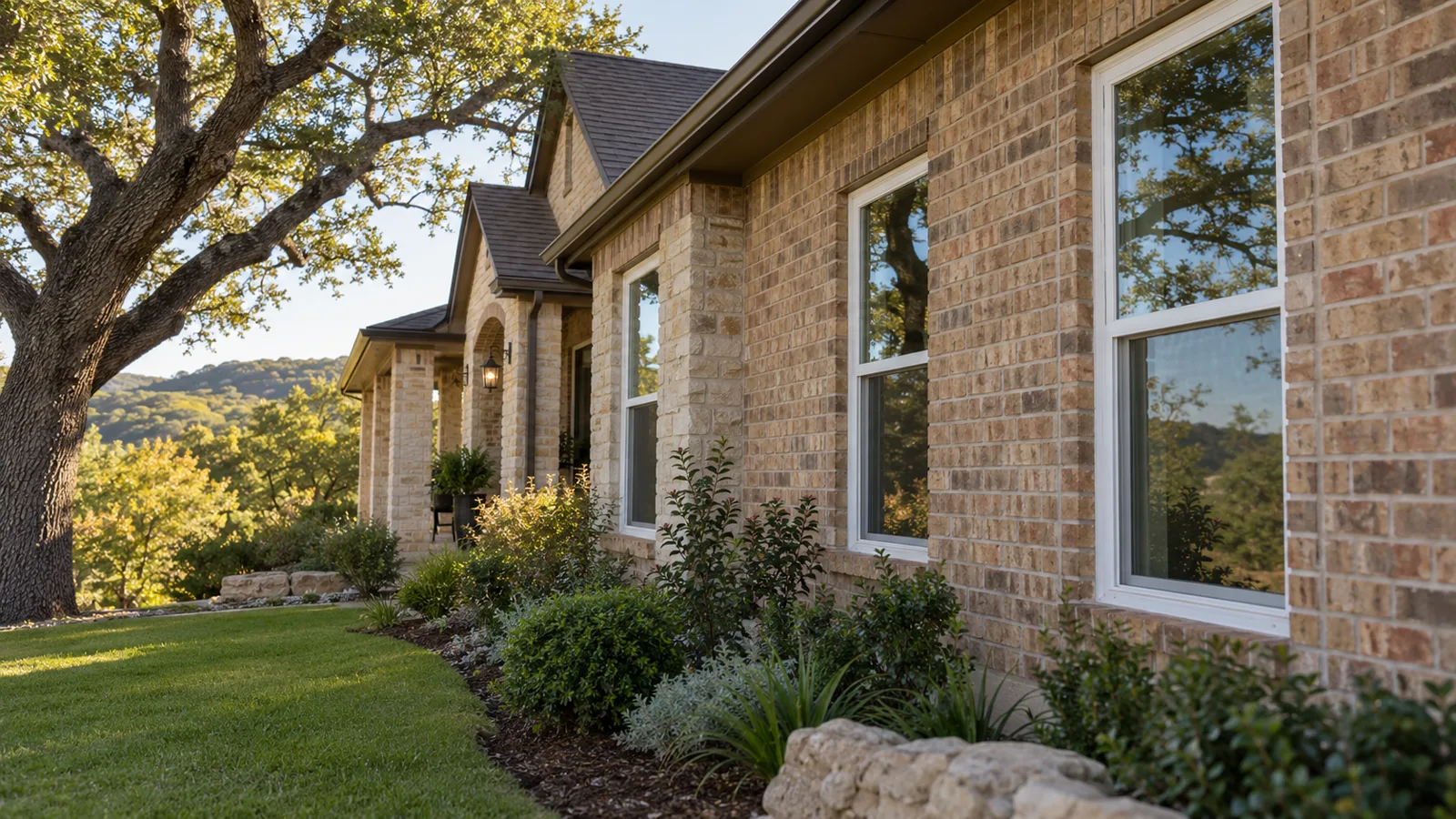
A brick front with sound frames can take inserts while a rotted rear wall goes full-frame. The units still match, because frame color, hardware and glass are ordered together for every opening in the house.
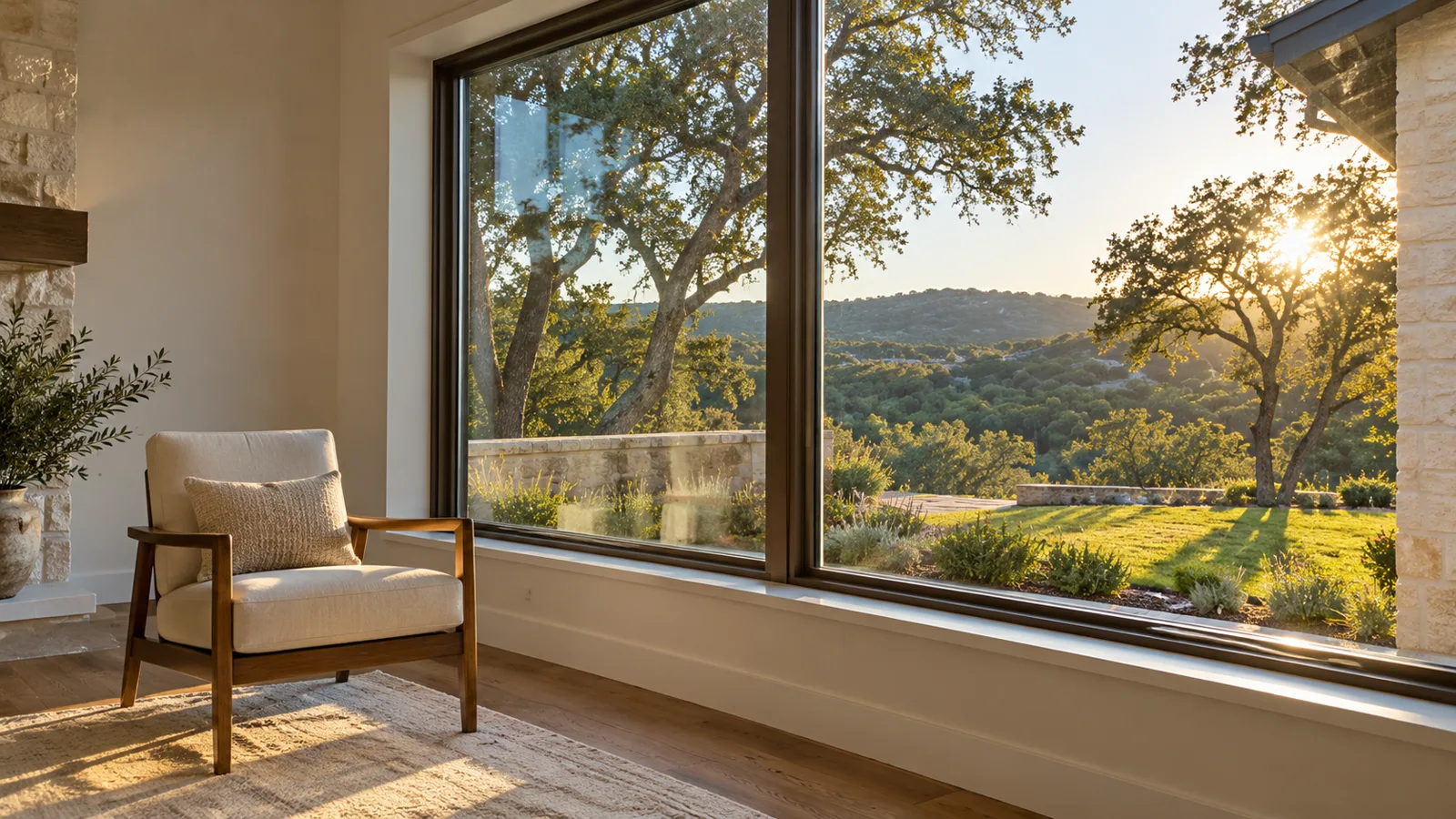
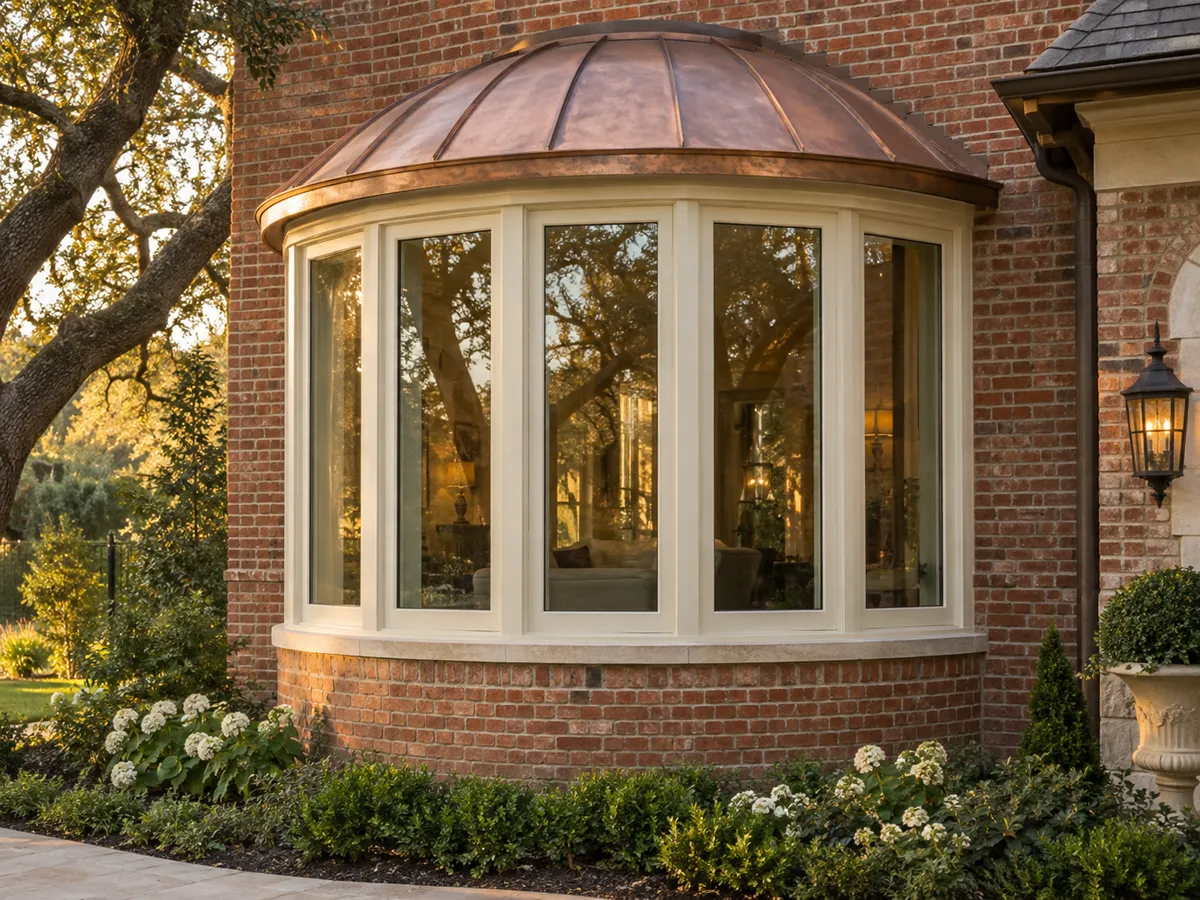
From the street a full replacement should read as one house, so frame color, sash profile and grid pattern match on every side. The glass can still be tuned elevation by elevation, because a west wall in Austin takes a very different afternoon from a north wall under the trees.
Travis County sits in Climate Zone 2. Under the 2015 IECC prescriptive table the limits there are a 0.40 U-factor and a 0.25 SHGC, and SPEER's guide to that code says the table covers replacement windows as well as new homes. Every unit we order carries an NFRC label, because one without it is assigned default values.
Nothing comes out until its replacement is on site. That one rule decides the whole schedule, and it is why no opening in your house sits covered in plastic overnight.
Before the first day we walk the house with you and agree the order of rooms. Bedrooms that are slept in go first or last, never in the middle of a run. Rooms with heavy furniture against the glass get cleared the day before. Alarm contacts on the old frames are noted so your security company can reconnect them on the new ones.
A whole-house project touches every face of the building, so it touches every rule that governs one. We check the current requirements for your address at quote time, because they change, and we file once for the whole house rather than opening by opening.
For a house inside an Austin Wildland-Urban Interface zone, glass in the closest proximity zone must be tempered, dual-pane, glass block or 20-minute fire-rated, and we confirm that before the order is written.
We do not print a figure for a full replacement, because the same count of openings can price very differently once the frames, the glass and the house itself are counted. These are the drivers.
The real number comes from the free in-home measure. We size every opening, mark full-frame or insert on each one, and put the price, the scope and the room sequence in writing.
The process
Four steps, and nothing is ordered until you have signed off on the drawings and the price.
We measure every opening, check the framing and the header, and talk through glass, frame material and how each window should operate.
You get drawings of every unit for your approval and for any HOA or historic review, with one written price.
Units are ordered to the approved sizes and glass package, and checked against the drawings when they arrive.
Old units out, openings flashed, new units set, sealed and water tested, then trim and cleanup.
Service area
Questions
The number and size of the openings, full-frame or insert on each, the frame material, the glass package, repairs found at removal, access, and any HOA or historic review. The free in-home measure turns those into one written price.
No, but one project means one order, one matched look and one round of disruption. If you prefer to phase it, we plan the phases so the later units still match the first ones.
No opening stays open overnight. We remove an old unit only when its replacement is on site, and each room is glazed and weathertight before the crew leaves for the day.
It depends on the manufacturer, the frame material and the glass. We give you the install date in writing with the quote.
Often, on openings where the frame is sound and an insert unit fits. Where a frame is rotted or leaking we go full-frame, and at the measure we tell you which openings fall in each group.
Frequently. Rollingwood permits every window replacement, Barton Creek and Lost Creek review windows through their committees, and historic properties in Austin go through historic review. We prepare the specifications and handle the filing with you.
A low-E insulated unit with a lower solar heat gain coefficient than the shaded sides, read off the NFRC label before ordering and checked against samples so it stays close in color to the rest of the house.
We measure every opening ourselves, check frames and sills for rot, note which openings need full-frame work, talk through glass and color, and leave with what we need for a written quote.
Yes. Every whole-house project comes with a written warranty, and we explain what it covers when you receive the quote.
Free in-home measure across Austin and the west side. We call you back to set a time.
Calls only, we do not receive text messages.