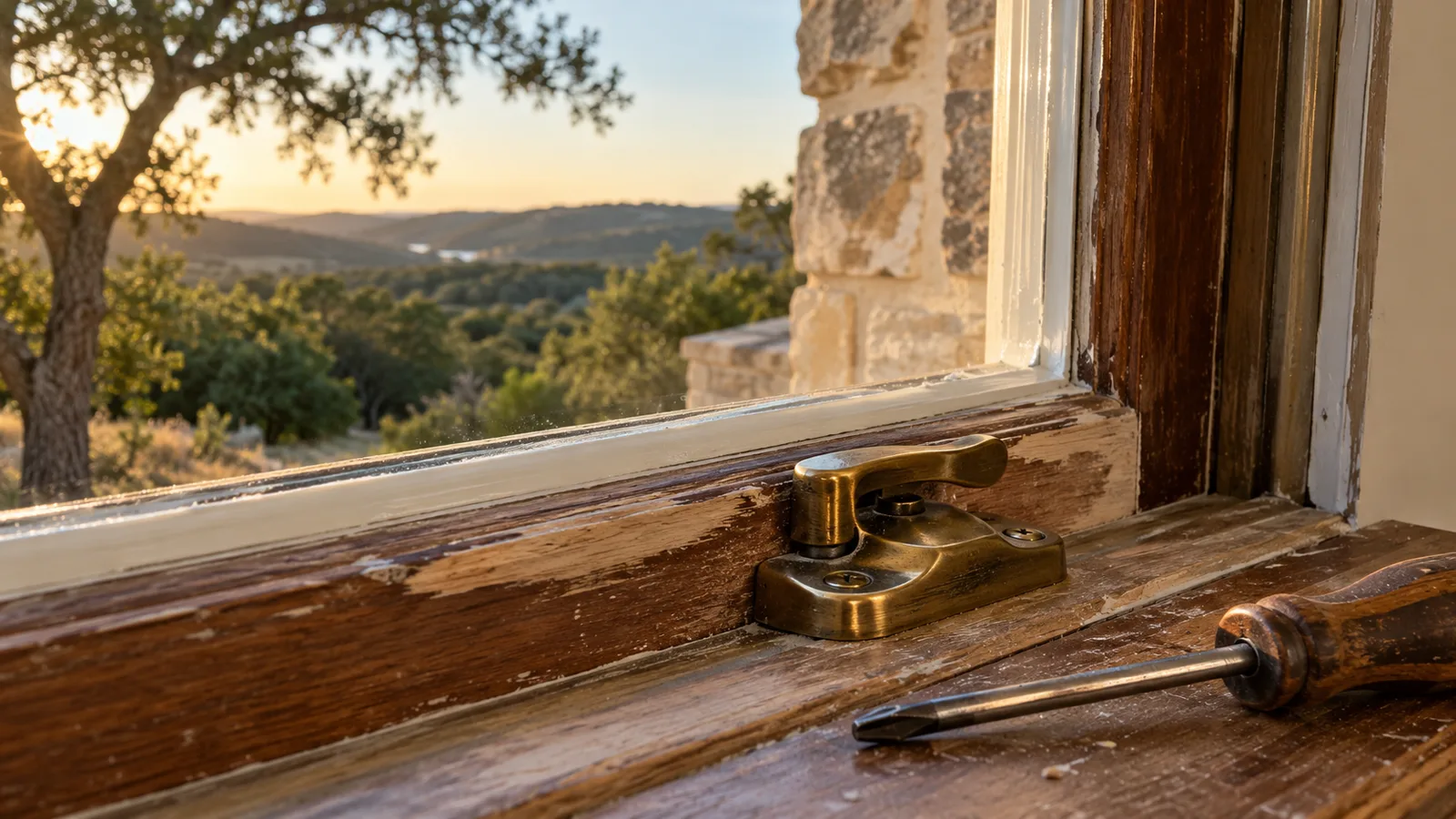
Vinyl
Vinyl offers good thermal resistance with very little upkeep, and it usually costs less. It is softer than fiberglass and expands more as it heats, so wide units often need internal reinforcement.
Austin Quality Windows handles fiberglass window replacement in Austin, TX, and is a trusted Travis County specialist in pultruded window frames, specializing in slim fiberglass sashes, painted and darker exterior finishes, and full-frame tear-outs where an old frame has failed. We offer insert installation into a sound existing frame and full-frame replacement down to the rough opening.
Our team provides the glass package, the frame finish and the flashing detail as one written specification, delivering windows that keep their seal through summer heat for both residential and commercial projects. The same crew that measures each opening installs it, we flash every sill to the manufacturer's written instructions, and we water-test before the interior trim goes back.
From matching a painted frame to the trim color beside it to removing every tired frame in the house, our team handles every detail. Serving Austin, West Lake Hills, Rollingwood and Sunset Valley, we fit fiberglass on elevations that take the full afternoon sun, including in cities that may ask to see a glass sample before approving it.
Why Austin Quality Windows
No handoffs between a salesperson, a measurer and a subcontracted crew. The crew that measures your openings installs the windows.
A fiberglass window frame is not molded or extruded the way vinyl is. It is pultruded: continuous strands of glass fiber are soaked in resin and pulled, rather than pushed, through a heated steel die, where the resin hardens around them. What comes out the far end is a straight profile with the same cross-section along its whole length, which is exactly what a window frame needs.
The resin in a pultruded profile is a thermoset, usually polyester, vinylester or polyurethane, and once it cures it does not soften again in the heat. The glass fiber carries the strength, and the resin carries the resistance to weather. Manufacturers can add a surface veil to the outside of the profile to resist ultraviolet light and fiber bloom, which matters on a frame that faces open sky.
The composite is often described as stronger than many metals by weight. Pultruded glass fiber is even used as the stiffening bar inside some vinyl windows, because plain PVC is not as strong as other frame materials and needs the help. A fiberglass frame is that stiffening material all the way through.
Every frame grows when it heats and shrinks when it cools, and the glass inside it does the same. The trouble starts when the two move by different amounts. The frame pulls on the sealant at the edge of the pane, the glazing bead works loose, and over many summers the joint between frame and glass opens a gap that lets air and water in.
Fiberglass has a lower rate of thermal expansion than vinyl, and that rate closely matches window glass. In plain terms, a fiberglass sash and the insulated glass unit it holds stretch and settle together, so the edge seal is not being tugged every afternoon when the sun comes around to a west wall.
That is the reason to choose fiberglass on a house that takes hard sun. The frame stays square in its opening, the sash keeps meeting its weatherstrip in the same place, and the operating hardware does not bind when the frame warms up. Fiberglass is also stiffer than vinyl, which keeps a tall sash from bowing.
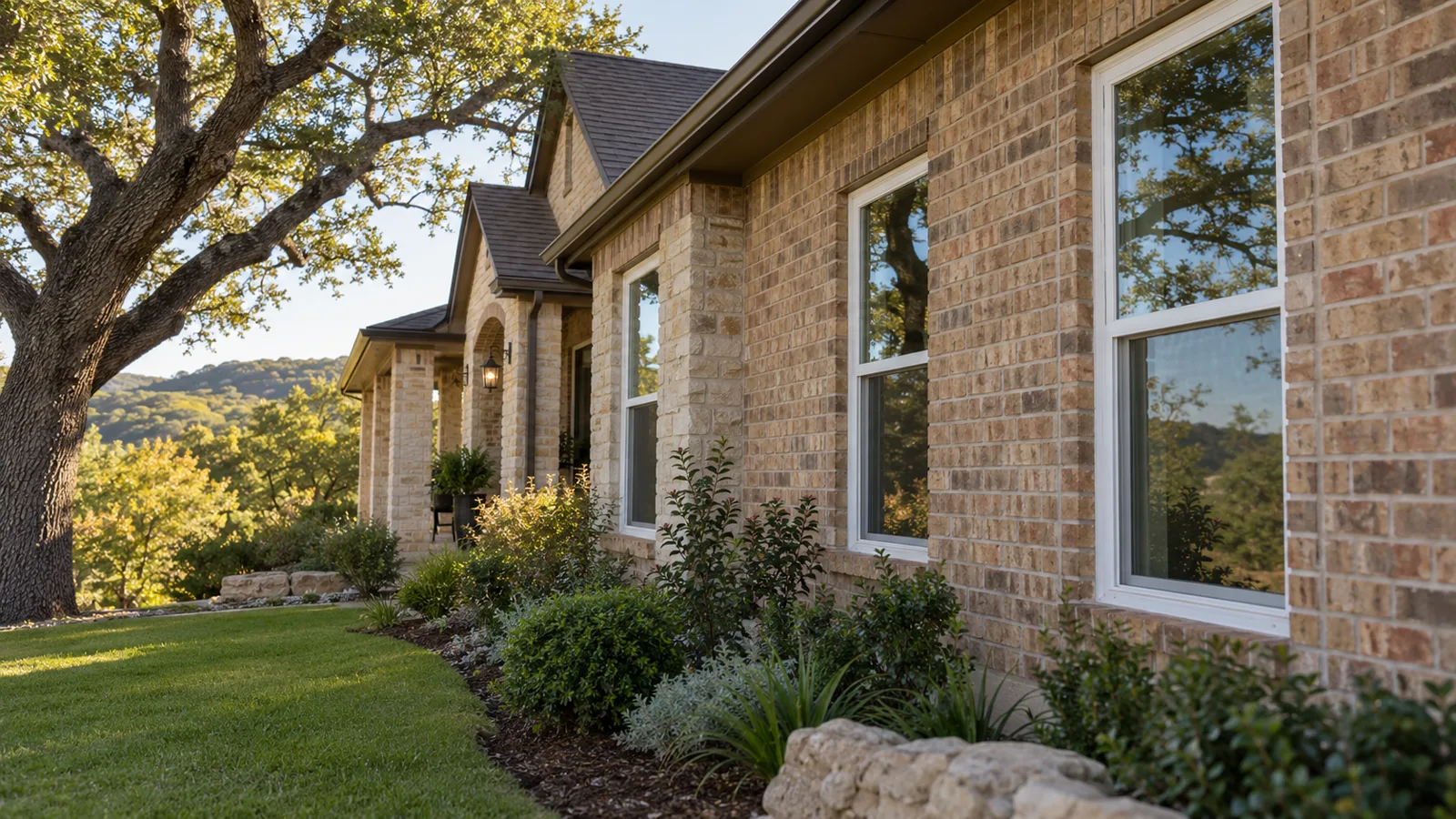
Owners usually arrive at fiberglass after looking at two other frames. This is how they differ on a Travis County house.
Vinyl offers good thermal resistance with very little upkeep, and it usually costs less. It is softer than fiberglass and expands more as it heats, so wide units often need internal reinforcement.
Clad wood gives a real wood interior that can be stained, with an aluminum skin outside. It suits a traditional room, but the wood still needs a sound finish and protection from water at the sill.
Fiberglass gives thermal resistance and low upkeep like vinyl, with more stiffness and expansion close to glass. It costs more than vinyl, and it performs well in accelerated weathering tests.
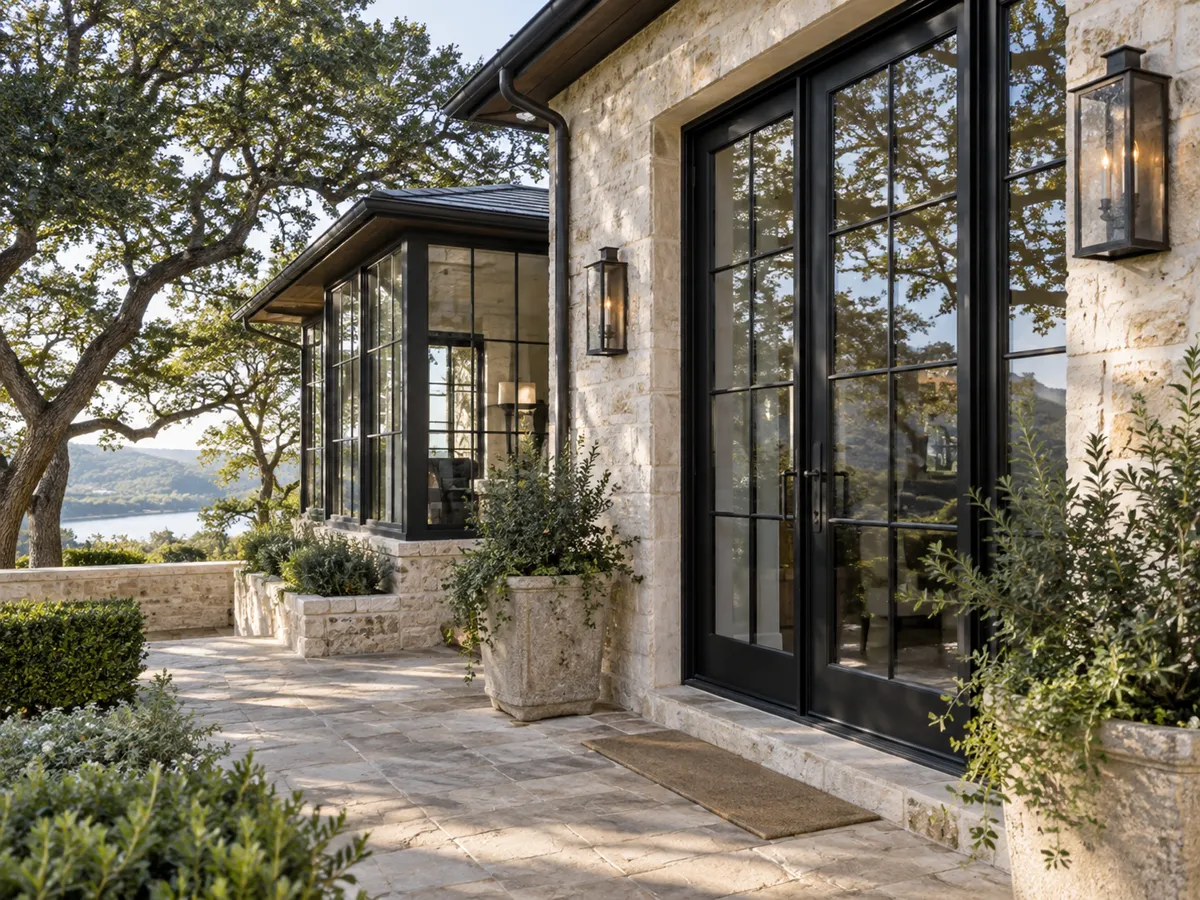
Strength buys sightlines. Because a pultruded profile is stiff for its size, a fiberglass frame and sash can be made narrower than a vinyl unit of the same opening, which puts more glass and less frame in the view. On a large picture unit or a tall pair of casements, that difference shows from across the room.
Color is the second reason owners pick it. A dark frame absorbs more of the sun than a light one, so it runs hotter, and a material that moves several times more than glass is a poor place to put a dark finish in Austin. A frame whose movement tracks the glass is better placed to carry it. Fiberglass also accepts paint, so a house whose trim may change color later is not locked to the first choice.
We confirm which factory finishes, interior colors and paint options the chosen product line offers at the measure, and we put the selection in writing before anything is ordered.
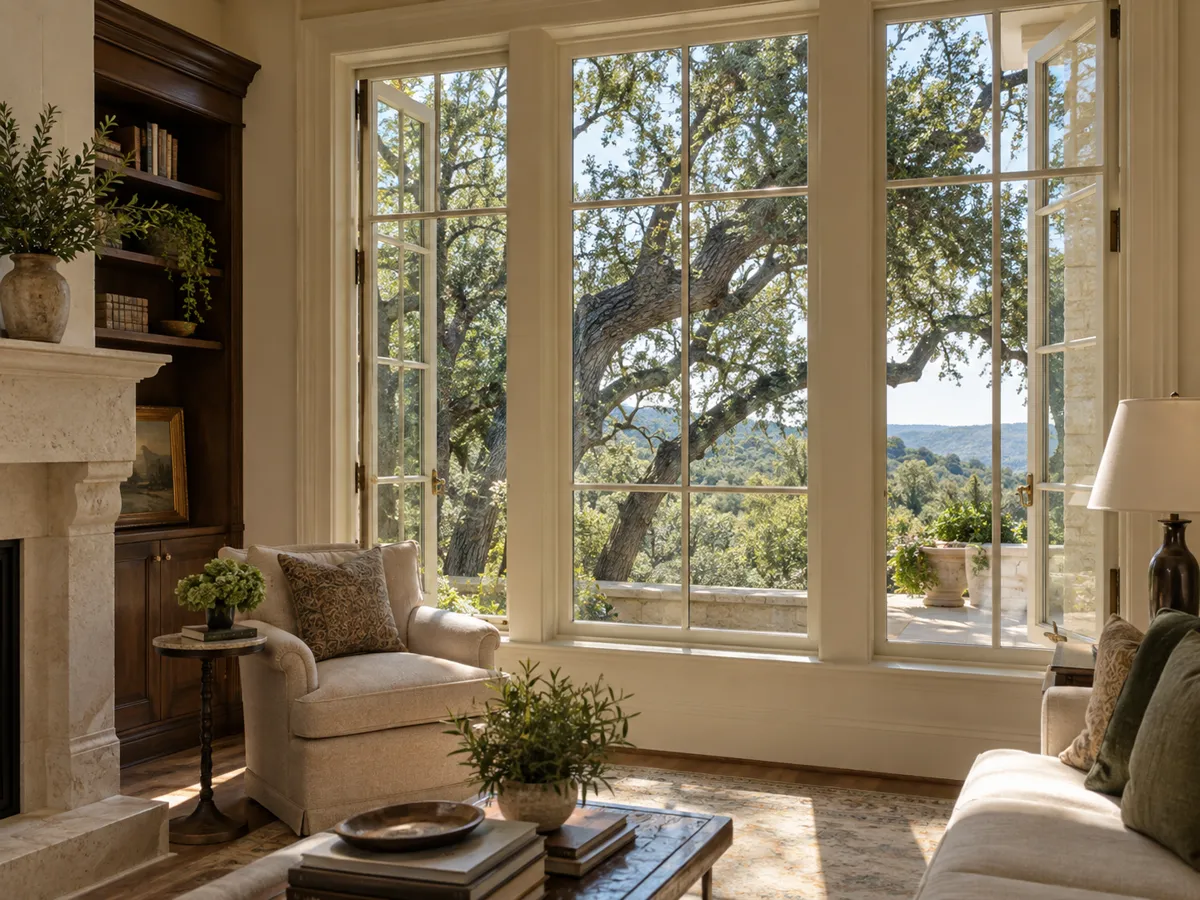
The frame is only part of the window. Travis County sits in Climate Zone 2, and the energy code limits there apply to replacement windows as well as new homes: a fenestration U-factor of 0.40 and a solar heat gain coefficient of 0.25 under the 2015 IECC guide for Texas homes. Some cities in the county have adopted later code editions, and we check the edition your city enforces when we quote.
Those numbers have to come from a National Fenestration Rating Council rating, printed on the label of each unit. A window without an NFRC label is assigned default values, which can fail the code even when the glass itself is good. The label also lists visible transmittance, air leakage and condensation resistance.
Inside the frame we specify an insulated unit with a low-E coating chosen for a low SHGC on the sunny elevations, argon gas fill, and laminated glass where sound or security is the concern. Units that need safety glazing are ordered tempered or laminated.
Each opening is judged on its own at the measure, because one house can need both methods.
Where the existing frame is square, dry and solid, a fiberglass insert fits inside it. The interior trim and exterior brick or stucco stay untouched, and the opening is closed again the same day.
Where the frame has rotted, warped or leaked, we remove it to the rough opening, inspect the framing, and install a sill pan and flashing integrated with the weather barrier.
On masonry and stucco, full-frame work means cutting back and patching the cladding. We tell you before we start which openings need it and how the patch will be finished.
We quote in writing after a free measure, never from a chart, because the price follows the house. These are the drivers:
It all starts with the free in-home measure, where every opening is measured, photographed and assessed for insert or full-frame.
The process
Four steps, and nothing is ordered until you have signed off on the drawings and the price.
We measure every opening, check the framing and the header, and talk through glass, frame material and how each window should operate.
You get drawings of every unit for your approval and for any HOA or historic review, with one written price.
Units are ordered to the approved sizes and glass package, and checked against the drawings when they arrive.
Old units out, openings flashed, new units set, sealed and water tested, then trim and cleanup.
Service area
Questions
The glass package, the frame finish, the number and size of the openings, insert versus full-frame, any structural or cladding repair, and access. The written quote after your measure breaks each one out.
On a house with strong west or south sun, fiberglass has the edge: it expands less than vinyl, its movement closely matches the glass, and it is stiffer. Vinyl costs less and suits shaded, standard-size openings well. We will tell you which fits each elevation.
Fiberglass accepts paint, which is part of why it suits a house whose trim color may change. At the measure we confirm the factory finishes for the product line and what its manufacturer says about repainting later.
Insert when the old frame is square, dry and solid; full-frame when it has rotted, leaked or warped, or when you want the slimmest possible sightline. Many houses get a mix, decided opening by opening.
It depends on the manufacturer, the finish and the glass. We give you the delivery date in writing with the quote, and we do not remove an old window until its replacement is on site.
An insulated unit with a low-E coating chosen for a low solar heat gain coefficient, ideally at or under the 0.25 code limit for Climate Zone 2, with argon fill. The NFRC label on each unit shows the rated numbers.
Often. Rollingwood permits every window replacement, West Lake Hills permits any alteration, and Barton Creek and Lost Creek send window changes to their architectural committees. We prepare the product data and drawings for the submittal with you.
Yes. We give a written warranty on our installation, and you receive the manufacturer's product warranty paperwork at handover.
Yes, across Travis County, including Austin, West Lake Hills, Rollingwood, Sunset Valley, Barton Creek, Lakeway and Steiner Ranch. Call and we will confirm your address.
Free in-home measure across Austin and the west side. We call you back to set a time.
Calls only, we do not receive text messages.